
Introduction
Heavy-load bearing applications place demanding requirements on rolling contact, dimensional consistency, and material performance. In mining equipment, industrial gearboxes, construction machinery, and heavy-duty transmission systems, unsuitable taper rollers can contribute to uneven contact, surface fatigue, overheating, and premature bearing failure.
Selecting taper rollers for these conditions requires more than matching nominal dimensions or specifying a harder material. Engineers must understand how load distribution, roller-to-raceway contact, shaft deflection, and lubrication interact during operation.
For bearing manufacturers, OEM purchasing teams, and industrial equipment suppliers, the objective is to establish a roller specification that meets the bearing design requirements and remains consistent throughout production.
This guide focuses on heavy-load contact conditions, failure diagnosis, replacement decisions, and the technical information needed to source taper rollers for demanding industrial applications.
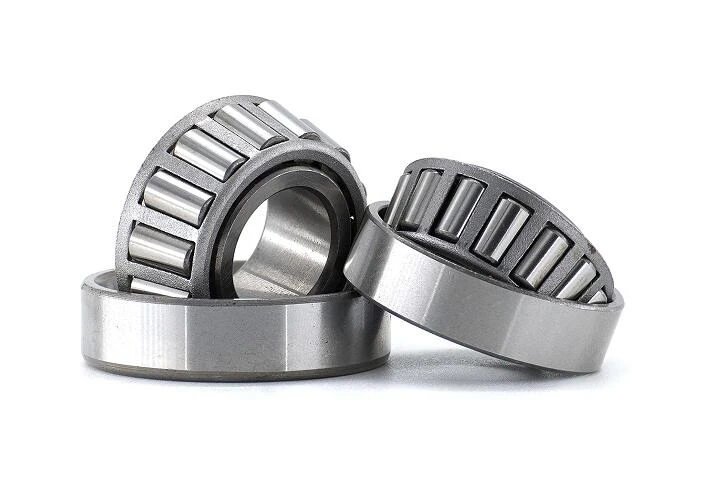
1. Define the Actual Heavy-Load Conditions
Before specifying taper rollers, determine how the bearing experiences load throughout its operating cycle.
Continuous radial loading, combined radial and axial loading, and repeated shock loads create different demands on the bearing. A gearbox operating under relatively stable torque, for example, may require a different engineering assessment from mining equipment exposed to repeated impacts.
Start by identifying:
-
Continuous and peak loads
-
Radial and axial load directions
-
Shock loading and load variation
-
Operating speed and duty cycle
-
Shaft deflection and alignment
-
Lubrication and contamination conditions
These factors establish the requirements for the complete bearing assembly. Taper rollers operate in conjunction with the inner and outer raceways, so their performance cannot be evaluated independently of the bearing's internal geometry and operating conditions.
When replacing a failed component, also determine whether the original bearing operated within its intended design conditions. Ordering identical rollers may reproduce the original problem if excessive loading, misalignment, or inadequate lubrication caused the failure.
2. Evaluate Roller-to-Raceway Contact Under Load
Contact geometry is a critical consideration when selecting taper rollers for heavy-load applications.
Control edge loading
Under suitable operating conditions, roller and raceway geometry distribute load across the intended contact region. Shaft deflection, housing deformation, misalignment, or unsuitable roller profiling can concentrate stress near the roller ends.
This condition, known as edge loading, can accelerate localized surface damage and rolling-contact fatigue.
Profile modifications, including appropriate crowning or logarithmic profiling, may help reduce edge stress. The required profile depends on bearing geometry, load distribution, and permissible misalignment. Excessive modification can reduce the effective contact area, so changing the profile without engineering review is not recommended.
Verify taper and dimensional consistency
Roller diameter, length, taper accuracy, and profile must match the intended bearing design. Variations between individual rollers can also affect load sharing within the assembly.
For production procurement, checking one sample against nominal dimensions is not sufficient to establish ongoing consistency. Buyers should define relevant tolerances and confirm how they will be inspected throughout production.
For general guidance on conventional roller dimensions, materials, and selection factors, see our taper roller selection guide for industrial and automotive bearing applications.
3. Match Material and Heat Treatment to the Duty Cycle
Material selection should reflect contact fatigue requirements, impact loading, operating temperature, and the intended manufacturing process.
Through-hardened bearing steels, such as GCr15 or AISI 52100, are commonly used for rolling elements in conventional bearing applications. When properly processed, they provide the hardness and fatigue properties required by many industrial designs.
Case-hardened steels may be considered where a hard surface and a tougher core are required. Their suitability depends on impact conditions, component design, and specified material properties. Neither approach is universally superior.
Material designation alone does not guarantee performance. Chemical composition, steel cleanliness, heat treatment, hardness, and microstructure must meet the application requirements.
For heavy-load taper rollers, purchasing teams should clarify the material grade, hardness requirements, and applicable heat-treatment specifications. Material traceability and metallurgical inspection records may also be necessary for critical OEM projects.
The final specification should be agreed upon before production rather than relying on general descriptions such as “high-strength bearing steel.”
4. Use Failure Evidence to Guide Replacement Decisions
When an existing bearing fails prematurely, the damage pattern can help identify which factors require investigation.
| Observed condition | Priority checks |
|---|---|
| Localized wear near roller ends | Alignment, shaft deflection, roller profile, and raceway contact |
| Spalling or surface fatigue | Load cycle, contact stress, lubrication, and contamination |
| Smearing or scoring | Lubricant supply, sliding conditions, speed, and load |
| Overheating | Lubrication, operating clearance, fit, speed, and cooling |
| Uneven wear between rollers | Dimensional consistency, load distribution, and assembly condition |
These symptoms are diagnostic clues, not definitive proof of a single cause. Several problems can produce similar damage, so inspection should consider the complete bearing assembly.
For example, edge damage does not automatically mean that the roller profile is incorrect. Excessive misalignment or shaft deflection may produce a similar pattern. Surface fatigue may result from excessive loading, contamination, inadequate lubrication, or a combination of factors.
A useful failure review combines the observed damage with operating history, lubrication records, installation conditions, and component measurements. This helps determine whether the replacement requires a revised roller specification or correction of an underlying operating problem.
5. Verify Manufacturing Tolerances and Surface Quality
A roller can meet its nominal dimensions and still be unsuitable if its geometric consistency or surface condition does not satisfy the bearing design.
Relevant inspection characteristics may include diameter variation, length, taper accuracy, roundness, profile tolerance, and surface roughness. End-face geometry may also be important where specified by the design.
Surface finish influences the interaction between the roller, raceway, and lubricant film. The required finish depends on load, speed, lubrication, and functional requirements; a smoother surface is not automatically better in every application.
For OEM procurement, confirm three points:
-
Which dimensional and surface characteristics are controlled?
-
What inspection methods are used to verify them?
-
Can the supplier maintain the approved specification across repeat orders?
The drawing or purchase specification should define acceptance requirements clearly. Generic quality statements are not a substitute for measurable tolerances and agreed inspection criteria.
Where the application is safety-critical or production volumes are high, buyers may also require agreed inspection reports, material traceability, and sample approval before mass production.
6. Review Lubrication and Contamination Before Changing the Design
Heavy loads increase the importance of maintaining suitable lubrication at the rolling contact. If the lubricant film becomes inadequate, friction, wear, and surface distress may develop even when the rollers conform to the drawing.
Review lubricant type, viscosity at operating temperature, supply method, and replenishment interval. Also consider whether dust, water, or abrasive particles can enter the bearing.
In mining and construction equipment, contamination control and sealing arrangements may be as important as roller geometry. In high-temperature applications, lubricant performance and material suitability require particular attention.
If a bearing repeatedly fails under apparently acceptable loads, review these conditions before specifying a different roller material or profile. Changing the rolling element alone may not resolve a problem caused by lubrication, contamination, installation, or operating clearance.
7. When Should You Source Custom Taper Rollers?
Standard rollers are appropriate when their specifications match the existing bearing design and operating requirements.
Custom taper rollers may be worth evaluating when an OEM requires non-standard dimensions, a defined roller profile, specific material properties, or a replacement for a difficult-to-source component.
For these projects, the supplier should review the available drawing, assess manufacturing feasibility, confirm inspection requirements, and agree on sample approval before volume production.
Customization does not automatically increase load capacity or service life. Its purpose is to meet defined design requirements, with performance depending on the complete bearing design, manufacturing quality, and actual operating conditions.
When comparing suppliers, assess their ability to control the required geometry and material properties, maintain batch consistency, and provide relevant inspection documentation. Prototype capability, production volume, and delivery requirements should also be considered for recurring OEM orders.
8. Prepare a Complete Taper Roller RFQ
A clear request for quotation reduces uncertainty during technical review and helps the supplier determine whether the proposed specification is manufacturable.
Provide the following information where available:
-
Drawing or sample: Roller drawing, dimensional sketch, physical sample, or existing bearing part number.
-
Geometry: Diameter, length, taper angle, profile, and required tolerances.
-
Material: Steel grade, hardness, and heat-treatment requirements.
-
Operating conditions: Load, speed, temperature, lubrication, and contamination exposure.
-
Quality requirements: Inspection parameters, traceability, and documentation.
-
Order details: Prototype quantity, initial order volume, and estimated annual demand.
If a complete drawing is unavailable, an existing sample or bearing part number can provide a starting point, provided sufficient information is available to identify the component. Additional measurements or application details may be needed before a quotation can be finalized.
For applications using cylindrical rather than tapered rolling elements, our cylindrical roller selection guide for industrial and wind power applications explains the different operating and design considerations.
Conclusion: Select Taper Rollers Based on Verified Requirements
Selecting taper rollers for heavy-load bearing applications requires coordinated consideration of operating loads, roller-to-raceway contact, material, heat treatment, manufacturing tolerances, and lubrication.
For engineers, the priority is to identify the factors governing contact stress and premature failure. For purchasing teams, the priority is to establish a measurable specification and confirm that the supplier can manufacture and inspect it consistently.
For OEM development and replacement projects, a drawing, sample, existing part number, and operating details provide a practical starting point for technical evaluation.
Request a Taper Roller Quotation
Send your drawing, sample details, or existing bearing specifications to info@w-bm.com. Include your application, estimated order quantity, and specific material, profile, or tolerance requirements to support the technical review and quotation process.