
The core of modern enterprise management is the process of designing, controlling and managing the flow and velocity of people, logistics and information flow.
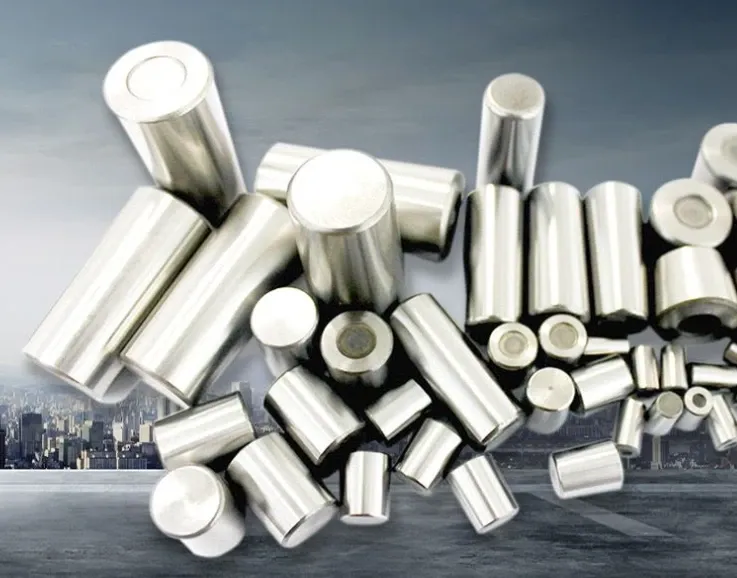
Industrial enterprises are a man-made large system composed of several economic cells. The foundation that can maintain the survival and development of this system is the circulation of a series of production factors, such as the circulation of various human actions and personnel generated around products and machines, the circulation of a series of materials such as raw materials, products in process and finished products, as well as the circulation of drawings, instructions, statements and production orders These elements can be summed up as people flow, logistics and information flow. "Moving is living, not moving is declining", which shows that the core of modern enterprise management It can be described as the process of designing, controlling and managing the flow and velocity of people, logistics and information flow.
Over the years, people have spent the most time and money on the utilization and development of production technology. However, the rational allocation, use and scientific management of internal resources of enterprises have not been studied and invested enough. Under the condition of market economy, due to market orientation, business operators and managers began to pay more attention to people flow, logistics and information flow to meet the needs of market economy. However, the internal logistics management of the enterprise has not been placed on the due agenda. Many manufacturing factories in China's bearing industry, especially small and medium-sized factories and township enterprises, have outstanding problems in logistics management.
Compared with other industrial enterprises, bearing factories have two obvious characteristics in logistics management: first, bearing factories are typical raw material processing enterprises. Taking a small and medium-sized factory with an annual output of 200000 sets and an average unit weight of 5 kg as an example, it needs various specifications of bearing steel, copper plate (or steel plate) and other raw materials, as well as supporting auxiliary materials It is more than 3000 tons, and the material transportation volume is particularly large. Second, the bearing is a precision part, which is processed according to the current decentralized process. The four major parts need to go through nearly 200 processes from input to output. Coupled with the necessary rust prevention of parts, inventory and back and forth transportation during processing, all parts of a set of bearings need to be lifted and put down by different people hundreds of times. During this period, some unnecessary and unreasonable handling can be seen everywhere. However, it is strange that people are used to it. As everyone knows, it is these scattered and intermittent simple labor that does not seem to require any advanced technology, but consumes a lot of human, material and financial resources of the factory for many years. The disorder and disorder of logistics management and the unreasonable loss in logistics handling have become an important part of the internal consumption of factory benefits. If this is studied and improved, the benefits will be improved.
1.Relationship between logistics handling and economic benefits
In the production and operation activities of enterprises, the loss of waste in logistics handling is unexpected. According to experts' estimates, 25% - 40% of the processing costs belong to handling costs; 80% of the time required for the project belongs to handling and dead time; 85% of factory disasters occur in handling [. If the dynamic economic analysis method is used for analysis, the material handling system accounts for about 20% to 50% of the total manufacturing cost.
These data clearly illustrate two problems: (1) the key to shortening the production cycle is to improve material transportation. (2) If the logistics layout of the enterprise is reasonable, scientific, and well managed, the product manufacturing cost may be reduced by 20% - 30%.
According to the author's investigation in a small and medium-sized bearing factory, the factory has 840 employees, 37 unplanned workers (mainly temporary workers used for loading, unloading and transshipment). The annual salary of temporary workers plus fixed warehouse keepers, rust prevention workers and supply department managers is nearly 270000 yuan, accounting for the total salary of the whole factory 7% of the total: plus the transportation expenses inside and outside the factory and the depreciation and repair expenses of transportation tools, it accounts for about 18.4% of the production cost. Although the caliber of calculating production costs at home and abroad is different, it is well-known that China's factory material inventory occupies a large amount, material supply planning is poor and capital turnover is slow, so the potential in material management and logistics transportation is very huge. In order to improve economic efficiency and management quality, enterprises cannot ignore the important link of logistics management.
2. Main problems in logistics management
The problems of logistics management in bearing factories are mainly reflected in logistics layout, handling equipment, personnel quality and management means.
(1) On the whole, factory design determines the process flow, and the process flow determines the logistics direction V flow and cost. 75% of the product cost is decided at the design stage I ". Bearing factories in China follow the principle of processing - assembly Overall characteristics, except that a few large and medium-sized factories are designed and built by the bearing factory design institute, most local factories are self-designed or transformed according to the original building facilities, often taking one thing into consideration and losing the other. Many vehicles and processes are not matched with the bearing production process, and are inconsistent with the specified logistics scale and flow direction. The layout of the process plane is unreasonable As a result, the transportation route of materials and parts is long, and repeated transportation caused by unitary return transportation, cross transportation and parts repair is very common. Therefore, our material handling cost is high, labor occupation is large, and the efficiency is not high.
(2) Most bearing factories in China were established before the 1980s. At that time, the guiding ideology of "large and complete" and "small and complete" with representative models as planning and mass production as the goal once became the keynote of factory design in the planned economy period. Today, in the face of multi variety and small batch production under the condition of market economy, almost all bearing factories have the trouble of "continuous cutting and disorderly management". Products and markets are changing, while logistics facilities and management are still the same. It's impossible not to change knowingly And it's too weak to change. Even some factories have not realized the necessity and urgency of logistics transformation. Cause new imbalance and irrationality within the enterprise.
(3) Due to the dispersion of processing technology and the difference of production technical conditions, under the premise that the current bearing production is still dominated by manual assembly, the low qualification rate of parts, low matching rate, low comprehensive utilization rate of materials and low utilization rate of inventory area, as well as the phenomenon of large inventory of products in process and many warehouse management and transfer personnel, this is bound to increase the production cost, reduce the handling efficiency and increase the complexity of management.
(4) There is a lack of standard transportation equipment for the transportation and storage of bearing parts in the factory. Except that a few factories and some sections are equipped with overhead cranes and other motor vehicles for centralized transportation, most factories still use square baskets, iron baskets and trolleys together. Not only is the transportation efficiency low, but also the operation is extremely unsafe. The bumps and scratches of products are also impossible to prevent, and the backward transportation mode restricts the improvement of product quality.
(5) A few factories still adhere to the business purpose of "taking production as the center" in the factory, rely on "scheduling" to eat, and follow the old road of "production → unsalable → overstock → reproduction". Therefore, the production is loose before and tight after, and the logistics turnover is not smooth, resulting in a passive situation of "people waiting for materials, materials waiting for machines, and users waiting for products". At the same time, material transportation is chaotic and waste is also very serious.
(6) The quality of production assistants is not high. Most bearing factories place temporary workers, the old, the weak, the disabled and the unemployed in positions such as warehouse management, transportation and material loading and unloading. These people generally have not received formal training before taking up their posts, their operation is based on experience, and their assessment is not standard. Often some product quality problems, such as scratches, rust and residual magnetism, often appear here. This is a big "stubborn disease" in logistics improvement.
In addition, the imperfection of the external market mechanism of the enterprise and the long-term implementation of the contract responsibility system within the enterprise cannot fundamentally cure the short-term behavior of the enterprise in logistics management. The preparedness in material procurement, the better the storage of WIP, the simple handling of materials, and the adverse tendencies of emphasizing production, neglecting service and neglecting facilities formed over the years are all related to the short-term behavior of enterprises. In addition, at present, most bearing factories are not equipped with management personnel specialized in logistics planning and design and comprehensive coordination, so that the bearing industry has a lot of debts in logistics transformation, and the task of transformation is very arduous.
3.Basic ways to improve logistics management
As mentioned above, logistics management is a subsystem of the enterprise system. The problems in logistics management are generally comprehensive, but the vast majority of them are caused by human beings. Therefore, the solution should be comprehensively treated by the methods of system theory and cybernetics.
Combined with the technological progress of China's bearing industry and the comprehensive strength of enterprises, the general guiding ideology of current logistics improvement should be: take the market economy as the premise, improve economic benefits and enterprise quality as the goal, take logistics handling analysis as the basis, focus on the adjustment of logistics layout and the transformation of key workshops and key processes, and combine product adjustment and technological transformation, seize opportunities, plan as a whole, and implement step by step.
First of all, we should improve our understanding of logistics management and enhance our awareness of logistics. Logistics management of enterprises not only refers to material handling, but also includes multiple contents involving time and space, such as logistics layout, material disposal and corresponding facilities. Although logistics management cannot increase the value of products, it must not be regarded as a non-technical and dispensable process. On the contrary, the process, flow and direction of materials fundamentally determine the production cycle and production efficiency of products, contain 20% - 50% of the production cost, and affect the product quality to varying degrees. Logistics management runs through the whole process from the arrival of raw materials to the use of products by users. In order to realize the modernization of management, logistics management must be modernized.
Second, carry out material handling investigation in a down-to-earth manner, and analyze the handling of material movement, disposal, processing and stagnation in the whole process of production and operation. For material handling, people are used to dividing it into two processes: material movement and processing. In fact, the disposal of materials between the two, such as lifting, unloading, arranging, reversing and fixing positions, takes up a considerable amount of labor and time. Therefore, the disposal of materials is the focus of handling investigation.
The purpose of handling investigation is to carry out handling analysis and effectively improve material handling. The specific investigation work can be checked item by item according to the five aspects of handling operation setting, process, operation method, handling equipment and organization. Then use a special table to summarize the times, time and distance of movement, disposal, processing and stagnation, so as to provide complete first-hand data for handling analysis.
The methods of handling analysis usually include handling process analysis, handling activity analysis (that is, the difficulty of material disposal in the process of handling) and empty handling analysis. The following six aspects should be paid attention to in handling analysis: (1) shorten the handling time; (2) Shorten the handling distance; (3) Reduce the fatigue intensity of operation; (4) Reduce the number of unnecessary handling and empty handling; (5) Improve the handling activity index; (6) Simplify the handling way and reduce the handling cost. On the basis of investigation and analysis, we should not only find out the weak links, but also put forward a comprehensive plan to improve the whole handling process.
Third, adjust the layout of the factory and establish a new production order to rationalize the flow of people, logistics and information. According to the process structure characteristics of bearing parts, the bearing factory layout can generally be divided into three categories: process layout (i.e. function layout), product layout (i.e. production line layout) and mixed layout. For small and medium-sized factories, it is advisable to adopt the process layout composed of the processing sequence of the four major parts of the bearing; Due to the complete types and large quantities of bearings produced by large-scale bearing factories, product layout should be adopted, such as dividing the processing of ferrules into large, small, micro or extra large workshops (branches). Cages can also be divided into copper cages and iron cages workshops (branches). Due to market needs, special parts production areas can also be set up; For small factories with cross varieties and small batches, it is suitable to adopt mixed layout. No matter what type of layout is adopted, the principles of shortest handling distance, least time, lowest handling cost, convenience, safety and rationality should be implemented. Improve the logistics layout by adjusting the factory process layout.
For most factories, it is mainly the layout adjustment and improvement of material handling, rather than overturning and starting over. In case of any of the following situations, the factory layout should be adjusted in due time: (1) the products produced now have great changes from the original design. (2) The bearing production type remains unchanged, but the production batch changes greatly. (3) The current production scale and logistics handling layout are obviously incompatible with the market demand. (4) The internal logistics transportation has great contradiction with the production process and production schedule. (5) The logistics handling cost is more than 30% of the production cost, and the factory benefit is still low, excluding the reasons such as process equipment and manufacturing technology.
Practice has proved that timely and reasonable adjustment and transformation of enterprise material handling system, as long as the plan is careful and the measures are effective, it generally does not affect the current production of the enterprise, and can effectively improve the adaptability of the enterprise to the market.
Fourth, the logistics adjustment and transformation work is a complex work with a large amount, a wide range and a long battle line. Therefore, when carrying out the specific work, we must also pay attention to the following issues: (1) in terms of time, we should seize the great opportunity of enterprise mechanism transformation and synchronize the logistics transformation with the product structure adjustment, new product development and major technological transformation. However, we should follow the objective law of material transportation and pay attention to the overall benefits of the system. (2) In terms of technology selection, we should adjust measures to local conditions and time. (3) In terms of fund-raising, we should not only seek truth from facts and take the overall situation into consideration, but also focus on some key points, so as to achieve the effect of "transforming one link and driving one area". (4) The transformation of logistics system should be carried out continuously with the continuous progress of technology. Therefore, every major adjustment and transformation should be equipped with full-time or part-time facility planning and design personnel, constantly accumulate data, scientifically conduct acceptance and evaluation, constantly study and constantly improve.
More about WBM 2022 New product Taper Roller With Hole in The Center:
Here is a new taper roller product from our company. It is assured with high performance. If you have an interest in it,please let us know.
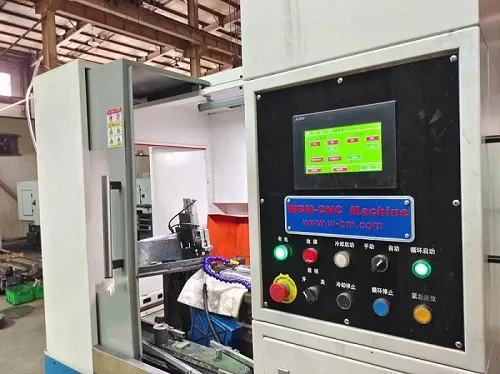
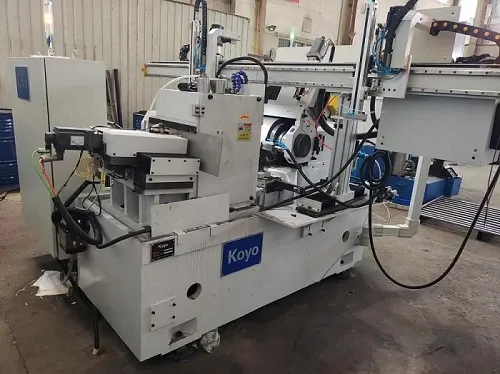
Henan Weichuang Bearing Technology Co.,Ltd successfully finished the development of taper roller with hole in the center. Heat treatment was done by case harden. This kind of roller widely used in wind turbines bearing or special industries bearing. New energy bearing brings a new increase point in bearing market. Weichuang purchase two plug in type centerless grinder and one plug in type honing machine. Expand the taper rollers production capacity, now can supply roller diameter from 5 to 80mm.
1. Following are the honing machine to produce taper roller.
2. Following are the plug in type centerless to produce taper roller.
3. Following is the video of the new product.