Bearings are the core basic components, and the bearing industry is a national strategic industry that plays an important supporting role in the development of the national economy and defense construction. Since the founding of the People's Republic of China, especially since the continuous and rapid development of the reform and opening up, China's bearing industry has formed an independent and complete industrial system. China has become the third largest bearing production country in the world in terms of sales and output. And move towards becoming a world bearing powerhouse. During the 13th Five Year Plan period, many enterprises in China's bearing industry worked hard, overcame difficulties, and went against the trend to maintain stable and rapid development of the entire industry, laying a good foundation for building a world bearing power.
In 2022, there were over 1300 enterprises above designated size in the entire industry, with a main business revenue of 223.2 billion yuan and a bearing production of 21.2 billion sets. In 2022, China's cumulative export earnings amounted to 7.255 billion US dollars, imported bearings accounted for 4.564 billion US dollars, and imported 2.721 billion sets of bearings.
China is already a major producer of bearings in the world, but it is not yet a world bearing powerhouse. There is a significant gap between its industrial structure, research and development capabilities, technological level, product quality, efficiency and benefits and the international advanced level. There are nearly 10000 domestic enterprises related to bearings and bearing products, of which the proportion of mid to low end products is over 80%. Among the global high-end bearing market capacity, Chinese enterprises only account for 5%.
1. Rollers are a key link in the bearing industry chain
Roller bearings are an important type of rolling bearing products, including cylindrical roller bearings, cylindrical roller bearings, and self-aligning roller bearings. The size range mainly includes large, extra large, and heavy-duty bearings, which are mainly used in the host industries such as construction machinery, metallurgy and mining, automobiles, high-speed rail, and wind power. Rollers are key components of roller bearings, and their accuracy, performance, lifespan, and reliability have a significant impact on the accuracy, performance, lifespan, and reliability of complete sets of bearings. Therefore, roller manufacturing is a key link in the bearing industry chain. Due to limitations in technology and equipment capabilities, the bearing industry is currently unable to mass produce Grade 0 and Grade I precision rollers. Whether from the perspective of independent matching of high-end bearings or the safety and controllability of the bearing industry chain, the manufacturing of precision rollers is not compatible with the development requirements of roller bearings, and has become a bottleneck for supporting major equipment such as high-end bearings.
According to the statistical report, the import volume of bearings in China from January to December 2022 was 2720775600 sets, with a foreign exchange consumption of 3686268600 US dollars. Among them, the import quantity of cylindrical roller bearings and tapered roller bearings was 144141400 sets; Accounting for 5.3% of the national import volume of bearings; Imported foreign exchange for cylindrical roller bearings and tapered roller bearings: 1219.2722 million US dollars; 33.07% of the total foreign exchange used for bearing imports in the country; It can be seen that the proportion of imported cylindrical and tapered roller bearings is relatively high, indicating that the added value of imported roller bearings is high and belongs to high-end precision bearings. That is to say, there is still a considerable amount of high-end precision roller bearings in China that need to be imported, such as wind turbine spindle bearings.
Since the 13th Five Year Plan, the bearing industry has attached great importance to the research and manufacturing of rollers, especially in the first two years after the launch of the 14th Five Year Plan. Many enterprises have made certain progress by introducing and digesting advanced roller grinding lines, and actively supporting high-end hosts.
Research institutions and universities in the bearing industry, targeting enterprises and focusing on difficulties, have continuously explored the field of ultra precision machining and equipment for tapered roller convexity, and completed the National Natural Science Foundation of China general project; The research on the mechanism and laws of the through type ultra precision training of tapered roller convexity has achieved scientific research results. The key technology of the through type ultra precision research of tapered roller convexity has won the second prize of the China Machinery Industry Science and Technology Award and correspondingly obtained a national invention patent.
Starting from meeting the demand for high-end bearings, equipment manufacturing enterprises establish fully automatic roller production lines through equipment research and development, gradually forming a fully automated operation from processing to packaging;
The leading roller production enterprise self funds to introduce advanced production lines from abroad, adheres to the combination of introduction and digestion, and explores the path of improving roller performance that suits its own characteristics based on the actual situation of the enterprise.
2. Current situation and existing problems of roller production in China's bearing industry
(1) At present, the main professional manufacturers of rollers in China's bearing industry are:
a. Jiangsu Lixing Steel Ball Co., Ltd. has newly introduced roller production lines from Italy and Germany, and currently has 12 production lines. Produce tapered rollers with a diameter of 6mm to 80mm and cylindrical rollers with a diameter of 20mm to 80mm. The monthly production capacity reaches 1050 tons/month, and the annual production capacity is 12680 tons/year.
At present, tapered rollers with a diameter of less than 25mm have the production capacity for batch I and II grade rollers, and the production ratio of I and II rollers is executed according to the customer's drawing requirements. At present, Grade I rollers account for 25%. The products currently produced by cylindrical rollers are mostly wind power products, mostly G1A grade, accounting for 80%, while the supply of railway cylindrical rollers is mostly G1 grade, accounting for 20%. The tapered rollers produced are mainly used in wind power, heavy trucks, rail transit, commercial vehicles, etc.
b. Zhejiang Wuzhou Xinchun Group Co., Ltd. has been producing cylindrical rollers for wind power variable pitch bearings and some tapered rollers for main shafts since 2019. Its main production equipment is domestically produced, but the surface profile and heat treatment process have been optimized technically (three new salt bath furnace lines have been added). The number of tapered rollers for wind power main shaft bearings is about 60000 per month, and most of the products have reached or are close to Level I precision. The number of cylindrical rollers for variable pitch bearings is about 1.5 million per month, which basically meets the quality requirements of bearing products. With the increase in the number of wind power bearings, it is also continuously upgrading and building production lines to expand production capacity.
c. Shandong Dong'a Steel Ball Group Co., Ltd. has also been producing cylindrical and tapered rollers since 2009, with cylindrical rollers capable of producing precision of 0; Grade I and II rollers. Cylindrical rollers are mainly grade II or above. Conical rollers can produce precision grade II and III rollers, with some projects reaching grade I precision. Grade III rollers account for about 60%, while the rest are Grade II and I. The advanced British Taylor roundness tester is now introduced and controlled according to Schaeffler's roundness and waviness judgment standards. The appearance generally adopts intelligent automated detection equipment, and AI vision technology is introduced to achieve efficient, stable, and accurate detection of roller surface defects. This has laid a solid foundation for the export of high-end equipment and roller parts.
d. Wafangdian Weiyuan Rolling Element Manufacturing Co., Ltd. mainly produces medium and large cylindrical, spherical, and tapered rollers, which are used as supporting bearings for rolling mills, mining metallurgy, and wind power. Some of them are exported to European and American markets, with an annual production capacity of about 10 million pieces, of which cylindrical rollers and spherical rollers account for more than 85%.
e. Ningbo Haiyat Roller Co., Ltd. currently has an annual output of 120 million cylindrical rollers and 936 million tapered rollers (with an export proportion of about 35%). It has 4 cylindrical roller production lines and a production capacity of 73 million cylindrical rollers in 2022; There are a total of 33 tapered roller production lines with a production capacity of 572 million pieces in 2022, including 15 medium-sized tapered rollers with an annual production capacity of 114 million pieces and 18 small tapered rollers with an annual production capacity of 458 million pieces; The annual output is about 640 million pieces, with the domestic market share ranking first in the country. Currently, most of the cylindrical and tapered rollers produced meet the technical requirements of Class II rollers. The accuracy of most products is similar to the requirements of Class II rollers.
There are also professional roller production factories such as Xinchang Chengben, Ningbo Rongcheng Huasheng, and Luoyang Hongsheng that produce cylindrical and tapered rollers. In addition to professional manufacturers, major bearing manufacturers such as Wazi, Luozi, Renben, Tianma, Gansu Hailin Zhongke, Xiangzhou, Northwest Axis, Daye Axis, and Luoyang Xinqianglian also produce cylindrical and tapered rollers themselves, which can basically meet the current market demand. Of course, these bearing manufacturers also need to purchase high-precision rollers from some major rolling element manufacturers.
From the above situation, the current production situation of cylindrical and tapered rollers in China's bearing industry is mainly dominated by Grade II and III rollers, accounting for about 80%, Grade I rollers accounting for about 5%, and Grade 0 rollers accounting for less than 5%.
There is a certain gap between domestic roller manufacturing equipment and the international advanced level, but in recent years, domestic roller equipment manufacturers have achieved certain results in equipment development based on learning from advanced foreign equipment. For example, the successful development of high-speed roller cold heading machines, roller CNC centerless grinders, roller CNC ball surface grinders, roller ultra precision machines and other equipment has improved the technical level of domestic roller equipment. Domestic roller inspection equipment, especially visual inspection equipment, has already been comparable to or surpassed foreign equipment, such as online appearance inspection of rollers. Domestic produced equipment has far surpassed Europe, America, and Japan in market share.
However, compared with the high-end bearing matching demand in the host industry, there is still a certain gap in the performance indicators of rollers at the current stage. The effective breakthrough of this bottleneck requires the joint efforts of knowledgeable people in the industry, technological progress and transformation upgrading of bearing parts enterprises, and close cooperation between bearing production enterprises and roller manufacturing enterprises. Breaking through this bottleneck has become an important key link for China's bearing industry to promote transformation and upgrading from large to strong.
(2) There are problems
a. Technical indicators cannot meet the requirements
The national standards of the People's Republic of China GB/T25767-2010 "Conical Rollers for Rolling Bearings" and GB/T4661-2015 "Cylindrical Rollers for Rolling Bearings" clearly define the parameters and accuracy indicators for conical rollers and cylindrical rollers.
However, the current manufacturing level of the industry is constrained by various conditions, and Chinese bearing enterprises can only mass produce G2 grade cylindrical rollers and III grade tapered rollers, which cannot meet the matching requirements of high-end bearings. Starting from the need to develop high-end bearings, the quality level of bearing roller technology must reach: the ability to mass produce G1 grade cylindrical rollers, I grade tapered rollers, and II grade spherical rollers.
b. In terms of materials
The quality of bearing steel materials plays a crucial role in the machining quality, service life, and reliability of bearing products. With the introduction of advanced technology and equipment, the smelting level and metallurgical quality of bearing steel in China have reached a new level, reaching or approaching the advanced level of foreign countries in some technical and quality indicators. However, there is still a significant gap between the overall quality level and that of developed countries, manifested as:
1) In terms of standards
In the current bearing steel material standards, the quality of carbide particle size and distribution status is specified.
The lack of content in the control situation results in significant differences in the size and distribution of carbide particles between foreign countries, which is also a major reason why the service life and reliability of bearing products in China are lower than similar foreign products. In addition, the inspection and rating methods for non-metallic inclusions in "High Carbon Chromium Bearing Steel" (GB/T18254) currently have certain limitations for low oxygen and high purity bearing steel, and cannot accurately evaluate non-metallic inclusions in bearing steel. Other inspection methods have been adopted for rating in foreign countries. Therefore, only by making breakthroughs in the above aspects can the quality of bearing steel and bearing products in China be improved. The raw material of high carbon chromium bearing steel rollers with a diameter greater than 60mm does not have a requirement for mesh carbides in GB/T18254, which makes it difficult to control the heat treatment microstructure.
2) The metallurgical quality stability of bearing steel is relatively poor.
The oxygen content in the production of bearing steel in our country has approached the level of advanced countries in the production of bearing steel abroad. However, the particle size and distribution of non-metallic inclusions in bearing steel are very uneven. Some fields of view have no non-metallic inclusions at all, while others have a large number of them. Point like non deformed inclusions not only have a high probability of appearing, but also have a large particle size.
The plasticity of raw materials, stability of chemical element composition, purity, and particle structure are currently the bottleneck factors that constrain the development of our roller industry, and also limit the service life of bearings.
c. The gap between China's bearing roller technology level and the international advanced level is highlighted in the bearing roller process equipment.
At present, foreign processing is mainly based on wire arrangement, while domestic bearing roller processing mostly adopts single machine, multi process, and multi-step processing. Some processing machine tools have poor accuracy and stability, and the processed bearing rollers have problems such as large dimensional dispersion, inconsistent geometric accuracy, and instability, resulting in inconsistent bearing states and unstable service life. Among them, roller forming is adopted by large bearing companies in China, just like in foreign countries, using cold heading forming. However, the cold heading equipment used is outdated compared to foreign countries (multi station cold heading machines), and the applicable roller size is much smaller.
With the gradual improvement of basic manufacturing level, the manufacturing and imitation capabilities of domestic roller processing equipment have been enhanced, and compared with foreign countries, they are at a different level. The design principles of machine tools, as well as the materials and processing techniques used, still constrain the performance of equipment. At the same time, auxiliary machining equipment for repairing and grinding fixtures is also one of the main factors limiting the performance of machine tools. Domestic equipment manufacturers are still more concerned about how machine tools can achieve grinding functions, and the protection of machine tool service life has not yet been put on the design agenda. Currently, modular assembly of domestic machine tools has not been achieved, which cannot guarantee equipment accuracy.
Due to the lack of breakthrough development in digesting, absorbing, and innovating imported equipment, it is impossible to stably produce high-precision rollers of grade 0 and grade I for high-end bearings in bulk.
1) Production process route of cylindrical rollers:
Cold heading - Soft channeling - Soft grinding outer diameter - Soft grinding end face - Heat treatment - Shot blasting - Polishing - Connected production in the hard grinding workshop - Coarse grinding outer diameter - Double end face 1- Fine grinding outer diameter - Double end face 2- Polishing/end face precision grinding - Final grinding 1- Final grinding 2- Ultra precision - Cleaning - Optoelectronic appearance inspection - Sorting - Oil coating - Packaging.
2) The main equipment includes: cold heading machine, finishing machine, outer diameter grinder, end face precision grinding machine, and ultra precision machine.
3) Conical roller processing technology:
Cold heading - Soft channeling - Soft grinding outer diameter - Soft grinding end face - Heat treatment - Shot blasting - Light decoration - Connected production in the hard grinding workshop - Grinding outer diameter (coarse grinding, fine grinding) - Grinding ball base surface (coarse grinding, fine grinding) - Final grinding outer diameter (1-3 times) - Ultra precision outer diameter - Cleaning - Appearance inspection (photoelectric, manual) - Oil coating - Material coding - Packaging.
The main equipment includes cold heading machines, outer diameter grinders, and ball surface grinders. Among them, there are many forms of ball surface grinding, mainly disc grinding and generating method grinding. The generating method grinding has slightly higher relative accuracy, but lower efficiency, and is suitable for larger rollers. Of course, there are other grinding methods as well. Roller outer diameter ultra precision machine, cleaning equipment, photoelectric appearance inspection, oil coating packaging, etc.
Roller multi station cold heading machine
The imitation Su roller cold heading machine that has been used for many years is very outdated and must be completely eliminated. The introduced roller multi station cold heading machine has high processing accuracy and efficiency, but it is expensive and most enterprises cannot afford to purchase it. In recent years, some domestic equipment manufacturing enterprises have made great efforts in digesting, absorbing and innovating the introduced roller multi station cold heading machines, achieving certain progress, but there is still a big gap with the international advanced level.
Roller cylindrical grinder
The technical characteristics of the imported high-precision CNC roller cylindrical grinder, such as servo CNC, rigid support of grinding wheel and guide wheel, large diameter and wide grinding wheel, large diameter and wide guide wheel, application of combined grinding wheel, dual servo interpolation and automatic compensation of grinding wheel, and self repair of guide wheel on machine, have been deeply studied, digested, absorbed and innovated, and high-precision CNC roller cylindrical grinder with international advanced level has been developed and applied.
Roller outer circle ultra precision machine and specialized ultra precision guide roller grinder
Conduct in-depth research on the technical characteristics of the imported high-precision roller outer circle CNC ultra precision machine, such as the application of large-diameter and wide ultra precision rollers, large reciprocating and small oscillation oscillators, digest, absorb and innovate, and develop and apply high-precision roller outer circle CNC ultra precision machines that have reached the international advanced level.
Research and development of a specialized ultra precision guide roller grinder, which forms a special profile for roller support after grinding, allowing the rollers to achieve the required logarithmic curve convexity or profile through ultra precision.
Roller ball surface grinder
At present, various types of roller CNC ball surface grinders imported from multiple countries have high machining accuracy but low machining efficiency, while others have high machining efficiency but low machining accuracy. We should conduct in-depth research on various types of ball surface grinders introduced, learn from others' strengths, focus on independent innovation, and develop roller CNC ball surface grinders that are suitable for China's national conditions, with high processing accuracy and efficiency, and good cost-effectiveness.
Online roller appearance automatic detection and non-destructive testing equipment
At present, domestic testing instruments are relatively backward, while foreign testing equipment keeps up with the times and relies more on computer-controlled judgment. However, mature and basic online testing technologies and equipment in China are not widely used, and many still rely on manual appearance inspection, which affects production efficiency and product quality.
Roller Grinding Ultra Automatic Production Line
At present, most professional roller manufacturers or bearing factories in China have upgraded their equipment in recent years and installed many roller grinding super automatic lines. However, due to the accuracy problems of the equipment itself, most of them have long connecting lines, occupy a large area, and affect the production efficiency and product quality of rollers.
Digital testing instruments
Develop specialized digital instruments and equipment for comprehensive testing of the main technical indicators of roller rolling surfaces, ball base surfaces, end face cavities, and chamfers.
However, there is a significant gap between the performance stability and accuracy retention of the equipment, as well as the connection technology and system integration capabilities, and the international advanced level. In particular, there has been no breakthrough in the introduction, digestion, absorption, and innovation of key equipment for roller processing, which has resulted in the inability to stably mass produce Class I cylindrical rollers and Class I tapered rollers for high-end bearings.
3. Development goals and main measures
(1) The market for bearing roller technology in the coming years
Roller bearings are an important structural type in rolling bearings and one of the important components of high-end bearings. It plays an irreplaceable role in the field of large machinery and heavy loads. Especially in the industries of high-speed railways, shield tunneling machinery, and wind power generation, the demand for the localization of roller bearings is becoming increasingly urgent. The development level of bearing rollers is not only related to the high-end breakthrough of bearing industry products, but also to major issues such as the safety and controllability of the host industry chain. According to the "14th Five Year Plan" for the development of the national bearing industry by 2025, the development goal is to produce 25 billion sets of bearings and generate sales revenue of 250 (2237-2583) billion yuan. It is expected that the total global demand for bearing products will reach 150 billion US dollars by 2025, including a total demand for rollers of 15 billion US dollars.
According to the statistics of 111 enterprises in the bearing industry in 2021, the output value of roller bearings (here referring to cylindrical and conical) accounted for 19.27% of the total bearing output value in 2021. Especially for high-end roller bearing bearings that are matched with key engines, their corresponding tolerance level requirements are also Level I or even Level O. Here are a few key areas in the roller bearing market in the past one or two years:
a. Main bearing of shield machine cutterhead system
The bearing requirements for shield tunneling machines are relatively high. The cutterhead is a key component of shield tunneling machines and plays an important role in the process of tunnel excavation. The main bearing in the cutterhead system is the core component that transmits excavation power and motion. It bears enormous axial forces, overturning moments, and certain radial forces during operation, and its performance, lifespan, and reliability directly affect the construction progress, safety, and excavation mileage of the shield machine.
The annual demand for main shaft rollers of shield tunneling machines is about 140 million yuan. The demand for shield tunneling machines in domestic subways is about 2000 units, with an annual demand of about 400 units (including about 300 domestically produced units). There are also more than 1800 shield tunneling machines in service in China, and the main bearings of these machines need to be repaired and replaced after exceeding their design lifespan. The main shaft of shield tunneling machine has two major values, with a set price of about 3 million yuan. It is expected that the annual demand for main shaft bearings of shield tunneling machines will reach 400 sets, about 1.2 billion yuan, with rollers accounting for 10-15%. Calculated at 12%, the annual market demand for main shaft rollers of shield tunneling machines is about 140 million yuan.
b. Wind turbine main shaft bearings and gearbox main shaft bearings
At present, the localization rate of wind turbine main shaft bearings is 33.0%, basically 3.0 MW and below. The bearing industry has just entered this field and needs to increase efforts in technological research and market development. The localization rate of gearbox bearings is only 0.58%, and the localization rate of generator bearings is only 0.2%. It should be said that the bearing industry has not truly crossed the threshold of these two fields. Wind turbine main shaft bearings and gearbox bearings are mostly cylindrical roller and tapered roller bearings, with precision requirements of P5 level or above. Most of them still rely on imports, and the accuracy of rolling elements and the shape of busbars are also one of the main reasons affecting bearing accuracy. Fortunately, there has been progress in the research and development of high-power wind turbine main shaft bearings, and the technical optimization of wind turbine rollers mainly relies on the third tier. The competitive landscape of the roller market is divided into four tiers. The first tier consists of foreign brands with strong technical capabilities, which can be self-made but have high costs. Some companies have started domestic procurement; The second gradient is for domestic leading bearing enterprises, which can produce roller matching company spindles, gearboxes and other products, but the cost of rollers accounts for 10-15% of the total cost of bearings. However, roller research and development investment is large, and the equipment is not matched with bearing rings and other equipment. Therefore, the investment efficiency and investment enthusiasm of domestic leading bearing manufacturers are not high; The third tier is professional roller production factories, with efficient investment in roller research and development. The fourth tier is ordinary industrial bearing roller factories, which are small in scale and large in quantity, with over 1050 domestic factories. The process technology cannot meet the technical requirements of first and second level rollers.
The domestic roller technology has reached the international leading level, accelerating the process of replacing large MW imported rollers. Wuzhou New Year and Lixing can supply wind turbine rollers with a capacity of over 4MW, accelerating the localization process of large megawatts.
The difference in size between rollers and rings is significant, and domestic bearing manufacturers have low enthusiasm for improving roller technology. The roller size of wind turbine bearings ranges from 15-30cm, and the diameter of the wind turbine bearing ring exceeds 1m. However, this size difference is significant, and equipment cannot be shared in the heat treatment and grinding processes. In addition, the contour line processing and grinding process of wind turbine rollers require high requirements, and enterprises need to invest a lot of research and development energy. In the future, the domestic wind turbine roller market is expected to be mainly monopolized by professional roller factories.
c. High speed EMU bearings
The performance requirements for high-speed train bearings are high. At present, most of the high-speed rail bearings in China are imported from abroad. High speed trains CRH1 and CRH5 use SKF bearings, high-speed train CRH2 uses NTN and NSK bearings, and high-speed train CRH3 uses FAG bearings. High speed railway bearings mainly work under high-speed and heavy load motion conditions, with extremely harsh service conditions and high requirements for bearings. Taking CRH5 as an example, the average estimated bearing capacity of each set of shafts is about 68.7kN, the rolling element load is about 7.6kN, the contact stress between the inner race raceway and the rollers is about 810MPa, and the bearing speed is about 1730 r/min.
High speed rail bearings serve as a replacement market for existing stock. For bearings with operating speeds not exceeding 200km/h, the warranty period is 900000 kilometers (or 4 years). Bearings with operating speeds exceeding 200km/h undergo regular maintenance and must be scrapped after 2.4 million kilometers. There is nearly 700 million market space for high-speed rail bearing rollers.
d. Other high-end roller bearings such as urban rail transit subway bearings, machine tool shaft bearings, and heavy-duty truck hub bearings also have a large market.
(2) Development Goals
At present, there is still a significant gap between the technological level of bearing rollers in China and the international advanced level, with certain gaps in bearing steel, processing equipment, production processes, testing instruments, and management. In order to reduce the gap as soon as possible, China must increase its investment in scientific research in these areas, so that the bearing industry in China can upgrade from quantity to quality as soon as possible, and solve the problem of long-term dependence on imported high-end bearings.
According to the "14th Five Year Plan" for the bearing industry, the development goal is to "adhere to problem orientation, use technological innovation as a means, optimize the process route, start with improving product quality, fill in the development gaps, and steadily improve the product performance of bearing rollers through the comprehensive application of technology, talent, management and other measures, meet the needs of high-quality development in the bearing industry, and meet the strategic requirements of high-end bearing supporting major equipment.
(3) Main measures
a. Increase support efforts
The whole industry should deeply understand the importance of bearing rollers in the host industry chain, and examine the improvement of the manufacturing level of bearing rollers in the context of advanced industrial foundation and modernization of the industrial chain, and recognize it in the important position of safe and controllable industrial chain. The country should further increase its attention and support for mechanical basic components, including bearings and rollers. Especially for independent innovation, research and production that replaces imports should receive necessary policy and financial support. Prioritize the approval of major national scientific research projects and focus on breakthroughs in organizational strength.
b. Optimize manufacturing mode
The bearing rollers have multiple technical indicators, high product accuracy, and specialized production, with both technology intensive and labor-intensive characteristics. Encourage enterprises to improve their manufacturing processes and optimize their manufacturing models based on their own characteristics. Through 3-5 years of effort, 2-3 leading bearing roller enterprises with certain influence in the bearing industry and product technical indicators reaching the international advanced level should be formed within the industry. At the same time, we should also encourage leading enterprises in the bearing industry to establish their own bearing roller factories, establish their own product industry chains, and meet the supporting needs of their own products. By implementing the plan of walking on two legs, we can achieve complementary advantages and promote the sustainable development of bearing roller manufacturing together.
c. Establish an innovation system
Innovation is the core driving force for industry development. Each department should encourage colleges and research institutions to increase their research on the application of bearing roller foundations, and use innovative thinking to solve difficult problems in enterprise technological innovation. Actively support bearing roller manufacturing enterprises to establish national level enterprise technology centers, establish enterprise technology innovation platforms, and continuously cultivate new driving forces. Deploy innovation chains around the industrial chain and layout the industrial chain around the innovation chain. Effectively integrate the industrial chain and innovation chain.
d. Accelerate talent cultivation
The competition in the market ultimately boils down to the competition for talent, and the core of talent competition is education. We should strengthen the cultivation and training of professional talents in bearing rollers through various forms, adopt the method of inviting in and going out, and enable enterprises to communicate with experts from higher education institutions. By establishing academician workstations and postdoctoral workstations, we can enhance the communication and interaction between front-line technical personnel and expert learners, allowing experts to discover problems on the front line and solve problems for the front line. Through the establishment of the "Bearing Roller Manufacturing Technology and Application Special Class" by the Human Resources Committee of the China Bearing Industry Association, relying on Henan University of Science and Technology, we aim to explore the cultivation of bearing roller technology talents, with the goal of forming a talent pool for rolling elements in the bearing industry that integrates theory with practice.
e. Benchmarking advanced technology
Targeting the technical indicators and service life of high-end bearing rollers abroad, comparing product accuracy and performance, grasping key links, and striving to achieve breakthroughs; Compare the bearing rollers processed by domestic and imported machine tools, identify weaknesses, identify problems, and develop targeted solutions. Take GB/T25767-2010 "Conical Rollers for Rolling Bearings" and GB/T4661-2015 "Cylindrical Rollers for Rolling Bearings" as the basic requirements for production enterprises, improve process specifications and testing methods, and achieve the transformation and upgrading of bearing roller manufacturing.
f. Enhance the capability of process equipment
Sharp tools make good work. For a long time, there has been a significant gap between domestically produced roller specialized equipment and the international advanced level, which has hindered the improvement of roller technology quality. To upgrade roller products, equipment must take the lead.
1) Cold heading process and equipment
Cold heading, as a preceding process in the manufacturing of bearing rollers, has a significant impact on the machining efficiency and quality level of the rollers. Try to organize relevant units and departments to analyze and compare the existing single station, double station and multi station cold heading processes and equipment, and integrate progressiveness, practical, economical and other factors to gradually eliminate single station, popularize double station and advocate multi station in the application of cold heading technology. Taking the optimization of cold heading technology as the starting point, we will develop a roller multi station cold heading machine that is suitable for China's national conditions, with processing accuracy and efficiency reaching the international advanced level, and has low cost and subsequent usage. We will launch it on the market, forming an advanced, practical, and reliable bearing roller cold heading technology based on process equipment, and promoting the roller forming process and equipment level of China's bearing industry to reach the international advanced level.
2) Roller cylindrical grinder
In recent years, China has successively introduced high-precision CNC grinding machines from abroad for processing rollers. Some equipment manufacturers have made initial attempts to digest, absorb, and innovate these imported devices. On this basis, domestic equipment manufacturers need to further conduct in-depth research on roller grinding processing technology and equipment, so as to effectively improve key indicators such as the feed performance of CNC servo systems, the grinding and dressing performance of grinding wheels and guide wheels, and the stability of machine tool processing. Develop high-precision CNC roller cylindrical grinding machines that have reached international advanced levels.
3) Roller outer circle ultra precision machine and specialized ultra precision guide roller grinder
Through in-depth research on the technical characteristics of the imported high-precision roller outer circle CNC ultra precision machine, we aim to digest, absorb, and innovate, and independently develop high-precision roller outer circle CNC ultra precision machines that have reached the international advanced level; Conduct in-depth research on roller shaping technology and equipment, develop specialized ultra precision guide roller grinding machines, and explore effective ways to improve the service life of rollers in practice.
4) Roller ball surface grinder
In depth analysis is conducted on the characteristics of various types of roller CNC ball surface grinders introduced from multiple countries, and the focus is on independent innovation to develop roller CNC ball surface grinders that are suitable for China's national conditions, with high processing accuracy and efficiency, and good cost-effectiveness.
5) Online testing and non-destructive testing equipment
Promote the application of online roller photoelectric appearance automatic detection and non-destructive testing equipment that is leak free, error free, efficient and reliable.
6) Roller Grinding Ultra Automatic Production Line
Integrate the advanced CNC equipment independently developed in the above list into a system with automatic processing means, automatic detection function, automatic feedback mode, and automatic statistics mode, which can achieve automatic cleaning, oiling, packaging, and coordinated rhythm of the entire roller grinding super automatic production line. By establishing specialized manufacturing lines, we can further stabilize product quality, improve production efficiency, standardize tooling and molds, and promote the improvement of roller quality.
7) Application of surface strengthening
Develop roller surface strengthening technology and equipment that achieves international advanced level of research and application, with precise and controllable surface stress state.
In short, with the high-quality development of the bearing industry, higher requirements will be put forward for the quality of bearing rollers. I hope that through the joint efforts of the bearing industry during the 14th Five Year Plan period, the manufacturing level of bearing rollers can reach a new level and meet the supporting requirements for high-end equipment in the country.
2024 August 4th Week WBM Product Recommendation:
Quill:
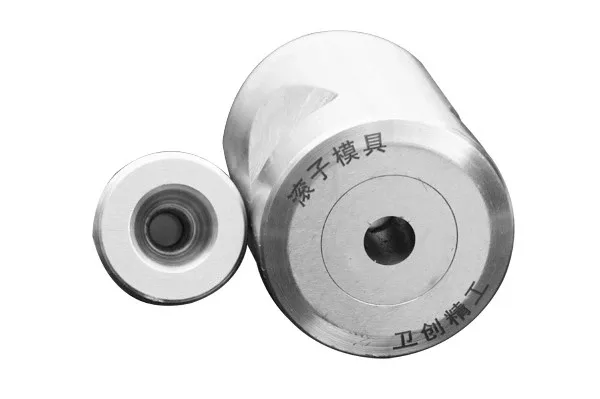
WBM produces taper roller dies with high efficiency and automation. Rollers are formed on a single automatic cold heading press and are fed, cut, and punched into the die for five steps.
We can produce different types and sizes taper roller dies with quality assurance,include:Combination Punch,Outside Sleeve,Blade,Combination Punch,Feed Cylinder,Combination Dies,Double Layer Sleeve,Insert.