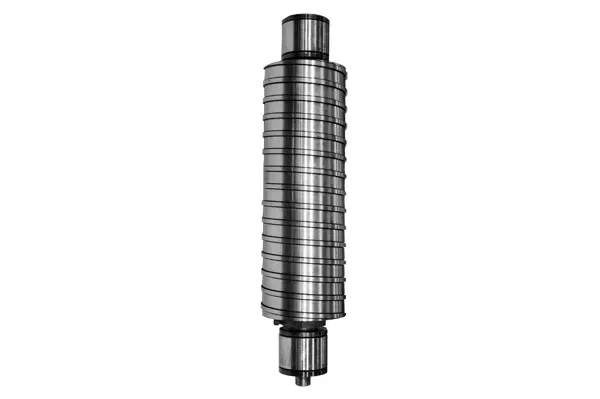
The structural characteristics of tapered roller bearings give them unique technical advantages: they have high radial load capacity comparable to cylindrical roller bearings, and can withstand both radial and axial loads like deep groove ball bearings; Roller can achieve pure rolling, with low friction coefficient, suitable for high-speed operating conditions. Therefore, tapered roller bearings are widely used in fields such as automobiles, machine tools, metallurgy, aviation, railways, engineering machinery, agricultural machinery, etc., and are the second largest type of rolling bearings after deep groove ball bearings. However, the complexity of geometry, mechanics, and kinematics in tapered roller bearings also makes their manufacturing difficult. It is necessary to strictly control the machining accuracy of the main parts such as the ring, especially the tapered roller, otherwise it will seriously affect the realization of its functional use and performance.
1 Standardization status of tapered rollers
The tapered roller is the most difficult to process in the rolling element of bearings (Figure 1), and its geometric shape is more complex than that of ball, cylindrical roller, and needle roller; The accuracy requirement is higher than that of spherical rollers. Therefore, tapered rollers are the most typical representative product in rolling elements, especially rollers.
Due to the difficulty in unifying the internal structural design parameters of tapered roller bearings among different enterprises, the standardization level of tapered rollers is relatively low. Unlike cylindrical rollers and needle rollers, which already have international and national standards for size specifications, it is difficult to organize mass production. At the same time, each type of roller requires a large amount of high cost investment in labor, cards, quantities, and molds, which greatly hinders its technological progress.
China is currently the only country in the world that has specifically formulated industry standards for tapered rollers (Japan only lists simple content as a reference in the appendix of JIS B1506:2005 Rolling Bearing Rollers). However, in the industry standard JB/T 10235-2001 "Technical Conditions for Conical Rollers of Rolling Bearings", only corresponding tolerances, technical requirements, and other contents are specified, and the dimensional specification parameters Dw × Lw × 2 are not involved φ, As shown in Figure 2. Among them, the tolerance level of tapered rollers is divided into 4 levels, namely 0, I, II, and III, with accuracy ranking from high to low. As a general matching principle, level 0 tolerance rollers are suitable for level 2 tolerance bearings, level I rollers are suitable for level 4 bearings, level II rollers are suitable for level 5 and 6 bearings, and level III rollers are mainly used for level 0 bearings. High precision rollers are mainly used for bearings in some fields such as machine tools and high-speed railways, such as coordinate boring machine spindle bearings that require a grade of 2.
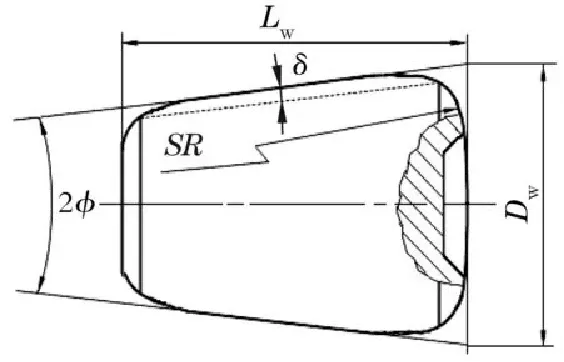
Figure 2 Main dimensional parameters of tapered rollers
Although there are no national or industry standards established abroad, many famous bearing companies and professional roller manufacturers have established internal standards. Some enterprise standards have a very wide influence, not only playing a good regulatory role in the technology and production of tapered rollers, but also promoting the commercialization of tapered rollers among enterprises and even internationally. Among them, the British tapered roller bearings led by Timken in the United States have specified the size specifications of the tapered rollers. One size specification of the roller can be interchanged and used for multiple bearing models to achieve mass production as much as possible.
2 Testing items for tapered rollers
The difficulty of machining tapered rollers is also reflected in the fact that the items that need to be controlled and inspected are the most common among rolling elements.
The testing items for the size and positional errors of tapered roller products in China's bearing industry generally include 7 items: diameter, diameter variation, length, cone angle, roundness, runout of the large end of the roller to the conical surface, surface contour shape of the roller, as well as surface roughness, appearance (cracks, etc.), heat treatment quality (such as hardness), residual magnetism, etc. But some foreign bearing companies have much more related testing projects. Taking Company A abroad as an example, it has tested over 20 items for the size and positional errors of finished tapered rollers; The schematic diagram of the shape and position error detection project for tapered rollers by foreign company B is shown in Figure 3. Only for the waviness project, 8 indicators are tested on the rolling surface and ball base surface, divided into low frequency and high frequency, radial and circumferential.
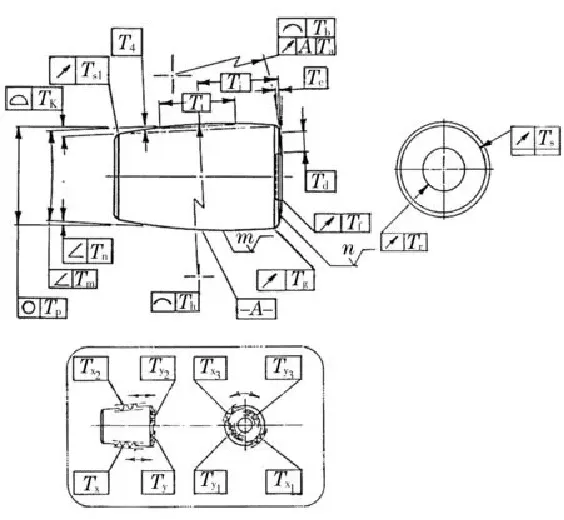
Figure 3: Inspection Items for Shape and Position Errors of Conical Rollers by Foreign Company B
3 Characteristics requirements for working surfaces of tapered rollers
In the design and processing of tapered rollers, the most important concern is the requirements for the characteristics of their working surface, namely the convexity of the rollers and the spherical base surface.
3.1 Roller convexity
From the calculation method of the basic performance parameters "basic rated dynamic load and rated life" of bearings, the applicable condition is that "the stress distribution at the contact between the roller and the raceway should be uniform". In order to ensure this condition, in addition to the inner and outer raceways that can be modified to convex, the most common practice is to have convex on the rolling surface of the roller. Especially when the required protrusion is small, the raceway can be machined according to straight lines. To reduce processes and save costs, only the protrusion is machined on the roller.
The commonly used convex shapes of rollers include full arc, arc correction line, and logarithmic curve. The comparison of the contact stress distribution formed by them under light and heavy loads with straight line rollers (taking cylindrical rollers as an example) is shown in Figure 4. It can be seen that the logarithmic curve convex roller has the most ideal contact stress distribution.
Due to the fact that roller convexity is mainly a measure taken to improve the contact stress distribution between the roller and the raceway, that is, to enhance the bearing's load capacity, it is not always the case whether the roller must have convexity when the bearing is applied to lower load conditions or other usage requirements are more important. The choice of convexity shape should also be based on different usage requirements, especially the possibility of process implementation.
(1) For applications such as light loads, stable operation, and low noise, it is advisable to use straight plain rollers.
(2) Due to the fact that in roller convexity machining, the shape of full arc convexity is the easiest to ensure (it is difficult for arc correction lines to achieve smooth transition at the intersection of arc and straight segments; logarithmic curves are also difficult to achieve at infinity on the end face), many famous foreign companies use full arc convexity for rollers (including cones and cylinders) in general applications.
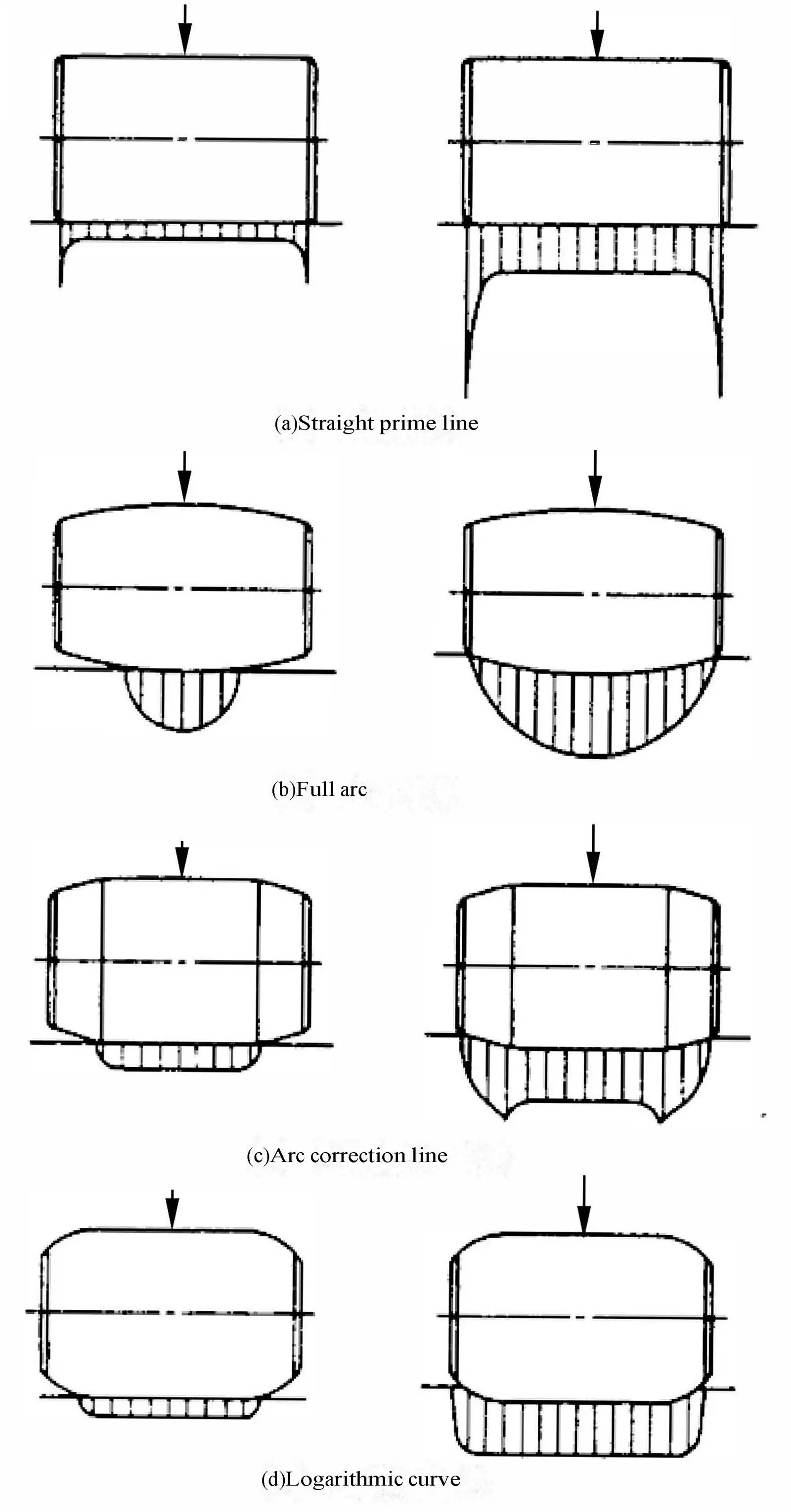
Figure 4 Roller Convexity Shape and Contact Stress Distribution
The convex shape of the arc correction line is a "correction type" choice that falls between the convex shape of a full arc and a logarithmic curve, with a wider applicability. For the selection of straight segments, it is generally 50% to 70% of the effective length of the roller. For example, a Japanese company divides arc correction line convexity rollers into two types: standard type (straight segment accounts for 60%) and improved type (straight segment accounts for 50%). Among them, the improved roller is more advantageous in adapting to eccentric loads.
Arc correction lines and logarithmic curve convexity are theoretically superior to straight lines and full arc convexity, but they are more difficult to process. If the actual machining shape error is too large, singular points of contact stress distribution will be generated at the error point, which will instead become the weak link for fatigue, wear and other failure phenomena to occur. The convex roller of a domestic enterprise's arc correction line, as shown in Figure 5, failed to achieve a smooth transition at the intersection of the arc and the straight section, resulting in fatigue peeling failure. The measured curve convexity of the logarithmic curve of a well-known foreign company's tapered roller is shown in Figure 6, which shows that it has reached a high level of processing.
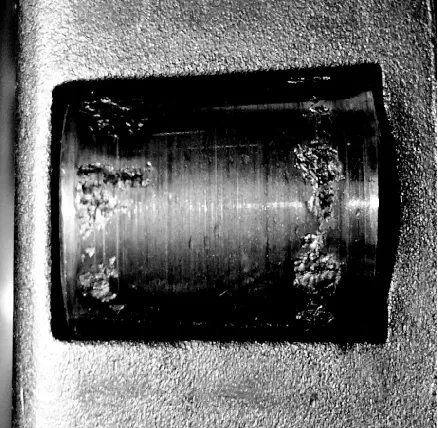
Figure 5 Example of fatigue failure of convex roller with arc correction line
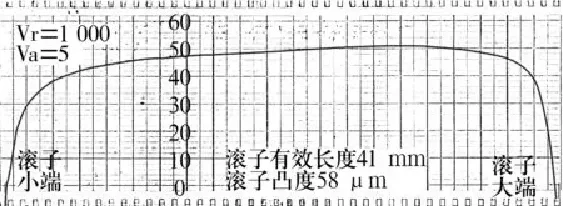
Figure 6 Measurement of the Convexity of the Logarithmic Curve of a Famous Foreign Company's Conical Roller
According to the force analysis of the structural characteristics of tapered roller bearings, the contact shape between the roller and the raceway is shown in Figure 7. As the contact stress at the small end of the roller is slightly higher than that at the large end, the convex shape should be asymmetric, that is, the convexity at the small end should be greater than that at the large end. In actual production, for convenience, symmetrical processing is often used. Whether it is for full arc, arc correction line, or logarithmic curve convexity, the method of slightly moving towards the larger end direction with the effective length center of the roller as the coordinate origin can be adopted to achieve different convexity measures at both ends of the roller.
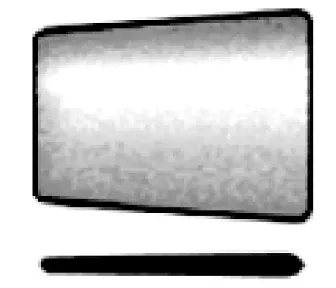
Figure 7 Contact Shape of Conical Roller
(6) Convexity machining method. Ordinary rollers generally use grinding as the final machining, while high-precision rollers should use ultra precision machining as the final machining (if the convexity is small, such as below 0.005 mm, direct ultra precision machining can be used; if the convexity is large, it can be "ground first and then exceeded").
(7) After the roller is processed with convexity, the roundness error of the convexity part generally deteriorates. If used for low-noise bearings, the roundness error of the convex part of the roller should be controlled.
3.2 Roller ball base surface
When the tapered roller bearing is in operation, the force state of the tapered roller is shown in Figure 8, that is, the large end face of the roller will naturally lean against the large inner ring edge due to the effect of the raceway and the cone angle of the roller. Therefore, the large end face of the roller is also another important working surface of the tapered roller. The motion form between the large end face of the roller and the large edge of the inner ring is sliding. In order to ensure effective lubrication under relatively unfavorable motion conditions, the large edge of the inner ring is usually designed as a spherical, inclined, or slightly convex surface. After experimental research and comparison on various types of surfaces such as spherical, inclined, and conical surfaces, spherical surfaces are basically the best choice for the large end face of the roller. Therefore, the large end face of tapered rollers is commonly referred to as the "spherical base surface".
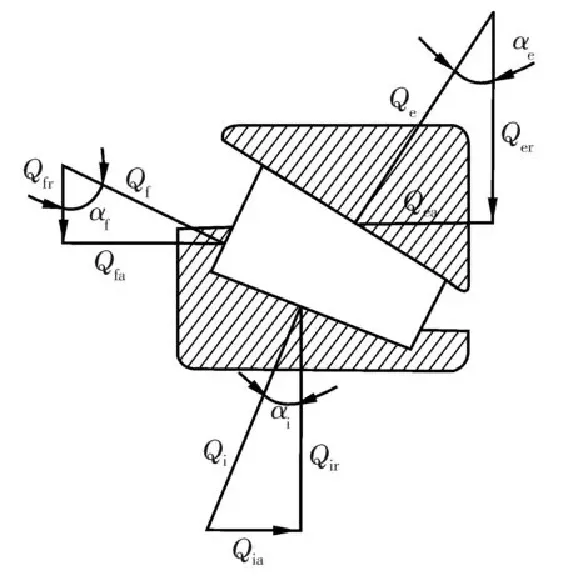
Figure 8 Force state of tapered rollers
The radius of the spherical base is generally taken as 0.95 (or 0.96) of the length of the cone top. At this point, the shape of the contact point is an ellipse, which helps to form an elastic fluid dynamic lubricating oil film and has lower contact stress and better anti skewing ability. Some foreign companies, in order to adapt to different usage conditions, have a wider range of values for the radius of the spherical base, and can even take 0.75-0.96 of the length of the cone top.
The final processing of the ball base surface is grinding, so the surface roughness is difficult to reach the level of ultra precision like the diameter surface. Using a combination resin grinding wheel for through grinding, the surface roughness Ra can reach 0.125 μ Below m, the best level can reach 0.08 μ About m.
4 The problems and solutions of tapered rollers in China
Due to the relatively backward processing equipment and technology, most enterprises in China still rely on single machines or simple production lines. There are many processes and many links are mainly manually operated, resulting in large differences in processing accuracy and poor product quality stability. Therefore, they have always been at a relatively low level. Only Class III rollers can be mass-produced; Part of them can produce Grade II rollers; Grade I and grade 0 rollers are basically unable to produce stably. The main problems that exist include: diameter variation and surface roughness of conical surfaces, cone angle error, length variation, roundness error, convexity shape (fit of logarithmic curve convexity, smooth transition of arc correction line convexity), ball base surface runout and surface roughness, non working surface size and positional error, etc. Taking the surface roughness, roundness error, and cone angle error of circular conical surfaces as an example, the advanced levels abroad are Ra0.06-0.16, respectively μ m. 0.8 μ M (even up to 0.3) μ About m), ± 1 μ m. In China, Ra is generally between 0.1 and 0.25, 1.5, ± 2 μ M. With the advancement of technology in recent years, there have been significant improvements in diameter variation, surface roughness of conical surfaces, and ball base surface runout. However, there are still significant gaps in convexity shape, surface roughness of spherical base surfaces, cone angle error, and non working surface quality.
To solve the problems related to size and positional errors mentioned above, advanced processing equipment must first be used, and currently there is a promising development trend.
(1) Some enterprises have introduced processing equipment with international advanced levels, such as the introduction of high-speed double click cold heading machines from Sakamura Company in Japan for tile shafts; Wazhi and Luoyang LYC have introduced outer diameter and ball base grinding machines from German company Modler. The introduction of these devices not only brings advanced technology, but also greatly changes the traditional concept of tapered roller manufacturing.
(2) Puyang Beiying has developed the most advanced fully automatic conical roller grinding production line in China, which realizes functions such as automatic loading and unloading, conveying, measurement, compensation, etc., basically eliminating manual operations, achieving a processing accuracy of Class I roller level, and avoiding scratches on the roller surface; The precision tapered roller centerless grinding machine developed by Xinxiang Risheng can meet the requirements of Class II rollers with machining accuracy.
(3) The polishing machine developed by Dalian Longzheng can reduce the surface roughness of rollers by 1-2 levels and significantly improve the appearance quality by performing polishing treatment after roller grinding or ultra precision. Its polishing machine is not only used in domestic bearing enterprises, but has also been purchased and used by foreign bearing enterprises such as Timken and Schaeffler.
In addition, in response to the short service life of tapered roller bearings, and the failure of tapered rollers is the main factor, in addition to using convex rollers, especially logarithmic curve convex rollers, high-quality raw materials (such as high purity vacuum degassed steel or electroslag remelting steel), high surface quality cold drawn silver bright materials (such as peeled materials, polished materials), and advanced heat treatment technologies (such as protective atmosphere or controllable atmosphere) must be selected. This is the most critical prerequisite to avoid early failure of tapered rollers and affect the service life of tapered roller bearings.
5 Manufacturing of high-precision rollers
High precision tapered rollers are generally small-sized rollers. Taking the roller diameter Dw ≤ 25 mm as an example, to manufacture high-precision grade 0 and I rollers, the following processing equipment, process technology, and advanced concepts should generally be used.
(1) The rough forming adopts a high-speed double click cold heading machine, with silver bright material, closed forming, fewer ring belts, small reserves, and can ensure the dimensional and positional tolerance requirements of non working surfaces such as concave pits on the ball base surface, small end faces (non grinding), chamfers, etc. that will not be processed in the future.
(2) The grinding process adopts CNC machine tools, with 2-3 cycles of machining, and conventional secondary tempering, cold treatment, additional tempering, aging treatment and other measures are adopted to improve the structure and dimensional stability of the rollers.
(3) The roller cone surface must adopt ultra precision as the final machining process to achieve the required low surface roughness level and improve the quality conditions such as roundness, waviness, and grinding deterioration layer.
(4) The small end face of the roller is processed by grinding. To ensure the smooth motion of high-precision tapered roller bearings and prevent the rollers from tilting, the small guard edge of the inner ring is also ground to control the dimensional variation of the inner ring raceway. The corresponding length variation of the rollers should also be strictly required, so the small end face formed by cold forging must also be ground.
(5) Measurement methods mainly rely on instrument precision measurement. For major dimensional and positional error items and parameters, instrument precision measurement (including online measurement) is adopted; For non working surfaces such as cavities and chamfers, traditional qualitative measurements such as templates should also be shifted to quantitative measurements such as coordinate projectors and surface profilers. For example, for precision rollers used in high-speed fields, if the chamfers are not consistent or the coaxiality of the grooves is not good, the roller will experience violent fluctuations in centrifugal force during motion due to mass imbalance, leading to phenomena such as roller tilting.
(6) Crack inspection should be controlled using multiple methods. Due to the fact that roller raw materials and subsequent processes such as cold drawing steel wire, cold heading forming, and grinding are prone to producing cracks and other defects, this is the most common quality problem in roller processing. Therefore, various inspection methods such as acid washing, eddy current, and magnetic powder must be used to ensure that the rollers have no serious defects such as cracks.
(7) Roller sorting should prioritize the use of online "card segment grouping" to maintain consistency in size and positional accuracy of roller batches as much as possible, in order to meet the requirements of "random assembly" of tapered roller bearings.
(8) The processing and testing environment should be measured in a laboratory. The precision machining process and testing environment should meet the requirements of the "measuring room", with conditions such as constant temperature, humidity, cleanliness, and vibration isolation, to minimize the impact of environmental factors on the machine tool, workpiece, and testing equipment, in order to ensure the relative stability and consistency of machining and measurement accuracy.
6 Conclusion
Conical rollers are representative products with the highest machining difficulty among bearing rolling elements. To manufacture high-quality tapered rollers, especially high-precision tapered rollers, machining equipment is the top priority. Many advanced process technologies can only be achieved by relying on advanced machining equipment. At the same time, it is necessary to have a profound understanding of the technical characteristics of tapered rollers, possess advanced technical ideas and concepts, in order to clarify the direction of technological progress of tapered rollers at a higher level. With the introduction of processing equipment from abroad and independent research and development, it is believed that China's product quality and technical level of tapered rollers will definitely achieve significant breakthroughs in the near future.
2024 April 3rd Week WBM Product Recommendation:
Super finishing roll:
We have 30 years in designing and producing experience in bearings rolling elements and tooling industry with ISO9001 and IATF16949.Tooling for cold heading machine,lathe,grinder will be produced accoriding to your requirement.