Beyond their simple conical shape, taper pins are engineered marvels critical for achieving zero-play alignment in high-precision assemblies. Their fundamental principle-a consistent 1:48 taper-ensures a perfect wedging action. This creates a full 360-degree contact area within a reamed hole, resulting in a connection that is both semi-permanent and exceptionally resistant to vibrational loosening and shear forces, outperforming many standard fasteners in dynamic applications.
Advanced Materials for Demanding Environments
While standard carbon steels are prevalent, the true versatility of taper pins emerges with advanced alloys. For extreme temperature applications, such as in turbine assemblies or power generation equipment, pins made from high-temperature alloys like AISI 8620 or even Inconel are utilized for their sustained strength and creep resistance. In highly corrosive offshore or chemical processing settings, duplex stainless steels (e.g., 2205) offer superior resistance to pitting and stress corrosion cracking compared to standard 316 grades. Furthermore, non-magnetic and highly conductive copper-beryllium pins are specified for sensitive aerospace and medical instrumentation.
Precision Engineering: The Path to Perfection
The manufacturing journey is a testament to precision. It begins with centerless grinding of raw bar stock to achieve a perfect cylindrical form with a tight diameter tolerance. The critical taper is then generated not just by grinding, but often through a sophisticated centerless taper turning process, which provides an exceptional surface finish and superior concentricity. For the highest-grade pins, a secondary honing or lapping process may be employed to achieve a mirror-like finish, further minimizing friction during installation and maximizing the contact surface area for ultimate holding power.
Quality Assurance: Beyond Standard Checks
Rigorous quality control is non-negotiable. In addition to standard dimensional checks, advanced non-destructive testing (NDT) methods are employed. Fluorescent penetrant inspection (FPI) or magnetic particle inspection (MPI) is used to detect micro-surface and sub-surface defects invisible to the naked eye, ensuring structural integrity from within. For critical aerospace applications, lot traceability and full material certification down to the heat number are standard requirements, guaranteeing consistency and reliability in every batch.
Critical Applications in Modern Engineering
The unique locking mechanism of taper pins makes them indispensable in modern technology. They are crucial in the assembly of high-speed robotic arms, ensuring repeatable precision in joint connections. Within the renewable energy sector, they are used to secure massive bearings in wind turbine gearboxes, transmitting immense torque reliably. In semiconductor manufacturing equipment, their ability to provide contamination-free, precise alignment is paramount. From the joints of a construction excavator to the delicate mechanisms of a scientific instrument, the taper pin remains a fundamental, high-strength solution for when alignment and reliability are absolute priorities.
2025 October 4th Week WBM Product Recommendation:
Heading dies,Punch:
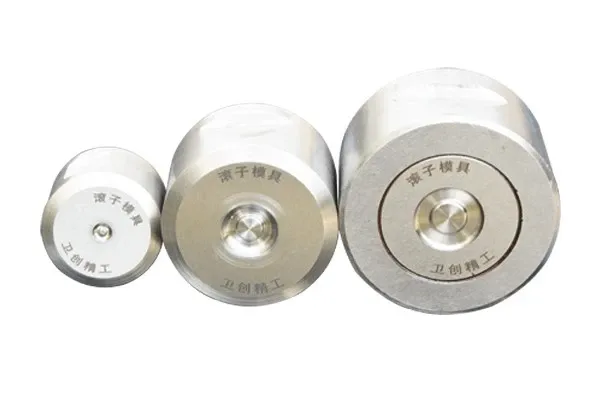
WBM produces taper roller dies with high efficiency and automation. Rollers are formed on a single automatic cold heading press and are fed, cut, and punched into the die for five steps.
We can produce different types and sizes taper roller dies with quality assurance,include:Combination Punch,Outside Sleeve,Blade,Combination Punch,Feed Cylinder,Combination Dies,Double Layer Sleeve,Insert.
https://www.w-bm.com/products/Taper-roller-cold-heading-dies/Heading-dies,Punch/400.html