Taper pins are simple yet indispensable mechanical components designed for precise alignment and secure fastening of machine parts. Their defining characteristic is a gradual, consistent diameter decrease along their length, typically standardized at a 1:48 ratio. This design allows for a tight, slop-free fit when driven into a reamed taper pin hole, creating a robust connection that can withstand shear loads and prevent relative movement between components.
Material Characteristics and Selection
The performance of a taper pin is heavily dependent on its material composition, chosen to meet specific requirements for strength, corrosion resistance, and environmental conditions.
Carbon Steel: The most common choice, carbon steel taper pins (such as grades AISI 1010, 1018, or 1045) offer an excellent balance of strength, ductility, and cost-effectiveness. They are suitable for a wide range of general industrial applications.
Alloy Steel: For high-stress applications, alloy steels like AISI 4140 or 4340 are used. These pins can be heat-treated to achieve high tensile strength and superior wear resistance, making them ideal for heavy machinery and high-impact environments.
Stainless Steel: To combat corrosion and for use in harsh environments, stainless steel grades (typically 303, 304, or 316) are employed. Their inherent resistance to rust and chemicals makes them essential in food processing, marine, and chemical industries.
Other Alloys: Specialized applications may call for brass or bronze pins, chosen for their non-magnetic properties, corrosion resistance, and good machinability, often used in electrical components or in environments where spark resistance is critical.
Surface treatments like zinc plating, black oxide, or passivation are frequently applied to enhance corrosion resistance and improve wear characteristics.
Precision Manufacturing Process
The production of high-quality taper pins involves a meticulous multi-stage process to ensure dimensional accuracy and mechanical integrity.
1. Cold Heading or Machining: The process begins with wire rods or bars of the selected material. Cold heading is a common method where wire is sheared and forged into a rough pin shape under high pressure, optimizing grain flow for increased strength. For larger diameters or specific alloys, precision machining from bar stock is used.
2. Turning and Taper Grinding: The blank is then precision-turned to achieve the basic tapered form. The critical final step is taper grinding, where the pin is ground to its exact final dimensions and surface finish using specialized grinding wheels. This process ensures the precise 1:48 taper and a smooth surface for optimal contact with the mating hole.
3. Heat Treatment (if applicable): For alloy steel pins requiring enhanced mechanical properties, heat treatment (quenching and tempering) is performed. This carefully controlled process increases the pin's hardness and tensile strength to the specified grade.
4. Surface Finishing: The final step involves applying the specified surface finish (e.g., plating, coating) to provide the required corrosion protection and aesthetic appearance.
III. Rigorous Quality Control
Ensuring every taper pin meets exacting standards is paramount. A comprehensive Quality Control (QC) regimen includes:
Dimensional Inspection: Using precision instruments like optical comparators and coordinate measuring machines (CMMs) to verify the taper angle, major/minor diameters, length, and straightness against international standards.
Material Certification: Verification of material grade through certified Mill Test Reports (MTRs) to ensure chemical composition conformity.
Mechanical Testing: Hardness testing (Rockwell or Vickers) is conducted to confirm heat treatment effectiveness and achieve specified strength values.
Surface Quality Check: Visual and microscopic inspection to detect any surface defects, such as cracks, seams, or imperfections, that could serve as stress concentration points.
IV. Diverse Industrial Applications
The unique locking action of taper pins makes them vital across numerous industries:
Aerospace: For securing critical flight control linkages, gearbox assemblies, and rotor heads where failure is not an option.
Machine Tooling: Used to align and secure gears, bearings, and tool holders to spindles with high precision, ensuring machining accuracy.
Power Transmission: Essential in assembling large gears onto shafts in gearboxes and industrial drives, transmitting high torque without slippage.
Heavy Equipment & Automotive: Employed in construction, agricultural, and mining machinery for pivot points and structural connections. Also used in precision automotive systems like steering assemblies.
General Fabrication: A fundamental component in jigs, fixtures, and for aligning structural steel members.
In summary, the taper pin is a masterclass in engineering simplicity. Its effectiveness stems from a synergy of appropriate material selection, precision manufacturing, and stringent quality control, making it a trusted solution for achieving permanent, precise, and reliable alignment in the most demanding mechanical systems.
2025 October 3rd Week WBM Product Recommendation:
Heading dies,Punch:
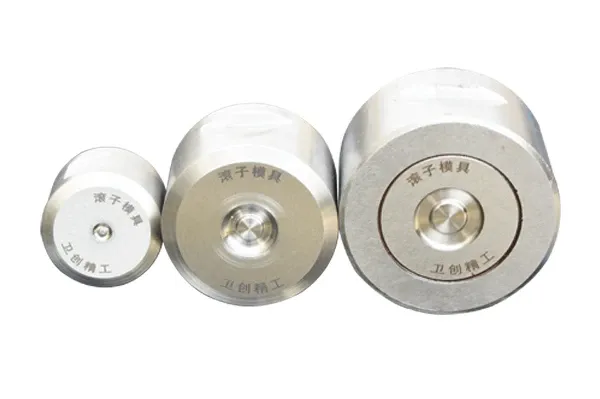
WBM produces taper roller dies with high efficiency and automation. Rollers are formed on a single automatic cold heading press and are fed, cut, and punched into the die for five steps.
We can produce different types and sizes taper roller dies with quality assurance,include:Combination Punch,Outside Sleeve,Blade,Combination Punch,Feed Cylinder,Combination Dies,Double Layer Sleeve,Insert.
https://www.w-bm.com/products/Taper-roller-cold-heading-dies/Heading-dies,Punch/400.html