Abstract: Taper pins are simple yet highly effective mechanical fasteners designed for precise location, alignment, and transmission of torque and shear loads between mating components. Their conical geometry provides a unique set of advantages that make them indispensable in demanding applications.
Material Characteristics
Taper pins are typically manufactured from high-strength materials to withstand significant shear and vibrational forces. Common materials include:
- Carbon Steel (AISI 1215/12L14): Offers excellent machinability and good strength for general-purpose applications. Often supplied with a plain or zinc-plated finish for corrosion resistance.
- Alloy Steel (AISI 4140/4340): Provides superior strength and toughness. These pins are often heat-treated (quenched and tempered) to achieve high hardness and are used in high-stress environments.
- Stainless Steel (AISI 303/304/316): Chosen for their excellent corrosion resistance, making them ideal for marine, chemical, and food processing industries.
The material selection is critical, directly impacting the pin's shear strength, fatigue resistance, and environmental durability.
Manufacturing Process
The production of taper pins involves precision machining to achieve the specified taper (standard is 1:48 on diameter). The process typically includes:
Cold Heading or CNC Turning: Bar stock is cut and formed to create the initial pin blank with the basic conical shape.
Precision Grinding: This is a critical step where the pin is ground to its final dimensions and surface finish, ensuring a consistent and accurate taper along its entire length.
Heat Treatment: For alloy steel pins, controlled heating and quenching processes are applied to enhance mechanical properties like hardness and tensile strength.
Surface Finishing: Processes such as plating, passivation (for stainless steel), or black oxide coating are applied to improve corrosion resistance and appearance.
Quality Control
Rigorous quality control is paramount. Key checks include:
- Dimensional Accuracy: Verifying the taper ratio, major and minor diameters, and length against tight tolerances using precision gauges and CMMs (Coordinate Measuring Machines).
- Surface Hardness: Using Rockwell or Vickers hardness testers to ensure the material meets specified strength requirements.
- Surface Finish: Inspecting for any defects, scratches, or inconsistencies that could affect performance.
- Material Certification: Ensuring traceability and compliance with international standards like ISO, DIN, or ASME.
Application Fields
Taper pins are versatile and found in a wide range of industries:
- Aerospace: For critical alignment in landing gear, engine mounts, and flight control systems.
- Machine Tooling: Precisely locating gears, pulleys, and tool holders on shafts to prevent relative movement.
- Automotive and Racing: Securing components in transmissions and drivetrains where high torque is present.
- Heavy Machinery: Connecting large gears, couplings, and structural parts in construction and mining equipment.
- Precision Instruments: Aligning optical components and other sensitive devices where accuracy is paramount.
In conclusion, the taper pin remains a fundamental engineering component, valued for its simplicity, reliability, and unparalleled ability to provide a tight, secure, and repeatable connection.
2025 September 4th Week WBM Product Recommendation:
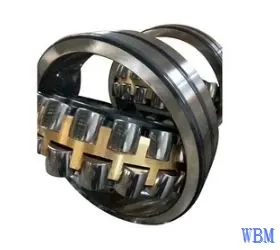
Spherical Roller:
Spherical roller bearings have two rows of symmetrical rollers, a common sphere outer ring raceway and two inner ring raceways inclined at an angle to the bearing axis. The centre point of the sphere in the outer ring raceway is at the bearing axis.
https://www.bearingroller.com/rolling-elements/taper-roller/spherical-2roller.html