3. The impact of the grinding wheel itself on blockage
3.1 Types of abrasives
The degree of blockage varies greatly among different grinding wheels. From the perspective of reducing blockage and improving grinding efficiency, different types of abrasives should be selected for different workpiece materials. If the selected abrasive cannot adapt to the grinding performance of the workpiece material, it is easy to cause sharp blockage, making the machining unable to proceed normally. If corundum abrasives are used to grind iron carbon alloys, carbon forms a very thin oxide film with oxygen in the air, which can effectively prevent the chemical affinity between the workpiece and the abrasive. However, when grinding titanium alloys, the blockage is much more severe. Some factories use grinding wheels that are not replaced for a long time, which can grind everything, seemingly saving and convenient, but actually losing efficiency and accuracy.
3.2 Abrasive particle size
The particle size of abrasive has a certain impact on the clogging of grinding wheels. Generally speaking, fine particles are more prone to clogging than coarse particles. Due to the small pore volume and chip cross-sectional area of fine-grained grinding wheels, the number of cutting edges of fine-grained grinding wheels increases, resulting in more chips. In addition, due to the increase in grinding temperature, fine-grained grinding wheels are prone to clogging in the range of small cutting times. As the number of cuts increases, coarse-grained grinding wheels have a greater depth of cut compared to fine-grained grinding wheels, resulting in greater wear of the abrasive cutting edge. Additionally, as the grinding temperature rises, the amount of chip fusion in the pores increases. After a certain number of times, the clogging amount of coarse-grained grinding wheels actually exceeds that of fine-grained grinding wheels. When semi precision grinding and precision grinding, the cutting amount is small, the temperature is low, and the blockage is light. Choose a fine grinding wheel; Coarse grinding has a large cutting amount, high temperature, and a lot of debris and molten deposits blocking the gaps. Choose a coarse sand wheel.
3.3 Hardness of Grinding Wheel
The hardness of a grinding wheel refers to the ease of detachment of abrasive particles, which is ensured by the strength of the binder. The higher the strength of the bonding agent, the greater the hardness of the grinding wheel, and the more abrasive particles become dull. Before the abrasive particles fall off, the sliding and squeezing of the workpiece become more severe, and the debris is more easily mechanically filled into the gaps of the grinding wheel. At the same time, more frictional heat is generated, which provides a fusion material for the adhesive plug. Therefore, the hardness of the grinding wheel has a significant impact on the amount of blockage, with the harder the grinding wheel, the greater the blockage.
3.4 Grinding wheel organization
The structure of the grinding wheel reflects the proportional relationship between the abrasive, binder, and pores. The denser the structure of the grinding wheel, the more abrasive particles it needs to work on, the smaller the distance between cutting edges, and the easier it is for the grinding wheel to clog. The average clogging amount of a grinding wheel containing 45% abrasive is half that of a wheel containing 49.2% abrasive; A grinding wheel containing 53% abrasive has twice the amount of clogging when grinding workpieces compared to a grinding wheel containing 49.2% abrasive. When grinding difficult to machine materials, grinding wheels with organization numbers 7 to 9 should be selected. Grinding wheels with large pores have better results than those with large pores.
4. The influence of grinding conditions
4.1 Grinding wheel linear speed
The increase in the linear velocity of the grinding wheel reduces the maximum cutting depth of the abrasive particles, reduces the cross-sectional area of the chips, and increases the number of cutting cycles and grinding heat. Both factors increase the amount of blockage, but when the linear velocity of the grinding wheel reaches a certain level (such as above 50m/s), the amount of blockage in the grinding wheel actually decreases significantly. When grinding stainless steel and high-temperature alloys in production, the clogging amount of a 50m/s grinding wheel is reduced by 30% -100% compared to a 30m/s grinding wheel. Therefore, when grinding difficult to grind materials, either a speed lower than 20m/s or a speed higher than 50m/s should be used. Choosing a grinding speed between them is very unfavorable for clogging the grinding wheel. For various workpiece materials, there is a certain critical grinding wheel speed value with low blockage.
4.2 Workpiece speed
The influence of workpiece speed on the degree of grinding wheel blockage is closely related to other factors in cutting conditions. The workpiece line speed is doubled, and the amount of grinding wheel blockage is tripled. This is because the higher the workpiece speed, the shallower the abrasive grain penetration depth, the smaller the chip cross-sectional area, which is equivalent to the hardening of the grinding wheel characteristics, making it easy to cause grinding wheel blockage.
4.3 Grinding method
Cutting in grinding is more clogged than longitudinal grinding. When cutting in for grinding, the contact area between the grinding wheel and the workpiece is large, and the cutting edge of the abrasive grain needs to be wiped several times on the same grinding mark. It is difficult for the grinding fluid to enter the grinding area, and the heat during grinding is high, which can easily cause blockage. The material in contact with the workpiece during longitudinal grinding is the edge of one side of the grinding wheel. When the wear surface increases to a certain extent, the abrasive particles break and fracture under the action of grinding force, achieving self sharpening. Most abrasive particles can work in a sharp state, resulting in relatively low grinding force and heat. At the same time, a considerable portion of the zone affected by grinding force and heat can be discharged out of the workpiece in the longitudinal grinding direction, thereby reducing the possibility of chemical adhesion.
4.4 Radial cutting amount
The effect of radial cutting amount on wheel blockage shows a hump trend. When the radial cutting amount is small (ap<0.01mm), blockage occurs. As the cutting amount increases, the average blockage amount also increases. When the cutting amount increases to a certain extent (ap=0.03mm), the blockage amount shows a decreasing trend. Then, as the cutting amount continues to increase (reaching ap=0.04mm), the blockage amount sharply increases again. Controlling the final radial cutting amount is crucial for improving the surface quality and accuracy of the workpiece when grinding difficult to grind materials.
4.7 Grinding fluid
Different grinding fluids have a significant impact on the grinding effect. Currently, the commonly used emulsion contains a large amount of mineral oil and oil-based additives, diluted to form a water in oil milky white liquid. Its specific heat capacity and thermal conductivity are small, and it is easy to cause adhesive wear and diffusive wear between the grinding wheel and the workpiece during intense friction, leading to clogging of the grinding wheel, increased grinding force, and ultimately premature breakage and detachment of abrasive particles, resulting in a decrease in grinding ratio. The selection of excellent grinding fluid plays an important role in improving grinding performance.
5. Conclusion
Wheel blockage is a common phenomenon in grinding processes. No matter how reasonable the processing conditions are, it is impossible to completely prevent blockage, although the degree may vary. The type of grinding wheel and processing conditions have a significant impact on wheel blockage, but the most important factors are the physical and mechanical properties of the processed material and the presence or absence of grinding fluid.
2026 August 3rd Week WBM Product Recommendation
Heading dies,Punch:
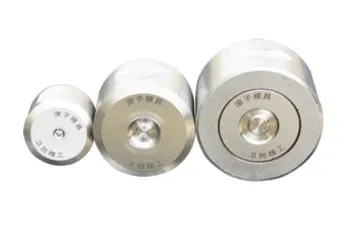
WBM produces taper roller dies with high efficiency and automation. Rollers are formed on a single automatic cold heading press and are fed, cut, and punched into the die for five steps.
We can produce different types and sizes taper roller dies with quality assurance,include:Combination Punch,Outside Sleeve,Blade,Combination Punch,Feed Cylinder,Combination Dies,Double Layer Sleeve,Insert.
https://www.w-bm.com/products/Taper-roller-cold-heading-dies/Heading-dies,Punch/400.html