Cylindrical rollers are a fundamental and critical component in the world of rolling element bearings, designed to carry high radial loads with exceptional precision and efficiency. Their performance is not a matter of chance but the result of meticulous material selection, advanced manufacturing processes, and rigorous quality control.
Material Characteristics: The Foundation of Performance
The core material properties of cylindrical rollers directly dictate their load capacity, durability, and operational life. Most high-performance rollers are manufactured from through-hardening bearing steels, such as SAE 52100 (or its international equivalent, 100Cr6). This low-alloy steel contains approximately 1% carbon and 1.5% chromium, providing an excellent balance of hardness, wear resistance, and toughness after heat treatment.
The final material properties are achieved through precise heat treatment, which typically involves:
Hardening: Heating the components to a specific austenitizing temperature followed by quenching to form a martensitic structure, resulting in very high hardness (often 58-65 HRC).
Tempering: Reheating to a lower temperature to relieve internal stresses and enhance toughness, ensuring the rollers can withstand impact and cyclic loading without being brittle.
For extreme environments, alternative materials are employed. For corrosive or high-temperature applications, rollers made from martensitic stainless steel (e.g., AISI 440C) are used. In settings where magnetic permeability is a concern, such as in MRI machines, non-magnetic materials like ceramic (silicon nitride, Si3N4) are chosen. Ceramic rollers also offer the advantages of lower density, reduced weight, and the ability to operate at higher speeds with less lubrication.
Manufacturing Process: From Bar Stock to Precision Component
The transformation of raw steel bar stock into a precision cylindrical roller is a multi-stage process demanding extreme accuracy.
Cold Heading or Slicing: The process begins with wire or bar stock being cold-headed into a rough cylindrical shape or sliced into blanks. This method maximizes material yield and improves the metal's grain flow for enhanced strength.
Soft Grinding: The blanks are ground to a precise diameter and improved surface finish. This prepares them for the subsequent heat treatment process.
Heat Treatment: As described above, the components undergo controlled hardening and tempering to achieve their final mechanical properties.
Hard Grinding: After heat treatment, the rollers are ground to very tight tolerances on specialized centerless grinding machines. This step defines the final geometric accuracy-diameter, roundness, and straightness.
Superfinishing/Lapping: The final and most critical step is superfinishing. This ultra-precise polishing process removes the microscopic peaks left from grinding, achieving a mirror-like surface finish (often Ra < 0.05 µm). A superior finish is paramount for reducing friction, minimizing wear, suppressing noise and vibration, and extending the fatigue life of both the roller and the bearing raceways.
Quality Control: Ensuring Uncompromising Standards
Every batch of cylindrical rollers is subject to a stringent battery of tests to ensure they meet exacting international standards (e.g., ISO 683-17). Key quality checks include:
Dimensional Accuracy: Using laser scanners and precision micrometers to verify diameter, length, and geometry (roundness, taper).
Surface Finish Analysis: Profilometers measure the surface roughness to confirm it meets specified values.
Hardness Testing: Rockwell or Vickers hardness testers ensure the heat treatment has achieved the required uniform hardness.
Microstructural Examination: Metallographic analysis checks for a correct, uniform microstructure free from detrimental anomalies like excessive retained austenite or carbides.
Non-Destructive Testing (NDT): Techniques like fluorescent magnetic particle inspection are used to detect surface defects that could act as initiation points for fatigue failure.
Application Fields: The Backbone of Modern Industry
The versatility and robustness of cylindrical rollers make them indispensable across a vast spectrum of industries:
Heavy Machinery & Industrial Gearboxes: Supporting high radial loads in mining equipment, construction machinery, and large industrial gearboxes.
Automotive Transmissions and Wheel Hubs: Providing reliable and efficient performance in passenger vehicles, trucks, and buses.
Aerospace: Used in critical engine components, landing gear, and control systems where reliability and precision are non-negotiable.
Wind Energy: A key component in the main shaft and gearbox bearings of wind turbines, where they must endure variable loads and harsh conditions for decades.
Machine Tools and Robotics: Enabling high precision, rigidity, and speed in spindles, linear guides, and robotic joints.
Agriculture and Rail Transport: Withstanding heavy loads and shock loads in agricultural machinery and railroad axle boxes.
In conclusion, the cylindrical roller is a masterpiece of precision engineering. Its superior performance is a direct consequence of optimized material science, sophisticated manufacturing, and uncompromising quality assurance, making it an essential element powering the smooth and efficient rotation of the modern industrial world.
2025 September 1st Week WBM Product Recommendation:
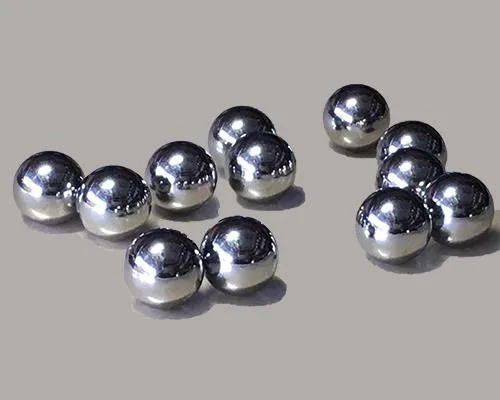
High Chrome Steel Balls:
G5,G10,G16 Our Chrome ball usually produce according to GBT 308.1-2013 and ISO 3290-1:2014 standards. Hardness will be customized base on your requirement.
https://www.bearingroller.com/rolling-elements/steel-ball/high-chrome-steel-balls.html