1.2 Basic laws of metal plastic deformation
1.2.1 Law of minimum resistance
During metal deformation, the particles of the deformable body have the possibility of moving in all directions, and the movement of the deformable body points is along their minimum resistance direction, which is called the minimum resistance law.
In the multi station cold heading of hexagonal head bolts, during the second station precision heading, the metal flows upwards and forms a flash at the opening of the lower mold, which is a manifestation of the minimum resistance law. Figure 36-4 shows that when the billet is upset in the mold, it not only fills the upper and lower mold cavities but also flows in all directions through the gaps formed by the upper and lower molds. Only when the resistance to the flash flow is greater than the resistance in other parts of the mold cavity, can the metal fill the mold cavity. In the downward movement of the upper mold, the metal flow resistance on the flash increases with the decrease of the flash thickness, in order to ensure the final filling of the upper and lower mold cavities.
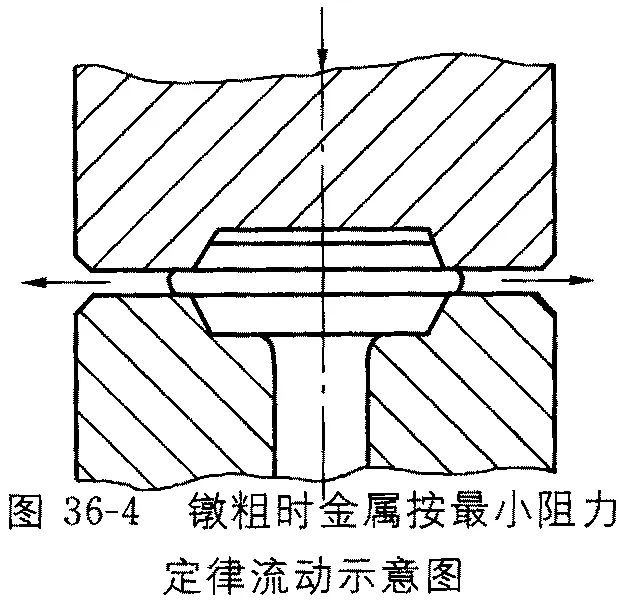
Figure 36-4 Schematic diagram of metal flow according to the minimum resistance law during upsetting
1.2.2 Law of invariance of volume
In metal plastic deformation, the density change is extremely small and can be ignored. The volume of an object undergoing plastic deformation remains constant, and the volume of a metal blank before plastic deformation is equal to the volume after deformation.
The law of volume invariance is to calculate the volume based on the shape and size of the product, and then determine the specific size of the required blank.
The law of minimum resistance is the most important basis for determining the number of metal deformations, allocating the amount of deformation each time, and determining the shape of the mold structure in design.
1.2.3 Main factors affecting metal flow during deformation
a. The impact of friction
There is inevitably frictional force on the contact surface between the mold and the blank during deformation, which changes the characteristics of metal flow due to the effect of frictional force. As shown in Figure 36-5, when upsetting rectangular defective materials between flat plates, due to the effect of friction, the resistance in each direction is different, and during deformation, the cross-section cannot continue to remain rectangular. According to the law of minimum resistance, it will gradually tend towards a circular shape. If there is no frictional force, the billet is in an ideal uniform deformation state, and the geometric shape is still similar before and after deformation.
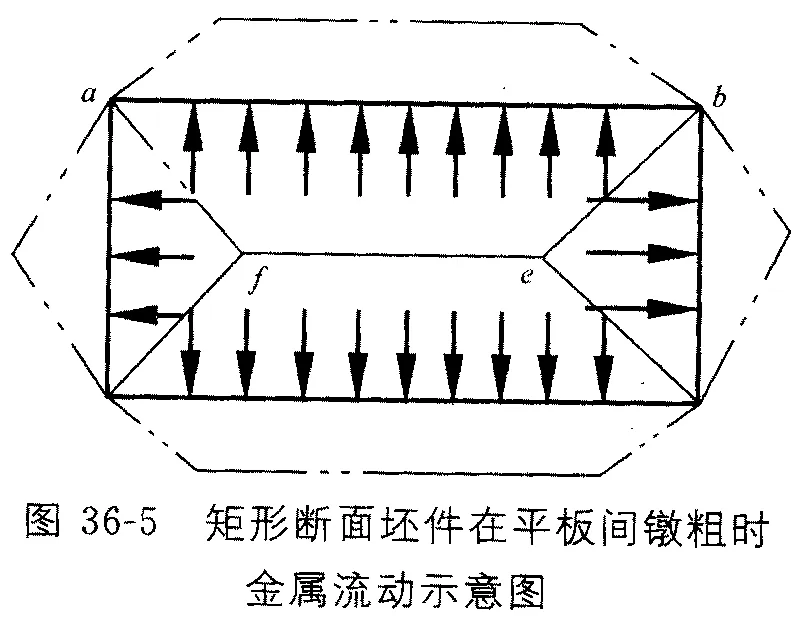
Figure 36-5 Schematic diagram of metal flow during forging of rectangular cross-section billets between flat plates
Figure 36-6 is a schematic diagram of the upsetting of a circular billet. When there is no friction, the annular component is compressed at a height, and according to the constant volume condition, the diameter of the metal increases both in the outer and inner layers, that is, all metals flow radially outward. Due to the presence of friction, flow is hindered. The closer the inner layer metal is, the greater the resistance to outward flow, which is even greater than when flowing inward, thus changing the direction of flow. As shown in the figure, a flow interface (dN) appears in the annular component.
b. The influence of mold shape
Due to the different shapes of the molds, the applied force on the billet and the frictional force between the mold and the billet are also different, resulting in differences in the flow resistance of the metal in various directions, leading to differences in the distribution of flow volume of the metal in various directions.
c. The impact of uneven properties of metals themselves
The uneven properties of metals themselves reflect the uneven composition, uneven structure, and uneven internal temperature during deformation. The non-uniformity of these properties results in additional stresses that balance each other inside the metal. Due to the presence of internal forces, the resistance of the metal to flow varies, and deformation first occurs in the part with the lowest resistance.
2. Metal cold heading (extrusion) process
2.1 Basic concepts of cold heading (extrusion) process
2.1.1 Cold heading and cold pressing
At room temperature, place the billet in the mold of an automatic cold heading machine or press machine, apply pressure to the mold, and use the relative motion of the upper and lower molds to deform the billet in the mold cavity, reduce its height, and increase its cross-section. This pressure processing method is called cold heading for automatic cold heading machines and cold pressing for press machines.
In actual production, the cold forming process of fasteners often involves extrusion during the cold heading process. Therefore, the cold heading process of fastener products alone is actually a composite processing method that includes both cold heading and extrusion.
2.1.2 Deformation method of cold heading (extrusion)
a. Punching separates a part of the blank from the main body. Such as cutting wire, punching nuts, and trimming the head of hexagonal bolts.
b. Upsetting is a processing method that shortens the height of the billet and increases the cross-sectional area, such as the heading of nuts, pre heading of bolt heads, and precision heading.
c. When the billet is deformed in the lower die during cold heading, the direction of metal flow is consistent with the direction of motion of the upper die. The reduction of the diameter of the coarse rod in cold headed bolts and cylindrical head hexagon socket screws is a type of forward extrusion.
d. During deformation, the direction of metal flow in the backward extrusion billet is opposite to the direction of movement of the upper die. The forming of the head of a hexagon socket screw with a cylindrical head belongs to reverse extrusion.
e. The flow direction of metal in composite extruded blanks during deformation is partly the same as the movement direction of the upper die, while others are opposite. There are both forward compression and backward compression in deformation. For example, cylindrical head hex screws have both rod reduction (forward extrusion) and head forming (reverse extrusion) during deformation at the same workstation.
2.1.3 Cold heading (extrusion) deformation degree
a. Deformation degree
It refers to the ratio of the compression of the length of the forged part of the billet at the end of forging to the original height, or the ratio of the increase in the cross-sectional area of the billet at the end of forging to the original cross-sectional area.
b. The representation method of deformation degree
The first method uses the forging ratio (S), as shown in Figures 36-7.
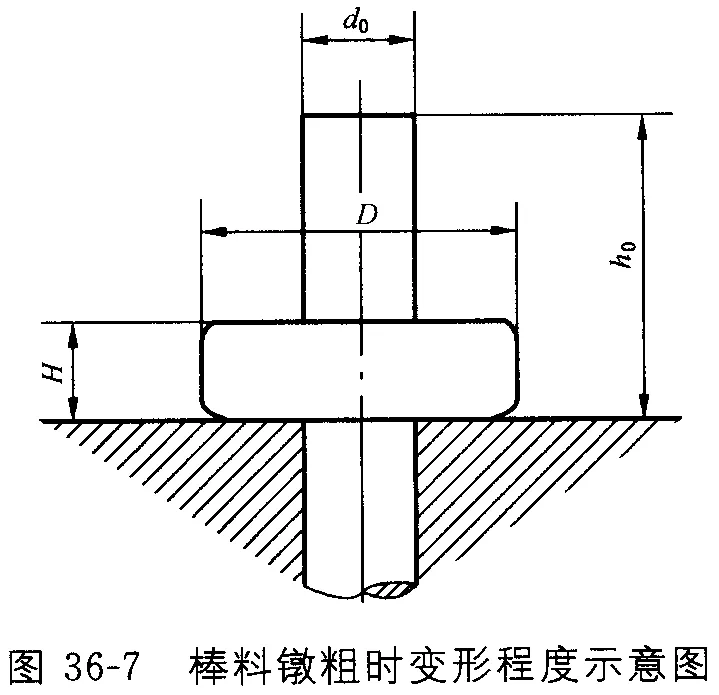
Figure 36-7 Schematic diagram of deformation degree during bar upsetting
h0 - The original height of the forged part
d0 - The original diameter of the forged part
The forging ratio can determine the difficulty of forging. The smaller the forging ratio, the smaller the deformation amount, and the easier the deformation. The larger the forging ratio, the more difficult the deformation is. The metal fibers flow irregularly, and some fibers are bent, forming a longitudinal bending phenomenon. As shown in Figures 36-8.
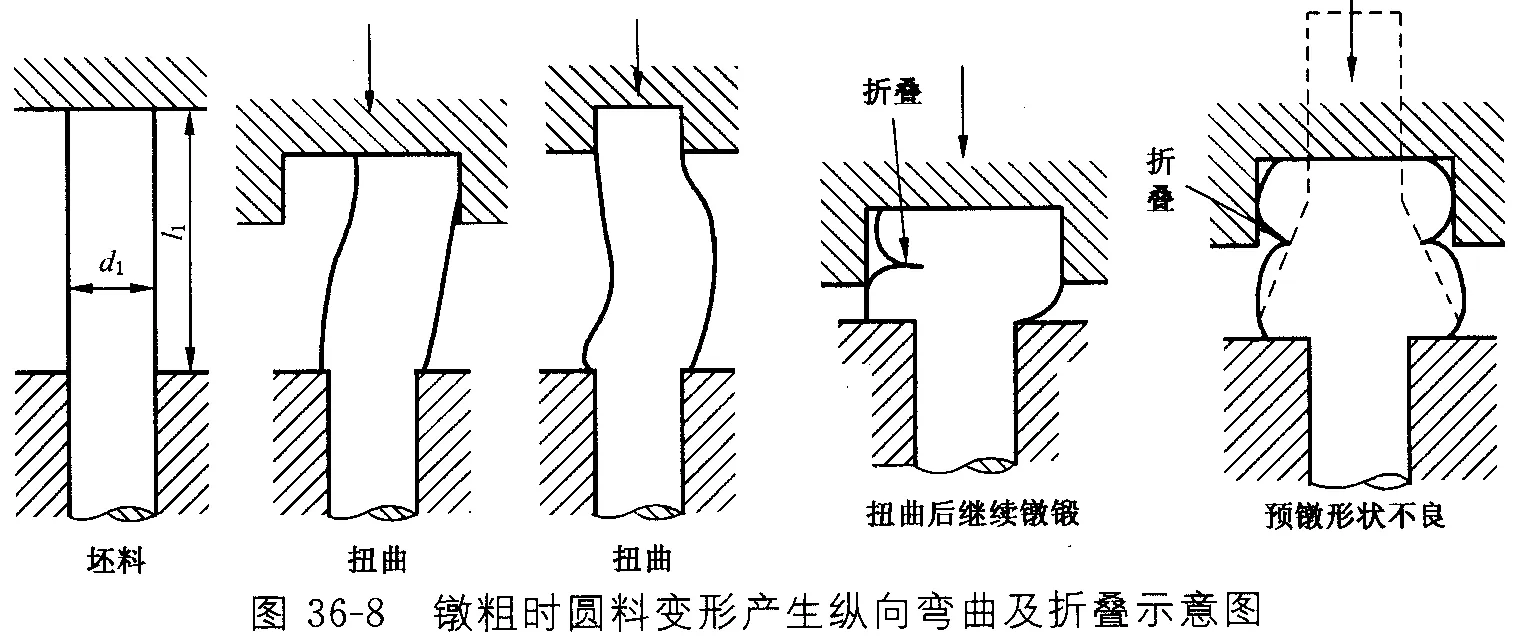
Figure 36-8 Schematic diagram of longitudinal bending and folding caused by deformation of round material during upsetting
The second method uses the forging rate( ε)
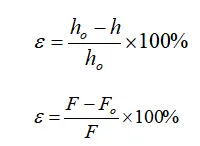
ho, Fo - the original height and cross-sectional area of the head material before forging
H, F - Height and cross-sectional area of the workpiece after forging
c. Allowable deformation degree
When the degree of cold heading deformation exceeds the deformation limit of the metal itself, cracks will appear on the side of the deformed workpiece, causing defective products. The strength of the mold will also be affected, reducing its service life. In severe cases, it can cause the mold to crack and be damaged. The allowable deformation degree of a metal is related to its plasticity. Metals with good plasticity have a higher allowable deformation degree than metals with poor plasticity. The higher the carbon content of carbon steel, the lower its plasticity and the smaller the allowable deformation.
In production, for metals with poor plasticity, such as medium carbon steel and alloy steel, cold forging often adopts annealing and softening treatment on the steel, increasing the strength and toughness of the mold, lubricating the metal surface, etc., with the aim of improving the allowable deformation degree of the metal. Table 36-1 lists the allowable deformation levels of some steels.
|
ε% |
Steel grade |
ε% |
Steel grade |
|
30 |
T10,T12 |
70~75 |
15Cr,Y12 |
|
35~50 |
50,60Mn,40CrNiMo |
75~80 |
30,35,40Cr |
|
55~60 |
40,45,30MnSi,GCr15 |
80~90 |
10(0.03%Si),10F,15 |
|
65~70 |
20(0.17~0.37%Si) |
|
2024 January 1st Week WBM Product Recommendation:
High Chrome Steel Balls:
G5,G10,G16 Our Chrome ball usually produce according to GBT 308.1-2013 and ISO 3290-1:2014 standards. Hardness will be customized base on your requirement.