Abstract: By analyzing the key technical indexes for bearing roller of foreign shield machine,such as chemical composition,hardness and microstructure,the technical support is provided for the nationalization of spindle bearing for shield machine,which is of great significance.
Key words: rolling bearing; shield machine; microstructure
The main bearing of the shield machine is a key component of the shield machine, which is used in the shield cutterhead system. Its service life and reliability directly affect the construction safety of the shield machine. At present, the main bearing market of shield tunneling machines in China is completely monopolized by foreign countries. To achieve the localization of shield tunneling technology, it is necessary to independently develop and manufacture the main bearings of shield tunneling machines. Due to the harsh working environment and complex bearing capacity of the main shaft of shield tunneling machines, they must withstand combined loads such as axial force, radial force, overturning moment, etc. when working under heavy and variable load conditions. The performance, reliability, and service life of rollers are key factors determining the service life and reliability of shield machine main bearings. Therefore, understanding and mastering the materials and heat treatment quality of advanced foreign enterprise shield machine main bearing rollers is of great significance for the localization of shield machine main bearings.
1. Chemical analysis
The chemical composition of the main bearing roller samples of shield tunneling machines at home and abroad was tested using the Swiss ARL 4460 direct reading spectrometer. The results are shown in Table 1. The roller material in China is GCr18Mo, and the standard values in the table are the requirements of GB/T 18254-2002. According to the table, the content of C, Cr, Si, trace elements, and impurity elements in the main bearing roller material of foreign shield machines is similar to GCr18Mo, but the content of Mn and Mo elements is relatively high. Therefore, it can be determined that the material used for the main bearing roller of foreign shield machines belongs to GCr18Mo high carbon chromium bearing steel.
Due to the complex stress on the main bearing rollers of shield tunneling machines and the relatively large roller size ( 100 mm × 100 mm), in order to meet service conditions, the core of the rollers must also have high strength. Therefore, it is required that the material must have high hardenability. The increase in Mn content in the material of the main bearing rollers of foreign shield tunneling machines is mainly aimed at improving the hardenability of steel and strengthening the matrix; Appropriately increasing the Mo element content can not only improve hardenability, but also overcome the tempering brittleness problem caused by the increase in Mn element content.
Table 1 Comparison of Chemical Composition of Main Bearing Rollers of Shield Tunneling Machines at Home and Abroad

2. Metallographic analysis
The Olympus GX51 optical microscope was used to perform metallographic structure testing on the main bearing rollers of foreign shield tunneling machines. The surface and core metallographic structures are shown in Figure 1 and Figure 2, respectively. The etchant used is a 4% nitric acid alcohol solution.
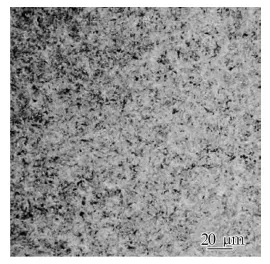
Figure 1 Surface metallographic structure
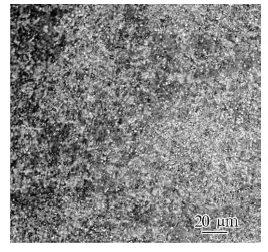
Figure 2 Metallographic structure of the heart
Comparing Figure 1 and Figure 2, it can be clearly seen that there are a large number of undissolved carbides (white bright spots in the figure) and martensite (dark gray areas) in the heart tissue. The reason for the appearance of undissolved carbides is that under the same quenching and heating insulation time, the equivalent insulation time of the core is shorter than that of the surface, and the austenitization is not sufficient, resulting in a large amount of carbides not dissolving into austenite. The reason for the appearance of bainite structure is due to the large size of the roller, and under the same cooling conditions, the core did not obtain the required cooling rate for bainite.
The purpose of conducting metallographic analysis on the sample is to determine whether the microstructure of the main bearing rollers of foreign shield tunneling machines is martensite, lower bainite, or a composite structure of both, in order to determine their heat treatment process methods and parameters. In the low magnification gold phase, the black needle like structures that can be clearly seen are mostly lower bainite. Lower bainite is a mechanical mixture composed of carbon supersaturated sheet-like ferrite and internally precipitated carbides. GCr18Mo belongs to high carbon steel, and the microstructure obtained after quenching is sheet-like martensite (needle like martensite). Therefore, under a metallographic microscope, the microstructure of lower bainite is extremely similar to that of high carbon martensite. Only by conducting in-depth observation and analysis of its microstructure through an electron microscope can accurate judgments be made.
3. Transmission electron microscopy analysis
The main bearing roller samples of foreign shield tunneling machines were analyzed using a Japanese electronic 2100 high-resolution transmission electron microscope, and the sampling locations are shown in Figure 3. The sample size is 0.5 mm × 10 mm × 10 mm. The sample thickness is ground to 200-500 nm using ion thinning method, and then analyzed by transmission electron microscopy.
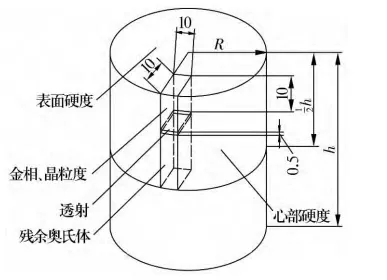
Figure 3 Schematic diagram of sampling location
Preliminary observation shows that the samples are mainly characterized by lower bainite. There are small carbides in the Flat noodles and a few martensites without carbides. Statistical results show that there are about 80%~90% lower bainite, a small amount of martensite and undissolved large carbides. The transmission electron microscope images are shown in Figures 4-6.
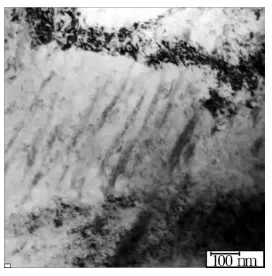
Figure 4 Characteristics of bainite
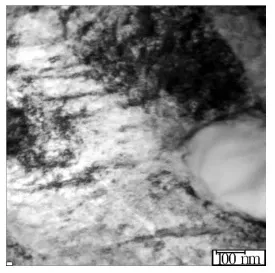
Figure 5 Bainite characteristics and undissolved carbides
Through transmission electron microscopy analysis, it can be seen that during isothermal quenching of the main bearing rollers of foreign shield tunneling machines, in order to improve the strength and hardness of the rollers and thus enhance their load-bearing capacity, the method of adjusting the isothermal quenching process is adopted. After quenching, the resulting structure is not a single bainite structure, but a composite structure mainly composed of bainite and containing a small amount of martensite. This composite structure not only has high strength and hardness, but also has good impact toughness, which can meet the harsh service conditions of shield machine main bearings.
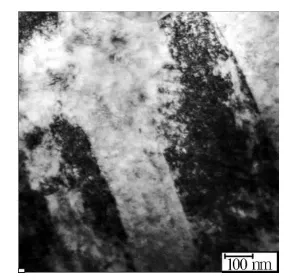
Figure 6: Characteristics of Bainite and Martensite
After determining the material composition, the relative content of bainite and martensite can be adjusted by adjusting the isothermal quenching process parameters. The main factors affecting the content of bainite are:
(1) Heating temperature: The higher the heating temperature, the more stable the austenite, and the higher the content of residual austenite and the lower the content of bainite after isothermal quenching.
(2) Under the same isothermal time, the lower the isothermal temperature, the slower the transformation rate of bainite, the higher the content of residual austenite, and the lower the content of bainite.
(3) At the same isothermal temperature, the shorter the isothermal time, the less complete the transformation of bainite, the lower the content of bainite, and the higher the content of martensite. Among the factors affecting the transformation of bainite, adjusting the heating temperature and isothermal temperature will bring many unfavorable factors, therefore, the adjustment range of both is very small. During isothermal quenching, the relative content of bainite and martensite can be adjusted by reducing the isothermal time, so that the transformation of bainite is incomplete, and the remaining austenite can be transformed into martensite, thereby increasing the content of martensite and improving the strength and hardness of the roller.
4. Hardness inspection
In order to understand the hardness and distribution of the main bearing rollers of foreign shield tunneling machines, hardness testing was conducted on the end faces of the rollers from the surface to the inside, with a total of 8 points tested. Then, cut the roller along 1/2 of its length, grind the profile, and use a Rockwell hardness tester to test the surface hardness, core hardness, and their distribution of the roller from its edge to the center. A total of 16 points were tested, and the test results are shown in Table 2. The hardness testing location is shown in Figure 7.
Table 2 Hardness testing results of main bearing rollers of foreign shield tunneling machines
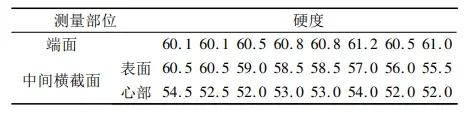
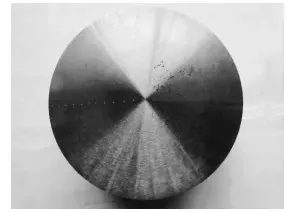
Figure 7 Hardness testing location map
According to Table 2, the hardness of the roller end face is relatively high, all above 60 HRC and very uniform, with a maximum hardness difference of only 1.1 HRC.
The reason for the high hardness of rollers is that foreign roller materials have increased the content of Mn element and appropriately increased the content of Mo element, which improves the hardenability of steel; In addition, during isothermal quenching of the roller, the cooling rate of the roller end face is relatively fast.
The reason for the uniform hardness of the rollers is that the composition and structure of foreign materials are very uniform, and during heat treatment, the cooling of various parts of the rollers is relatively uniform.
Due to the complex stress on the main bearing rollers of shield tunneling machines, it is not only required that the rollers have good toughness, but also high strength and hardness to meet their requirements for bearing heavy loads. In the case where the composition of the roller material has been determined, the hardness of the roller depends entirely on its heat treatment process. From the selection of materials for the main bearing rollers of foreign shield tunneling machines and the analysis of their microstructure, it can be determined that the heat treatment process used for the rollers is mainly bainitic isothermal quenching. The purpose of bainitic isothermal quenching is to obtain a lower bainitic structure, which has good comprehensive mechanical properties. However, if conventional bainitic isothermal quenching treatment is used, the obtained structure is 100% lower bainitic structure. Compared with martensitic structure, although the toughness is significantly improved, the hardness is relatively low, which cannot meet the requirements of the main shaft bearing force of the shield machine.
By adjusting the isothermal quenching process parameters and changing the morphology, proportion, and residual austenite content of the bainite structure obtained after isothermal quenching, the hardness of isothermal quenching can be improved. The main factors affecting the hardness of parts after isothermal quenching are:
(1) The thickness of bainite tissue. The finer the organization, the higher the hardness. The thickness of the organization can be adjusted by adjusting the isothermal temperature of bainite isothermal quenching. The lower the isothermal temperature, the finer the bainite structure and the higher the hardness.
(2) The content of bainite, which refers to the relative content of bainite and martensite in the tissue. The higher the content of bainite, the lower the content of martensite in the tissue, and the lower the hardness, and vice versa. The content of bainite in the organization can be adjusted by adjusting the isothermal quenching time. The longer the isothermal time, the higher the content of bainite in the tissue, the lower the content of martensite, and the lower the hardness. From this, it can be seen that the isothermal quenching time of the roller can be appropriately shortened to increase the content of martensite in the structure, ultimately achieving the goal of improving the hardness of the roller.
(3) Content of residual austenite. The higher the residual austenite content, the lower the hardness.
5. Grain size analysis
The results of grain size analysis of the main bearing rollers of foreign shield tunneling machines are shown in Figure 8. The sample position is shown in Figure 3. The etchant used is a solution of picric acid, sodium dodecylbenzenesulfonate, and hydrochloric acid in water.
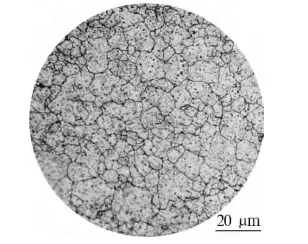
Figure 8 Grain size
As shown in the figure, the grain size of the roller is very small, reaching level 9 in GB/T 6394 "Method for Determining the Average Grain Size of Metals". There are many factors that affect grain size, the most important of which are the chemical composition of the material and the heating temperature and holding time during heat treatment. The higher the heating temperature and the longer the holding time during heat treatment, the coarser the grain size, and vice versa.
The grain size of steel has a significant impact on its properties. Due to the fact that grain boundaries are obstacles to dislocation movement, they experience significant deformation resistance when deformed to the grain boundary position. Grain boundaries can limit plastic deformation within a certain range. Therefore, the more grain boundaries there are, the higher the yield strength of steel. The higher the grain size level, the finer the grains, the larger the total area of grain boundaries, and the higher the yield strength of the steel. Due to the ability of grain boundaries to prevent the propagation of microcracks in steel, fine grains can also improve the toughness of steel.
6. Conclusion
Through a comprehensive and in-depth analysis of the main bearing rollers of foreign shield tunneling machines, the material composition, heat treatment microstructure, hardness, grain size, and residual austenite content of the rollers have been preliminarily mastered, providing technical support for the development of main bearings for shield tunneling machines in China and having significant implications for the localization of main bearings for shield tunneling machines.
2025 May 2nd Week WBM Product Recommendation:
Cutter:
WBM produces taper roller dies with high efficiency and automation. Rollers are formed on a single automatic cold heading press and are fed, cut, and punched into the die for five steps.
We can produce different types and sizes taper roller dies with quality assurance,include:Combination Punch,Outside Sleeve,Blade,Combination Punch,Feed Cylinder,Combination Dies,Double Layer Sleeve,Insert.