Abstract: High and low magnification metallographic observations were carried out on rollers with low local hardness values, and the raw materials and roller manufacturing processes were analyzed. The results showed that the low local hardness values of the rollers were caused by carbon residue due to excessive carbon depletion depth in the raw materials.
Keywords: low local hardness value; Railway freight car bearing rollers; carbon-poor
The hardness of bearing components has a significant impact on fatigue life and wear resistance, and hardness value is an important indicator for measuring bearing quality. Therefore, in the manufacturing and processing of bearing parts, there are strict and reliable process specifications and corresponding quality assurance measures from the entry of raw materials to the quality control of heat treatment processes. Especially for railway freight car bearing products, the technical requirements after heat treatment should strictly comply with TB/T2235 Technical Conditions for Rolling Bearings of Railway Vehicles, which stipulates that the hardness value of railway freight car bearing rollers is 60-64HRC.
A batch of GCr15 steel railway freight car bearings with tapered roller bearings had a hole on one side of the end face (see Figure 1 for morphology). After quenching and tempering in a heat treatment roller bottom furnace production line with a nitrogen based protective atmosphere, during normal heat treatment sampling and acid washing inspection, it was found that there was an abnormal color on the raceway surface of one roller. The local hardness of the roller rolling surface was found to be low at 57HRC, 57.5HRC, and 57HRC. Subsequently, individual roller rolling surfaces with low hardness were also sampled from other batches of hot rolled rollers, and the acid washing ratio was 1/50. In order to ensure the product quality of the rollers, a root cause analysis was conducted on their samples and an investigation was carried out on the entire processing process.
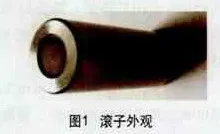
Figure 1 Roller Appearance
1. Analysis of defective samples
(1) Hardness inspection of defective samples
Using HRA-150 Rockwell hardness tester, the hardness of the roller with cavity end face of 353130B tapered bearing was tested: the hardness of the cavity part was 61HRC, 61HRC, 61.5HRC; The hardness of the remaining end faces is 61HRC, 61.5HRC, and 62HRC, which meets the requirements of TB/T2235 standard. Using V-shaped membranes, the hardness of the rolling surface with normal color was found to be 61HRC, 61.5HRC, and 62HRC. It is evident that the defective sample has a locally low hardness on the rolling surface.
(2) Metallographic observation of areas with abnormal color
Grind metallographic specimens along the axial direction near areas of low hardness in the color anomaly zone. After etching with 4% nitric acid alcohol, the metallographic structure of the deeply corroded area was observed at low and 500 times magnification. Compared with the standard image in Appendix A of JB/T7362-2007 "Method for Determining the Depth of Decarburization Layer of Rolling Bearing Parts", it was found that there was a carbon deficiency phenomenon (see Figure 2). When metal materials are heated and insulated, the carbon on their surface is oxidized, resulting in the complete or partial loss of carbon on the surface. This phenomenon is called decarburization, and the surface where carbon is lost is called the decarburization layer. When there is not much carbon loss and no obvious decarburization layer can be observed, but the excess carbides are significantly reduced and the hardness is low, it is called carbon deficiency.
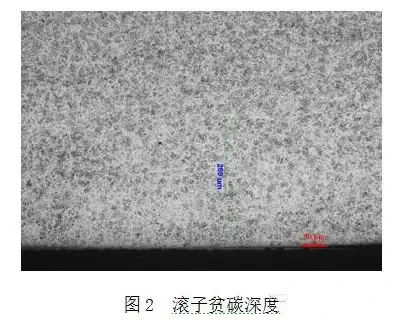
Figure 2: Depth of Carbon Depletion in Rollers
After deep corrosion, the metallographic structure of the area was found to have carbon deficiency, with a depth of 0.28mm. Under the Olympus GX51 microscope, the small end face of the roller was observed at low and high magnification, and no carbon deficiency was found. However, carbon deficiency was found at the chamfer of the large end face of the roller. Deep corrosion at 500 times can observe the microstructure of this area (see Figure 3), with a small and fine number of carbide particles on the surface, while the microstructure of the normal area in the center has a larger number of carbide particles (see Figure 4). For the carbon poor parts, after shallow corrosion, the lath like structure morphology on the surface can also be observed 500 times.
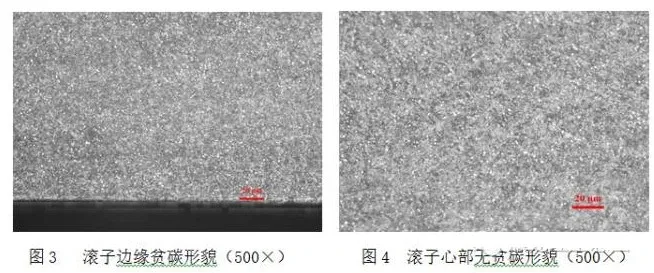
Figure 3: Poor carbon morphology at the edge of the roller
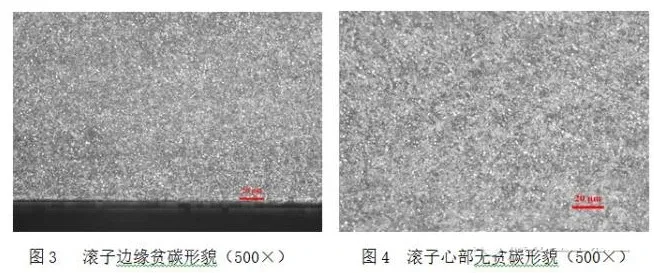
Figure 4: No carbon poor morphology at the core of the roller
(3) Observe the tissue of the roller groove area
Firstly, a small sample is taken along the center of the roller groove end face, and a metallographic sample is ground along the longitudinal section. Observing the tissue condition of the end face of the sample with holes, no carbon deficiency phenomenon was found in both high and low magnification observations. Observing the microstructure of the non cavity part of the roller, no abnormal phenomena were found.
Based on the above analysis, the locally low hardness of the roller is due to the local carbon deficiency on the surface of the roller.
2. Analysis of heat treatment process
The rollers of railway freight car bearings are produced and quenched and tempered using batch management. The heat treatment shaping equipment is a roller bottom furnace salt quenching production line with a protective atmosphere for quenching and tempering processing. It was found that the rollers of this model have been processed using raw materials from two manufacturers, A and B, for several consecutive shifts. Only the rollers from manufacturer A showed carbon deficiency, and the proportion was not very large; During the inspection process of multiple shifts of another manufacturer's product, no carbon poor rollers were found. No equipment abnormalities were found in the heat treatment records. 100% acid washing and picking were carried out on the rollers with poor carbon quality problems. From the picked rollers, it can be seen that they are also individual rollers. If the carbon deficiency in the heat treatment process is caused by poor atmosphere, it should be on a batch basis. During acid washing inspection, different degrees of carbon deficiency areas should be found in any part of the roller.
Roller manufacturing process flow: raw material inspection → feeding → cold heading → soft grinding → heat treatment → shot blasting → grinding → flaw detection inspection. From the perspective of the entire process, there are only two factors that contribute to carbon poverty: heat treatment and raw materials. Based on the above analysis, it is evident that the occurrence of carbon depletion is not related to heat treatment.
3. Raw material analysis
Find out the raw materials of the batch where the roller of this model is located. It is a non decarburized polishing material provided by a certain steel plant, with a diameter of 23.2mm, material GCr15, weight of 46 tons, and has been fully fed. There are a total of 7 sub furnace numbers. In order to ensure the quality of the rollers for this batch of materials, 100% acid washing and picking were carried out. Based on the processing and overall quality inspection of the heat treatment process, this is a quality issue related to the quality of the raw materials. Although the roller raw materials have undergone relevant inspections upon arrival at the factory, they all belong to the sampling inspection of bar materials. According to the technical requirements of the order, the steel mill should provide zero decarburization products, but in reality, they have not met the requirements of the bearing manufacturer. Steel mills should provide zero decarburization polishing materials. Although they have also undergone turning, peeling, and polishing, in some hot processing stages, the decarburization depth exceeds the standard due to equipment reasons or control problems. As a result, the decarburization and lean carbon layer on the surface are not completely removed, leaving them at the bearing manufacturer.
4. Conclusion
(1) The low local hardness value of the roller is due to the local carbon deficiency on the surface of the roller.
(2) The reason for the low local hardness of the roller is due to the carbon deficiency of the raw material.
Steel mills should strictly control all aspects of the production and manufacturing of roller materials, and provide zero decarburization roller raw materials as required to ensure the overall quality of railway freight car bearing rollers.
2025 May 1st Week WBM Product Recommendation:
Heading dies,Punch:
WBM produces taper roller dies with high efficiency and automation. Rollers are formed on a single automatic cold heading press and are fed, cut, and punched into the die for five steps.
We can produce different types and sizes taper roller dies with quality assurance,include:Combination Punch,Outside Sleeve,Blade,Combination Punch,Feed Cylinder,Combination Dies,Double Layer Sleeve,Insert.
https://www.w-bm.com/products/Taper-roller-cold-heading-dies/Heading-dies,Punch/400.html