1. Determination of initial upsetting shape of machine screws
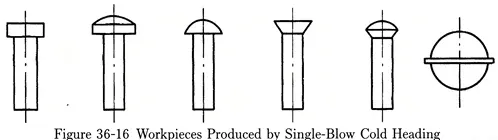
There are many types of machine screws, mainly different from the geometric shape of the head. Overall, the forging ratio (S=Lo/do and D/h) for machine screw head forming is relatively small, making it easier to forge. For machine screws with simple head shapes, single forging can be used for workpieces produced by cold heading, as shown in Figure 36-16. However, many varieties of machine screws have complex head groove shapes. For cross groove shapes, head forming requires two or more upsetting processes. The initial punching shape plays a decisive role in forging products that meet the groove requirements according to the standard.
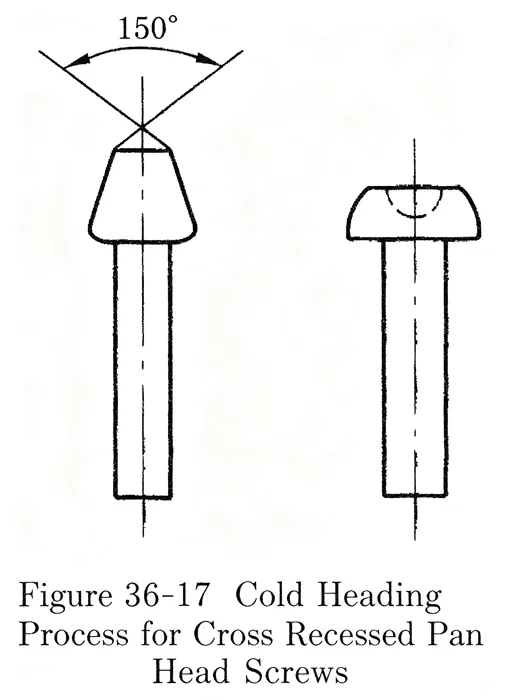
When forming the precision upsetting head, the groove shape is simultaneously subjected to upsetting and extrusion. At this time, the deformation of the product head not only causes the metal to flow and fill the large end of the head due to upsetting, but also has a tendency to flow in the opposite direction of force due to the extrusion of the groove shape, thereby affecting the filling of the metal at the edge of the large end. Especially in the groove direction, there is a clear phenomenon of "lack of meat". In order to solve the defect of local incompleteness, the top of the punch is made into a circular arc shape, and the initial punch of the flat round head cross groove screw is made into a conical top with a 120 ° -150 ° cone angle body, as shown in Figure 36-17. The purpose is to reduce the reverse flow of metal during deformation, which is beneficial for the filling of the large end of the head.
2. Determination of initial upsetting shape of hexagon socket head screw
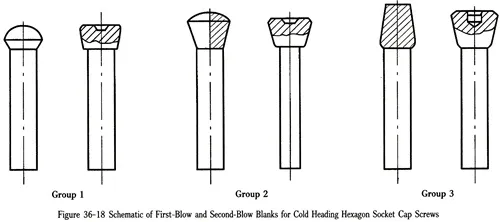
Cold heading internal hexagonal cylindrical head screw (head forging ratio less than 1.5, due to the deep internal hexagonal hole on the head, the geometric shape is complex, and the product performance requirements are high, with grades of 8.8, 10.9, and 12.9. The steel used is medium carbon steel, alloy steel, and has poor cold forming performance. The head deformation is complex, including upsetting, forward extrusion, and reverse extrusion. Therefore, the initial punching and forming of such products generally require initial upsetting and a second pre upsetting. Figure 36-18 lists several commonly used initial upsetting shapes in production. In the second stage pre upsetting, the head is upset to create an inner hexagonal pre formed cavity, which reduces the amount of deformation when refining the inner hexagonal hole at the next station. The flow resistance of the metal in the reverse extrusion deformation is reduced, so that the load borne by the hexagonal punch is minimized as much as possible, and the metal flow is relatively uniform to fill the edges of the upper and lower ends of the head.
2026 July 4th Week WBM Product Recommendation
Spherical Roller:
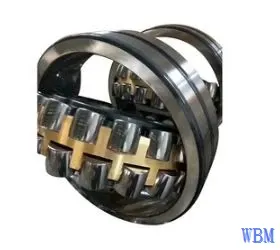
Spherical roller bearings have two rows of symmetrical rollers, a common sphere outer ring raceway and two inner ring raceways inclined at an angle to the bearing axis. The centre point of the sphere in the outer ring raceway is at the bearing axis.
https://www.bearingroller.com/rolling-elements/taper-roller/spherical-2roller.html