Abstract
A cold precision forging process for bevel gears, comprising the following steps: cutting and cutting cylindrical bar material; Cutting a taper on the length of the billet as part of the preform, which is used to position the billet in the die; Perform spheroidization annealing on the machined blank to reduce its hardness, followed by acid washing to remove oxide skin, phosphating and saponification lubrication treatment; The first cold precision forging process: the first extruded part is obtained by upsetting and extruding the tooth profile in the extrusion die, and the first extruded part serves as the blank for the second cold precision forging process; Perform spheroidization annealing on the first extruded part again, followed by acid washing to remove oxide scale, phosphating and saponification lubrication treatment; The second cold precision forging process: extruding the entire tooth profile in the extrusion die to obtain coarse material for bevel gears; Machining and shaping the coarse material of the bevel gear, cutting off excess material on the end face, and producing the finished bevel gear. And provide an extrusion mold. The present invention has high production efficiency, reduces material waste, lowers costs, and improves mechanical properties.
Description
A cold precision forging process and its mold for bevel gears
technical field
The present invention relates to the machining process of bevel gears and their molds.
Background technology
The traditional gear machining methods mainly include gear hobbing, gear hobbing, gear shaving, gear hobbing, gear grinding, gear grinding, and gear throwing. The main characteristic of these methods is the use of relatively precise machining machines. Due to the mechanical cutting process, the tooth profile of the gear cannot be processed by the machine tool in one step, resulting in low production efficiency and hindering the mass production of bevel gears; During the machining process, due to the cutting effect, there will inevitably be material waste, especially for expensive materials, the material cost will inevitably increase sharply; The metal fiber structure inside unprocessed raw materials is naturally continuous and has good mechanical properties. However, after machining, the metal fiber structure will inevitably be cut, thereby reducing the mechanical properties of the processed product. This effect is particularly evident in the tooth shaped forming area.
In recent years, the rapid development of the automotive industry has led to a sharp increase in demand for low-cost and high-performance components in the market. Highlighting the shortcomings of existing bevel gear machining.
summary of the invention
In order to overcome the shortcomings of low production efficiency, large material waste, high cost, and poor mechanical properties of existing bevel gears processed by mechanical cutting, the present invention provides a bevel gear cold precision forging process and its mold with high production efficiency, reduced material waste, cost reduction, and improved mechanical properties.
The technical solution adopted by the present invention to solve its technical problem is:
A cold precision forging process for bevel gears, comprising the following steps:
1) Using cylindrical bar material for cutting and cutting;
2) Cutting a taper on the length of the billet as part of the preform, which is used to position the billet in the die;
3) Perform spheroidization annealing on the machined blank to reduce its hardness, followed by acid washing to remove oxide skin, phosphating and saponification lubrication treatment;
4) The first cold precision forging process: the first extruded part is obtained by upsetting and extruding the tooth profile in the extrusion die, and the first extruded part serves as the blank for the second cold precision forging process;
5) Perform spheroidization annealing on the first extruded part again, followed by acid washing to remove oxide scale, phosphating and saponification lubrication treatment;
6) The second cold precision forging process: extruding the entire tooth profile in the extrusion die to obtain coarse material for bevel gears;
7) Machining and shaping the coarse material of the bevel gear, cutting off excess material on the end face, and producing the finished bevel gear.
Preferably, the first cold precision forging process and the second cold precision forging process use the same extrusion die, and the punch stroke of the extrusion die in the second cold precision forging process is greater than that of the extrusion die in the first cold precision forging process.
A mold for cold precision forging of bevel gears, comprising a convex mold mechanism and a concave mold mechanism. The convex mold mechanism is composed of an upper template, a convex mold cushion block, a convex mold ring, and a convex mold. The convex mold is fixedly connected to the convex mold ring, and the convex mold ring is fixed on the convex mold cushion block. The convex mold pressing ring is fixedly connected to the upper template, and the upper template is linked to the press machine; The concave mold mechanism consists of a concave mold ring, a concave mold insert block, a concave mold pad block, a lower template, and a top material rod. The concave mold ring is assembled by interference fit with the concave mold insert block used to place the blank to be processed. The concave mold ring and the concave mold insert block are fixed on the concave mold pad block, and are fixedly connected to the lower template; The top material rod passes through the middle through-hole of the lower template and the concave mold cushion block in sequence; The upper or lower template can slide up and down and be fitted onto the guide column.
Furthermore, the convex mold mechanism comprises an upper support ring, and the concave mold mechanism comprises a lower support ring. The upper support ring is fixedly connected to the convex mold ring and the upper template, and the lower support ring is fixedly connected to the concave mold ring and the lower template.
The technical concept of the present invention is that the development of cold precision forging technology perfectly meets the needs of the automotive industry. Cold precision forging changes the volume distribution of the billet without damaging the metal material, and transfers the excess material of the billet to the position where it needs to be formed to obtain the required formed parts, thus eliminating cutting losses and saving costs. Due to the fact that formed parts can be obtained by cold precision forging through two to three processes, production efficiency is improved. Cold precision forging only involves plastic deformation and does not cut off the naturally formed fiber structure of the metal, thus improving the mechanical properties of the finished product.
The complexity of bevel gear forming lies in the severe deformation of the tooth forming part, far exceeding the deformation limit of the material in one extrusion. If the gear is forcibly extruded by cold precision forging, the formed part will inevitably have defects such as low tooth forming accuracy and incomplete tooth shape. At the same time, high equipment extrusion pressure requirements and large mold losses will result in shortened service life. Good process design can solve these problems, such as arranging pre-processing steps before the cold precision forging process to produce suitable blanks in advance; Decompose a cold precision forging process into two processes to reduce the burden of each process; Adopting spheroidization annealing treatment between two cold precision forging processes to improve material properties. The present invention provides process measures suitable for cold precision forging bevel gears, coupled with the design of a bevel gear mold with two-layer combined concave molds. The formed parts have the advantages of good mechanical properties, high dimensional accuracy, and relatively low equipment load requirements, and are suitable for large-scale production of bevel gears.
The beneficial effects of the present invention are mainly manifested in: (1) using two processes to extrude the bevel gear; And these two processes use the same mold, the only difference being the setting of the punch stroke, which reduces the extrusion force and equipment requirements while saving mold costs; (2) Conical gears are directly formed by upsetting and extruding in a cold state, resulting in dense microstructure, refined grain size, high mechanical properties, high dimensional accuracy, and good surface quality of the extruded parts; (3) The mold structure is simple, easy to manufacture, the mold parts are easy to replace, the cost is low, and it is suitable for large-scale production.
Attached image description
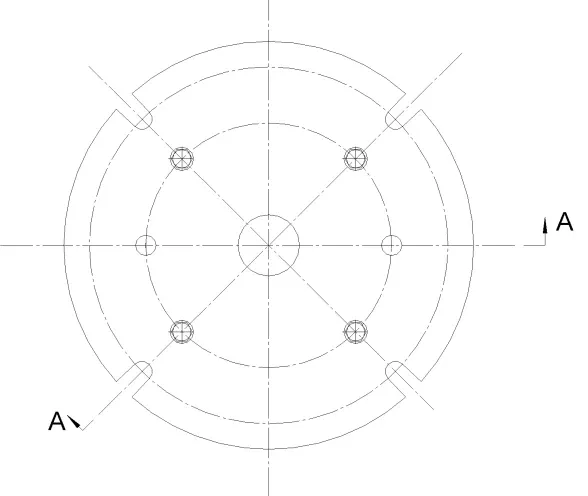
Figure 1 is a top view of the mold frame.
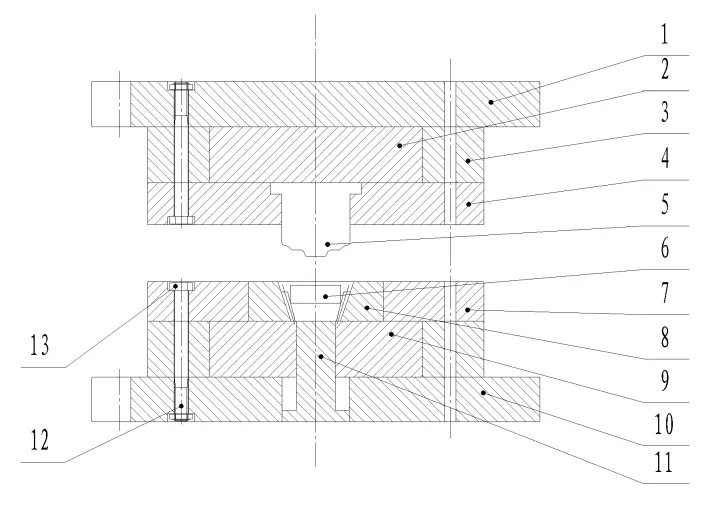
Figure 2 is a schematic diagram of the mold frame structure.
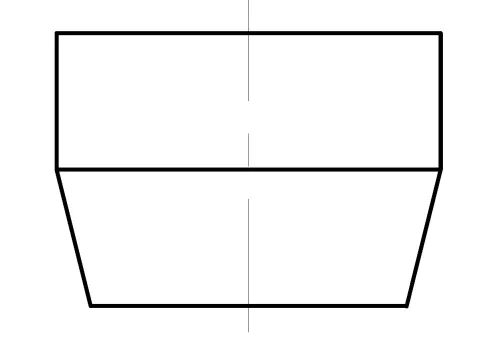
Figure 3 is a schematic diagram of the blank material for cold precision forging bevel gears obtained after machining a certain taper.
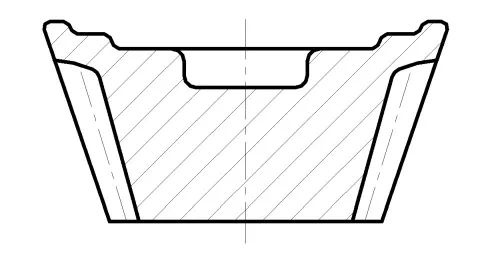
Figure 4 is a schematic diagram of the target formed bevel gear obtained by cold precision forging.
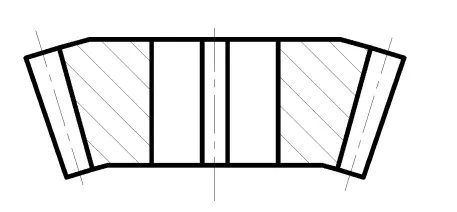
Figure 5 is a schematic diagram of the finished bevel gear obtained after machining.
Specific implementation method
The present invention will be further described in conjunction with the accompanying drawings.
Example 1
Referring to Figures 1-5, a cold precision forging process for bevel gears comprises the following steps:
1) Using cylindrical bar material for cutting and cutting;
2) Cutting a taper on the length of the billet as part of the preform, which is used to position the billet in the die;
3) Perform spheroidization annealing on the machined blank to reduce its hardness, followed by acid washing to remove oxide skin, phosphating and saponification lubrication treatment;
4) The first cold precision forging process: the first extruded part is obtained by upsetting and extruding the tooth profile in the extrusion die, and the first extruded part serves as the blank for the second cold precision forging process;
5) Perform spheroidization annealing on the first extruded part again, followed by acid washing to remove oxide scale, phosphating and saponification lubrication treatment;
6) The second cold precision forging process: extruding the entire tooth profile in the extrusion die to obtain coarse material for bevel gears;
7) Machining and shaping the coarse material of the bevel gear, cutting off excess material on the end face, and producing the finished bevel gear.
Preferably, the first cold precision forging process and the second cold precision forging process use the same extrusion die, and the punch stroke of the extrusion die in the second cold precision forging process is greater than that of the extrusion die in the first cold precision forging process.
The forming process of the cold precision forging bevel gear in this embodiment is as follows: the lower part of the mold frame is fixed to the lower worktable of the hydraulic press by the lower template 10, and after the upper part of the mold frame is adjusted, it is fixed to the upper worktable of the hydraulic press by the upper template 1. Select cylindrical billets for cutting and cutting. Firstly, the billet is machined into a certain taper shape, then subjected to spheroidization annealing, acid washing to remove oxide skin, and phosphating saponification lubrication treatment before being placed into the concave mold cavity. Set the working stroke of the hydraulic press, and then use punch 5 to extrude a portion of the tooth profile from the billet, resulting in the cold precision forging of process one. After the extrusion is completed, the convex mold 5 exits the concave mold cavity and the first process formed part is pushed out by the top material rod 11. After undergoing spheroidization annealing, acid washing to remove oxide skin, and phosphating, saponification, and lubrication treatment, the formed part is placed into the concave mold cavity, and the working stroke is set. Then, the convex mold 5 is used to extrude all the teeth to obtain the final formed part, as shown in Figure 4. Squeezing completed, exit the convex mold 5 from the concave mold cavity. Machine the final formed part to remove excess material and obtain the actual usable bevel gear, as shown in Figure 5.
The above specific embodiments are used to explain the present invention, not to limit the present invention. Any modifications and changes made to the present invention within the scope of protection of the spirit and claims of the present invention fall within the scope of protection of the present invention.
Example 2
Referring to Figures 1 and 2, a cold precision forging die for bevel gears, the die comprising a convex mold mechanism and a concave mold mechanism. The convex mold mechanism consists of an upper template 1, a convex mold pad 2, a convex mold ring 4, and a convex mold 5. The convex mold 5 is fixedly connected to the convex mold ring 4, which is fixed on the convex mold pad 2. The convex mold ring 2 is fixedly connected to the upper template 1, which is linked to the press machine; The concave mold mechanism consists of a concave mold ring 7, a concave mold insert block 8, a concave mold pad block 9, a lower template 10, and a top material rod 11. The concave mold ring 7 is assembled with an interference fit with the concave mold insert block 6 used to place the blank 6 to be processed. The concave mold ring 7 and the concave mold insert block 8 are fixed on the concave mold pad block 9, and are fixedly connected to the lower template 10; The top material rod 11 passes through the middle through-hole of the lower template 11 and the concave mold cushion block 9 in sequence; The upper template 1 or lower template 10 can be slid up and down and fitted onto the guide column.
Furthermore, the convex mold mechanism comprises an upper support ring 3, and the concave mold mechanism comprises a lower support ring. The upper support ring 3 is fixedly connected to the convex mold ring 4 and the upper template 1, respectively. The lower support ring is fixedly connected to the concave mold ring 7 and the lower template 10, respectively.
The entire mold frame is shown in Figure 2, with hexagonal head bolts and hexagonal nuts fixing the punch 5, punch pad 2, and upper template 1 together. The punch pad 2 plays a role in buffering the huge pressure on the punch 5 and reducing damage to the upper template 1. Support ring 3 serves to protect the upper template. The connection between upper template 1 and lower template 10 and the press equipment can be achieved by installing bolts around the templates and fastening them to the equipment. The guidance of the mold frame is achieved by inserting guide columns into the upper template 1, lower template 10, upper and lower support rings, as well as two convex mold rings 4 and concave mold rings 7. Hexagonal head bolt 12 and hexagonal nut fix the convex mold ring 7, lower support ring, and lower template 10 together to prevent the parts of the mold frame from moving up and down during the cold precision forging process. The concave mold insert 8 and the concave mold ring 7 adopt an interference fit to prevent tensile stress in the concave mold insert. The concave mold insert is made of hard alloy to increase the strength and lifespan of the mold, while the concave mold ring is made of alloy structural steel to balance economy and ease of replacement. The top material rod 11 and the concave mold pad 9 are fitted with a gap to prevent friction damage to the metal surfaces of both during operation.
Due to the use of hard alloy material for the concave die insert 8, tensile stress should not occur during the upsetting and extrusion process. Therefore, the concave mold is designed as a two-layer combination concave mold, and the concave mold ring 7 and the concave mold insert 8 are assembled by interference fit. Through this method, pre stress is applied to the concave mold insert to counteract the tensile stress generated during upsetting and squeezing, so that the concave mold insert 8 is always in a compressive stress state, increasing its service life. At the same time, the concave mold ring material 7 is made of alloy tool steel, reducing costs, balancing economy, and facilitating replacement.
2025 January 1st Week WBM Product Recommendation:
High Chrome Steel Balls:
G5,G10,G16 Our Chrome ball usually produce according to GBT 308.1-2013 and ISO 3290-1:2014 standards. Hardness will be customized base on your requirement.
https://www.bearingroller.com/rolling-elements/steel-ball/high-chrome-steel-balls.html