The process method and condition of reaching the standard for carbide network of hot rolling bearing ball blank were determined.
Abstract: GB/T18254-2002 standard stipulates that " carbide mesh of spherical annealing steel for heating processing is not checked ", at present, the large diameter GCr15 bearing steel produced by major steel mills in China are generally in the condition of carbide mesh exceeding standard. therefore, each of the enterprises of hot-rolled, hot-upsetting bearing steel ball billet must controlled the internal carbide mesh of the ball billet up to standard through its own production process. In this paper, the technological method and the standard condition of keeping the carbide mesh of the hot rolling bearing ball billet up to the standard are determined by the analysis and test.
Key words: ball billet hot rolling process; carbide mesh structure; steel ball impact toughness; fatigue strength of steel ball
1 Preface
GB/T18254-2002 standard stipulates that "the carbide network is not checked for spheroidized annealed steel used for heat supply processing". Therefore, the non annealed bearing round steel supplied by the steel plant for hot rolling steel balls is not checked and controlled. As a result, the carbide network in the center of hot rolled non annealed round steel with large diameter, especially continuous cast steel, is generally heavy, mainly distributed on the carbide belt or other carbon rich areas, It is often a closed fine mesh (Figure 1). This kind of secondary carbide network has strong stability. If the process design of hot rolling ball blank is improper, the carbide network inside the ball blank will exceed the upper limit of 2.5 grade specified in JB/T1255-2001. If the processing is continued, the steel ball will be crushed unqualified after heat treatment, which will reduce the impact toughness and fatigue strength of the steel ball and affect the safety and reliability of the bearing. It will also affect the foreign trade business of the export units. In 2006, a steel plant in China caused a foreign return event due to the steel ball carbide network of grade 3 and the crushing value lower than 12kN. Similar events have also occurred in other plants.
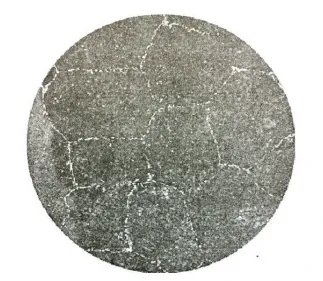
Figure 1 raw material carbide fine mesh, 500 ×
At the same time, it is hoped that through the elaboration of the hot-rolled ball billet organization in this paper, the steel ball factory can fully consider whether the steel used can meet the needs of users while selecting the hot-rolled ball billet, and can not unilaterally pursue the low price and ignore the quality index, resulting in the loss of users and undue losses to enterprises.
2 Process method for reaching the standard of reticulated carbide in hot rolled bearing steel ball billet
2.1 process analysis of reaching the standard of reticulated carbide in hot rolled bearing steel ball billet
The process of hot-rolled bearing steel ball billet is different from that of bearing ring forging and rolling. Ring forging and hot rolling can concentrate carbides in the center of the bar and locally punch or break large particles. In addition to the large deformation in the local area at an angle of 45 ° with the axial direction of the material, the deformation in the center and equatorial area of the ball billet is very small, basically maintaining the structure arrangement of the raw materials. As the bars used for hot rolling ball billets, especially the center of continuous casting steel, often have a closed carbide mesh, it is impossible to change the carbide mesh in raw materials by mechanical deformation during rolling, and there is little effect to change this mesh by steel spheroidizing annealing. Therefore, the main method can only rely on the heating, heat preservation and cooling of materials during rolling, Changing the morphology and distribution of carbides in the bar to achieve the standard of network carbides.
2.2 Design basis for heating process of hot rolled ball billet steel
In order to change the carbide closed net in the original structure of steel, the steel structure must be austenitized first, so that the secondary carbide forming the closed net can be dissolved into austenite, and then the composition of carbon and alloy elements in austenite can be homogenized by thermal diffusion. Due to the existence of chromium, the stability of carbides is increased and the diffusion coefficient is reduced, which makes the diffusion process of carbon in austenite difficult. It takes higher temperature and longer time for carbides to dissolve into austenite and carbon diffusion in austenite to complete. Therefore, the heating of hot rolled billet steel must have sufficient heating temperature and sufficient holding time, At the same time, it should be noted that the austenite grain of GCr15 steel begins to grow rapidly when it exceeds 1100~1150 ℃.
2.3 Design basis for cooling process of hot rolled ball billet
In order to get rid of the carbide network in the original structure of the steel, another condition is that the rolled ball must be rapidly cooled, so that the temperature of the precipitated secondary carbide (Fe, Cr) C is close to or even lower than the temperature at which the pearlite transformation occurs, so that the metallographic structure of the ball produces a "pseudo eutectoid" transformation, And this transformation is best carried out in the high temperature zone (about 700~500 ℃) in front of the upper nose of the "C curve" of Austenite Continuous Cooling Transformation of GCr15 steel. Under this condition, pearlite transformation can be realized.
2.4 Process implementation of reaching the standard for network carbide of hot rolled ball billet
(1) Heating and insulation of steel materials steel materials are heated to 1100 ± 50 ℃ in a gas furnace for 0.5~1h. The material diameter is large, and the insulation time is longer.
(2) The temperature of the ball billet falling out of the rolling mill is about 950~1 100 ℃, and the ball billet is cooled immediately after falling out. It is cooled to 750~650 ℃ within 90s, and the cooling rate is about 200 ℃ /min. In the next 90s, it is cooled to 550~500 ℃, and the cooling rate is about 120 ℃ /min. When the ball billet temperature is about 500 ℃, the drum is used for residual temperature tempering.
3 Results and analysis
Figure 2 shows the sorbite + pearlite structure of the ball billet rolled according to the above heating and cooling process. The closed net is disconnected and the carbide net structure is significantly reduced. The net is distributed in the carbon rich area and not on the belt, or on the belt but not serious (≯ Level 3). The carbide net of the billet structure can reach grade ≯ 2.5 (see Fig. 3 and Fig. 4). Fig. 3 shows the closed fine net structure in the carbon rich area of the raw material, and Fig. 4 shows the billet structure net rolled from the raw material with the structure shown in Fig. 3 is grade ≯ 2.5, which is judged as qualified.
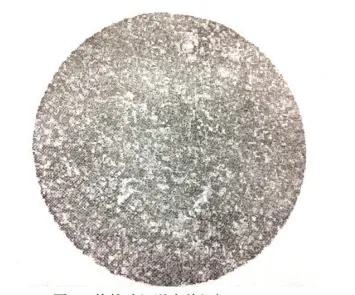
Fig. 2 microstructure of hot rolled ball billet before annealing, 500 ×
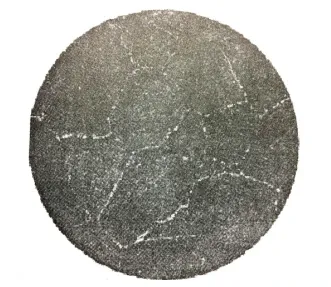
Figure 3 closed network in carbon rich area of raw materials, 500 ×
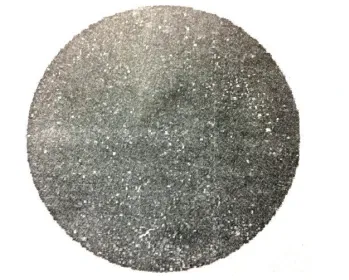
Fig. 4 reticular structure of ball billet ≯ grade 2.5, 500 ×
If the core of the raw material is seriously banded (>3 grade) and the closed net is distributed on the strip, it is difficult to achieve ≯ 2.5 grade carbide net of the rolled ball billet (Fig. 5 and Fig. 6). Figure 5 shows the raw material with a closed net, and Figure 6 shows that the net structure of the ball billet rolled with this raw material is greater than grade 2.5, which is judged to be unqualified. The analysis shows that in this case, the carbides are concentrated and the particles are large. In the environment of about 1100 ℃ temperature and holding time ≯ 1h, the carbon in austenite is not easy to diffuse, and the carbides are still concentrated after phase transformation, which is easy to form a network again. If the heating temperature is further increased and the holding time is prolonged, it is easy to cause coarse grains of the metal in the ball blank.
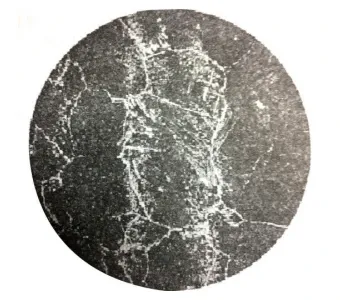
Figure 5 closed net on raw material belt, 500 ×
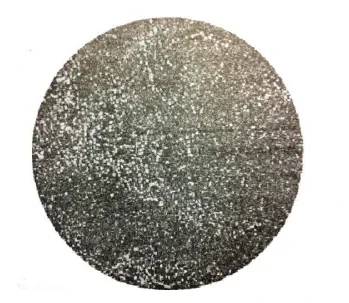
Fig. 6 net on ball billet structure ≯ grade 2.5, 500 ×
In addition, in practical work, we should pay attention to the difference between the carbide network brought by the raw material and the network caused by spheroidizing annealing: the carbide network structure of the raw material is distributed on the carbide belt or carbon rich area, and the raw material belt is distributed in a strip along the axial direction, so the carbide network is also distributed in an axial direction, and it is mostly a closed fine network. After rolling into the ball blank, although the closed carbide net is disconnected, there are still signs of its existence in the raw materials, which are directional and still fine nets. The carbide network formed by spheroidizing annealing of bearing parts is generally caused by too high temperature (above 840 ℃) and too long holding time, and the carbide is relatively coarse (see Figure 7).
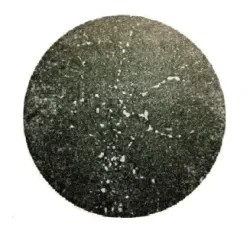
Fig. 7 network structure formed by annealing overheating ≯ grade 2.5, 500 ×
4 Conclusion
If the net carbide of raw material exceeds grade 2.5 but is not on the more serious carbide belt, and only exists in the carbon rich area of the material, or the net is on the carbide belt but the belt is not serious (≯ grade 3), the net carbide of rolled ball billet can not exceed grade 2.5 by controlling the heating temperature, time and cooling speed of hot rolling.
If the carbide band of raw material is more than grade 3, and the carbide closed net is distributed on the band, even if the heating, heat preservation and cooling processes of hot rolled billets are controlled, the network carbide structure of rolled billets is difficult to reach grade ≯ 2.5.
As long as the material is not overheated during heating and the billets are not piled up at high temperature, the carbide network of the billets caused by raw materials is still a fine network, which is different from the coarse network formed by excessive spheroidizing annealing temperature and long holding time.
More about WBM Steel Ball:
Steel Balls are simple green balls made out of steel. WBM steel ball quality precision:G5,G10,G16 Our Chrome ball usually produce according to GBT 308.1-2013 and ISO 3290-1:2014 standards. Hardness will be customized base on your requirement.
WBM is a professional steel ball manufacture and supplier in China, with bulk high quality products in stock. If you are going to buy customized steel ball at competitive price, welcome to get quotation from our factory. WBM are working hard to develop various chrome ball, Inch Steel Ball, Din 5401 Steel Ball products with broad market prospects and market competitiveness, and we have achieved fruitful results.
WBM steel balls include chrome steel ball, Carbon Steel Ball, Stainless Steel Ball, Metric Steel Ball, Din 5401 Steel Ball, 316 Stainless Steel Balls, Weldable Steel Balls,
Large Steel Ball, Precision Steel Balls and Solid Steel Balls and so on.