
Analyze the theoretical research and production application of bearing heat treatment technology at home and abroad
Abstract: from the aspects of annealing, quenching and tempering and special heat treatment of bearing parts, this paper systematically reviews and analyzes the theoretical research and production application of bearing heat treatment technology at home and abroad in recent years, and puts forward suggestions for the future research and development of heat treatment technology in China.
Key words: rolling bearing; Heat treatment; Process: progress
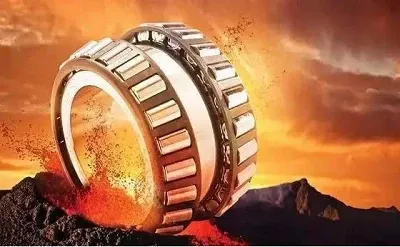
With the high-speed and lightweight of the host machine, the working conditions of the bearing are more demanding, and the performance requirements of the bearing are higher and higher, such as smaller volume, lighter weight, larger bearing capacity, higher service life and reliability. Among them, the life and reliability of domestic bearings have become more and more prominent problems in recent years. Developing new heat treatment technology and improving heat treatment quality have always been the topics of concern for bearing production enterprises and related enterprises and institutions at home and abroad. This paper summarizes the progress of heat treatment technology in recent years, with a view to providing reference for relevant personnel in China's bearing industry.
1. Annealing
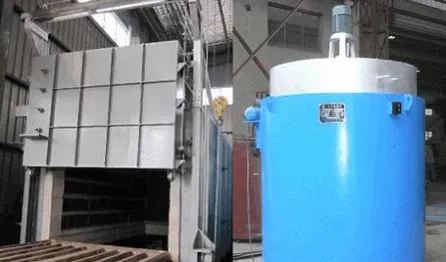
The ideal annealing structure of high carbon chromium bearing steel is the structure with fine, small, uniform and round carbide particles distributed on the ferrite matrix, which is prepared for the future cold working and final quenching and tempering. The traditional spheroidizing annealing process is to heat preservation at a temperature slightly higher than Acl (such as 780-810 ℃ for GCrl5), and then slowly cool down with the furnace (25 ℃ / h) to below 650 ℃ for air cooling. The heat treatment time of this process is long (more than 20h), and the particles of carbide after annealing are small and uniform, which affects the future cold working and final quenching and tempering microstructure and properties. Then, according to the transformation characteristics of supercooled austenite, an isothermal spheroidizing annealing process was developed: after heating, it was quickly cooled to a certain temperature range below Arl (690-720 ℃), and isothermal was carried out. During the isothermal process, the transformation of austenite to ferrite and carbide was completed. After the transformation, it could be directly discharged from the furnace for air cooling. The advantage of this process is to save heat treatment time (the whole process is about 12-18h). The carbides in the treated microstructure are fine and uniform, and the annealed microstructure can be easily controlled to level 2 ~ 3 or fine point microstructure in JBl255 standard, which significantly improves the performance after final heat treatment. In the 1980s, China began to widely promote this process in the industry, and developed and produced the corresponding isothermal annealing equipment. In recent years, from the perspective of energy saving, the oil electric compound heating isothermal annealing furnace and the isothermal annealing furnace with two chambers connected in parallel at the beginning and end have been developed, and the energy-saving effect is remarkable; At the same time, with the emergence of precision forming process and equipment for blanks, nitrogen based protective atmosphere isothermal annealing furnace has been adopted to reduce the oxidation and decarburization during annealing, and reduce the consumption of raw materials and machining costs.
2. Martensite quenching and tempering
The development of conventional martensitic quenching and tempering process of high carbon chromium bearing steel is mainly divided into two aspects: on the one hand, it is to carry out basic research on the influence of quenching and tempering process parameters on Microstructure and properties, such as microstructure transformation during quenching and tempering, decomposition of residual austenite, toughness and fatigue properties after quenching and tempering; On the other hand, it is the study of the technological properties of quenching with fire, such as the influence of quenching conditions on size and deformation, dimensional stability, etc.
2.1 Organization and performance
The microstructure of conventional martensite after quenching is composed of martensite, retained austenite and insoluble (residual) carbides. Among them, the martensite morphology of Dianli can be divided into two types: lath martensite and sheet martensite; According to the substructure, it can be divided into dislocation entanglement and twins. The specific microstructure mainly depends on the carbon content of the matrix. The higher the austenitic temperature is, the more unstable the original structure is, the higher the carbon content of the austenitic matrix is, the more retained austenite in the quenched structure is, the more lamellar martensite is, the larger the size is, the greater the proportion of twins in the substructure is, and quenching microcracks are easy to form. Generally, when the matrix carbon content is less than 0.3%, martensite is mainly lath martensite with dislocation substructure; When the carbon content of matrix is higher than 0.6%, martensite is sheet martensite with mixed arc structure of dislocation and twins; When the carbon content of the matrix is more than 0.75%, large martensite with obvious mid ridge surface appears, and there are microcracks at the impact of lamellar martensite growth. After quenching, the carbon content of martensite matrix of bearing steel is about 0.55%, and the microstructure is generally the mixed structure of lath and sheet martensite, or the intermediate form between them - jujube nucleate martensite, the so-called cryptocrystalline martensite and crystalline martensite in the bearing industry; The dumb structure is mainly dislocation entanglement and a small amount of twins. With the increase of quenching temperature or holding time, the microstructure gradually changes from cryptocrystalline to crystalline to fine needle. Generally, the normal structure after quenching is a mixture of cryptocrystalline + crystalline + fine acicular martensite. Once a large number of obvious acicular martensite appears, the structure is unqualified and should be avoided.
A large number of studies have been carried out at home and abroad on the effect of quenching on properties. Luoyang Bearing Research Institute carried out "Research on the heat treatment process of GCrl5 steel Chuan Yin. The research results show that when quenching heating is 835 ~ 865 ℃ and tempering is 150-180 ℃, better comprehensive mechanical properties and contact fatigue life can be obtained. When quenching at 845 ℃, the crushing load is the highest and the fatigue life is the longest; with the increase of tempering temperature and holding time, the hardness decreases and the strength and toughness increases. For parts with special requirements, higher temperature and fire can be used to improve the shaft." The service temperature of the bearing, or a cold treatment of 50~-78 ℃ between quenching and tempering to improve the dimensional stability of the bearing, or martensite step quenching to stabilize the residual austenite to obtain high dimensional stability and high toughness. After quenching and heating, bearing steel is subject to short-term graded isothermal air cooling at 250 ℃, followed by tempering at 180 ℃, or isothermal at martensite transformation temperature (martensite isothermal quenching), which can make the carbon concentration distribution in the quenched martensite more uniform, increase the stable residual austenite volume, and improve the impact toughness by twice as much as that of conventional quenching.
2.2 Deformation and dimensional stability of martensite quenching and tempering
In the process of martensite quenching and pitting, due to the uneven cooling of various parts of the part, thermal stress and structural stress inevitably occur, resulting in the deformation of the part. The deformation (including size change and shape change) of parts after quenching and quenching is affected by many factors, which is a quite complex problem. For example, the shape and size of the part, the uniformity of the original structure, the processing state before quenching (the size of the feeding alligator during turning, the residual stress of machining, etc.), the heating speed and temperature during quenching, the placement mode of the workpiece, the oil feeding mode, the characteristics and circulation mode of the quenching medium, and the temperature of the medium all affect the deformation of the part. A lot of research has been carried out at home and abroad, and many measures to control deformation have been put forward, such as rotary quenching, die quenching, and controlling the oil feeding mode of parts. Beck et al. Showed that when the transition temperature from vapor film stage to boiling stage is too high, large cooling rate and large thermal stress will deform austenite with low yield point and cause distortion of parts. Lubbenetal. Believe that the deformation is caused by the uneven immersion of oil between individual parts or parts, especially when new oil is used. Tensi et al. Believe that the cooling rate at MS point plays a decisive role in deformation, and low cooling rate at MS point and at f temperature can reduce deformation. Volkmuth et al. Systematically studied the quenching deformation of the inner and outer rings of tapered roller bearings by quenching media (including oil and salt bath). The results show that due to different cooling methods, the diameter of the ferrule will "increase" in varying degrees, and with the increase of the quenching medium temperature, the diameter increase degree of the large and small ends of the ferrule tends to be the same, that is, the "horn" deformation decreases, and at the same time, the elliptical deformation of the ferrule (the diameter variation momentum VDP, VOV in a single radial plane) decreases; The rigidity of the inner ring is large, and its deformation is less than that of the outer ring. In recent years, domestic and foreign heat treatment equipment manufacturers have greatly reduced the quenching deformation of the workpiece by changing the blanking method of the workpiece or adding a turnover mechanism under the blanking port.
The dimensional stability of parts after martensite quenching and quenching is mainly affected by three different transformations: carbon migrates from martensite to form a carbide, residual austenite decomposes and forms Fe3C, and the three transformations are superimposed. Between 50-120 ℃, due to the precipitation of carbides, the volume of the parts is reduced. Generally, the parts complete this transformation after being fired at 150 ℃, and its influence on the dimensional stability of the parts in the later use process can be ignored; At 100-250 ℃, residual austenite decomposes and transforms into martensite or bainite, which will be accompanied by volume increase; 200℃ above, e-carbide transforms into cementite, resulting in volume reduction. The research also shows that residual austenite can decompose under external load or at a lower temperature f (even at room temperature), resulting in the size change of parts. Therefore, in actual use, the same fire temperature of all bearing parts should be 50 ℃ higher than the service temperature. For parts with high dimensional stability requirements, the content of residual austenite should be reduced as much as possible, such as supplementary water cooling or cryogenic treatment after quenching, and higher tempering temperature should be adopted. However, retained austenite can improve toughness and crack propagation resistance. Under certain conditions, retained austenite on the surface of the workpiece can also reduce contact stress concentration and improve the contact fatigue life of the bearing.
2.3 development trend of conventional martensite quenching
At present, the conventional martensite quenching of bearing parts mostly adopts continuous quenching equipment such as chain casting furnace and mesh belt furnace, and the microstructure, hardness and other indicators after quenching can be easily controlled within the expected range. For this kind of quenching process, the development direction in the future includes the following two aspects:
2.3.1 control of quenching deformation
The quenching and heating equipment basically adopts protective atmosphere or controllable atmosphere, which can ensure no decarburization, or re carbonization or carburization as required, so as to greatly compress the machining allowance after heat treatment. But the compressibility of machining allowance is often restricted by quenching deformation. At present, quenching deformation (especially distortion) has become the main factor to control machining allowance; And for the rings of sealed dust-proof bearings, quenching distortion will affect the pressing in of the dust cover, and then affect the sealing performance. Therefore, reducing quenching distortion or achieving zero distortion will be the main i'uj problem to be solved in conventional martensite quenching. Because there are many factors that affect quenching distortion and the deformation mechanism is complex, each manufacturer should explore some effective measures to control distortion from production practice according to its own equipment and product characteristics, such as controlling the placement of workpiece, oil feeding mode, quenching oil and oil temperature, stirring, etc., so as to achieve less and no distortion quenching.
2.3.2 control and evaluation of residual stress and retained austenite
There are no evaluation index restrictions on residual stress and retained austenite in the current thermal inspection standards in China. A large number of studies show that residual stress affects the contact fatigue performance, toughness and grinding cracks of parts. Appropriate residual compressive stress can improve the contact fatigue life and prevent grinding and installation cracks; Retained austenite reduces dimensional stability, and its influence degree is related to the stability, quantity and existing position of retained austenite itself. However, an appropriate amount of retained austenite can improve the fracture toughness and contact fatigue properties. Many famous foreign bearing companies have included residual stress and retained austenite in the heat treatment control index. Therefore, further research on the influence and mechanism of residual stress and residual austenite on the performance after heat treatment, research on the influence of quenching and tempering process on residual stress and residual austenite, and then put forward the control indicators of residual stress and residual austenite according to the working conditions of bearings will be one of the main directions of heat treatment research in China's bearing industry.
3 Bainite isothermal quenching
Bainite isothermal quenching is a hot topic in domestic bearing industry in recent years. Since the 1980s, Luoyang Bearing Research Institute has cooperated with Chongqing bearing factory to start the application research of bainite isothermal quenching on railway bearings, and then carried out the application research of bainite isothermal quenching on rolling mill bearings with Shahe rolling mill bearing factory, which has achieved good results, and introduced the recommended technical requirements related to bainite isothermal quenching in JBl255-1991. At the same time, the bearing industry has also begun the popularization and application of bainite isothermal quenching. With the help of the national "Eighth Five Year Plan" key enterprise technology development project "railway passenger car bearing", the relevant units have carried out a systematic study on the microstructure and properties of bainite austempering, which has been successfully applied to the production of quasi high-speed railway bearings. In 2001, when jbl255 was revised, the technical content of bainite isothermal quenching was officially included in the formal provisions of the standard. Bainite quenching technology has been widely used in rolling mill, locomotive, railway passenger and other bearings.
3.1 Microstructure and mechanical properties of bainite quenching
The isothermal quenching structure of lower bainite in high carbon chromium bearing steel is composed of lower bainite and residual carbide. Among them, bainite is an irregularly intersected carbon supersaturated q-structure strip, on which is distributed 55,.-60 with the long axis of the strip. The spatial morphology of the granular or short rod-shaped carbide is convex lenticular, the substructure is dislocation entanglement, and no twin substructure is found. The quantity and morphology of bainite vary with different process conditions. With the increase of quenching temperature, the bainite strip becomes longer; With the increase of isothermal temperature, the bainite strips become wider, the carbide particles become larger, and the intersection angle between bainite strips becomes smaller, which tends to be arranged in parallel, forming a structure similar to the upper bainite; Bainite transformation is a process related to isothermal transformation time. The amount of bainite after isothermal quenching increases with the extension of isothermal time. At present, there are still many disputes about the transformation mechanism of bainite. Further research on the transformation mechanism will provide a theoretical basis for further optimizing the bainite quenching process and expanding its application.
The lower bainite structure of high carbon chromium bearing steel can improve the proportional limit, yield strength, bending strength and area reduction of the steel. Compared with the quenched martensite structure, it has higher impact toughness, fracture toughness and dimensional stability. The surface stress state is compressive stress. A high threshold value △ kth and a low crack growth rate Da / dN mean that the bainite structure is not easy to crack, Existing cracks or newly initiated cracks are not easy to expand.
It is generally believed that the wear resistance and contact fatigue properties of full bainite or horse / shell composite structure are lower than that of quenched low-temperature and fire martensite, and the wear resistance and contact fatigue properties of martensite with similar temperature and fire are similar or slightly higher. However, under the poor lubrication condition f (such as coal slurry or water), the full BL structure shows obvious advantages, which is much higher than the contact fatigue life of M structure at low temperature and fire, such as L10=168h for full BL structure under water lubrication and L10=52h for tempered M structure.
3.2 production application
The outstanding characteristics of bainite structure are impact toughness, fracture toughness, wear resistance, good dimensional stability, and the surface residual stress is compressive stress. Therefore, it is suitable for assembling bearings with large interference and poor service conditions, such as railway, rolling mill, crane and other bearings bearing large impact load, mine transportation machinery or mine loading and unloading system with poor lubrication conditions, coal mine bearings, etc. The high carbon chromium bearing steel BL austempering t-process has been successfully applied in railway and rolling mill bearings and achieved good results.
In the production of railway and rolling mill bearings, due to the large size and heavy weight of the ferrule, the martensite structure is brittle during oil quenching. In order to obtain high hardness after quenching, strong cooling measures are often taken, resulting in quenching microcracks; Because the surface of martensite after quenching is tensile stress, the superposition of grinding stress during grinding increases the overall stress level, which is easy to form grinding cracks and cause batch scrap. When bainite is quenched, because the toughness of bainite structure is much better than that of M structure, and a compressive stress of -400~500mpa is formed on the surface, the quenching crack tendency is greatly reduced; During grinding, the surface compressive stress counteracts part of the grinding stress, reduces the overall stress level, and greatly reduces the grinding cracks.
SKF company mainly applies the bainite isothermal quenching process of high carbon chromium bearing steel to railway bearings, rolling mill bearings and bearings used under special working conditions, and has developed steel grades suitable for bainite quenching (SKF24, SKF25, 100Mo7). The whole lower bainite structure is obtained after quenching with a long isothermal time. Recently, SKF has developed a new steel 775V and obtained more uniform lower bainite through special isothermal quenching. While the hardness increases after quenching, its toughness is 60% higher than that of conventional isothermal quenching, and the wear resistance is increased by 3 times. The wall thickness of the treated ferrule is more than 100mm.
The properties of martensite / bainite composite structure obtained after partial isothermal are still controversial, such as the content of BL is the best. Even if there is an optimal content, how to control it in production practice, and the composite structure needs an additional firing after isothermal, which increases the production cost. In addition, as far as bainite isothermal quenching is concerned, although its process, structure and properties have been systematically studied, while vigorously promoting this t-process, attention should be paid to the limitations of this t-process. Not all bearing parts are suitable for bainite isothermal quenching. The development of bainite austempering steel should also be carried out to further improve the properties of bainite after austempering; Carry out the development of isothermal heat treatment equipment to replace nitrate, reduce environmental pollution and so on.
4 Special heat treatment
High carbon chromium bearing steel is generally hardened as a whole, and the residual stress after quenching is in the state of surface tensile stress, which is easy to cause quenching cracks and reduce the service performance of bearings. One kind of special heat treatment is through carburizing, nitriding or carbonitriding of high carbon chromium bearing steel to improve the carbon and nitrogen content of the intermediate layer, reduce the MS point of the surface layer, and form surface compressive stress after surface transformation during quenching, so as to improve wear resistance and rolling contact fatigue. On the other hand, a certain amount of stable residual austenite is retained in the bearing parts after heat treatment through certain methods, and the easily deformed residual austenite is used to reduce the edge effect of indentation, so that the surface fatigue source originating from the edge of indentation is not easy to form and expand, so as to improve the contact fatigue life of bearing under polluted conditions. Generally, the above purpose can be achieved by controlling the carbon (nitrogen) potential of the atmosphere during quenching and heating. NSJ2 steel of NSK and SH technology of KOYO are developed based on this theory.
Another kind of special heat treatment method is to use high toughness carburized steel with high matrix carbon content (0.4%) combined with special carburizing or carbonitriding heat treatment. First, adjust the composition of carburized steel: on the premise of ensuring toughness, increase the carbon content of the matrix to improve the strength of the matrix, at the same time, increase the fluorescence content of Si and Mn to improve the stability of residual austenite, and add Mo to refine carbides and carbonitrides. The second is to strictly control the carburizing or carbonitriding process, so that more residual austenite (about 30%'--35%) and a large number of fine carbides and carbonitrides can be obtained on the surface of the parts after treatment. On the one hand, the tiny carbides and carbonitrides of the turtle can ensure the hardness and wear resistance of the surface, making the indentation difficult to form; On the other hand, even if indentation is formed, more stable retained austenite can reduce its edge effect and prevent the formation and expansion of fatigue sources. Based on this theory, NSK and KOYO developed TF series technology (HTF, STF, NTF) and Ke technology respectively, which greatly improved the service life of bearings under polluted lubrication conditions. For example, the fatigue life of tapered roller bearings produced by NSK with HTF technology under polluted lubrication is 10 times that of ordinary bearings. NSK and other companies have used special heat treatment technology in a variety of newly developed bearing products.
In recent years, Luoyang Bearing Research Institute has cooperated with relevant units to carry out the research on the special heat treatment process of high carbon chromium bearing steel, and also exclusively carried out the research on the special heat treatment process of medium carbon alloy steel. The preliminary results show that the contact fatigue life can be significantly improved by special heat treatment. This technology will have great promotion value in the bearing industry, and will become a hot technology in the research and application of China's bearing industry.
5 Conclusion
Throughout the development of bearing heat treatment technology at home and abroad, there is still a large gap between China's bearing industry and foreign developed countries' heat treatment technology, which seriously restricts the improvement of bearing quality, especially life and reliability. The whole bearing industry should pay attention to the research of basic theory and new technology of heat treatment, and vigorously promote and apply the research results in actual production, so as to improve the level of heat treatment in China as soon as possible.
More about WBM new product taper roller with a hole in the centre:
Henan Weichuang Bearing Technology Co.,Ltd successfully finished the development of taper roller with hole in the center. Heat treatment was done by case harden. This kind of roller widely used in wind turbines bearing or special industries bearing. New energy bearing brings a new increase point in bearing market. Weichuang purchase two plug in type centerless grinder and one plug in type honing machine. Expand the taper rollers production capacity, now can supply roller diameter from 5 to 80mm.
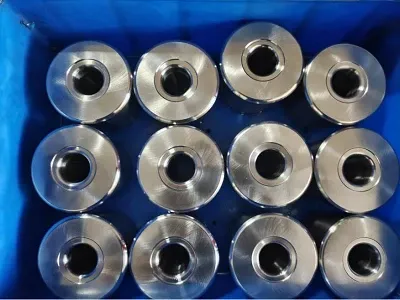
WBM are professional taper roller manufacturers and suppliers in China, with bulk high-quality products in stock. If you are going to buy a customized taper roller at a competitive price, welcome to get a quotation from the WBM factory. In line with the business philosophy of pursuing excellence, continuous improvement and common prosperity, the ball header, solid steel balls, roller header produced from WBM is absolutely high-quality and inexpensive.