Abstract
The present invention relates to a method for processing bearing rollers, specifically a method for processing large cone angle tapered rollers with a length to diameter ratio less than 1. The processing process is as follows: using spiral guide wheels with different angles to grind the outer circle of the roller multiple times, gradually grinding the outer circle of the roller to the required angle; Heat treatment of rollers between soft grinding and rough grinding processes; Grind the roller end face when the half cone angle of the roller does not exceed 6 ° between two rough grindings; When grinding the roller ball base surface with a medium soft grinding wheel between rough grinding and fine grinding. By adopting the processing method of the present invention, the surface of the roller can be ground uniformly without defects such as black skin, and the accuracy is high. This greatly reduces the noise of the matching bearings during operation and improves their service life.
Description
Processing method for large cone angle tapered rollers with aspect ratio less than 1
Technical field
The present invention belongs to the field of rolling bearing manufacturing and relates to a processing method for bearing rollers, specifically a processing method for large cone angle tapered rollers with a length to diameter ratio less than 1.
Background technology
The half cone angle of a general tapered roller is within the range of 1 ° to 4 °, and a half cone angle exceeding 4 ° is called a large tapered tapered roller. In addition, the length of a general tapered roller is larger than its diameter (referring to the diameter of the tapered roller's large head), that is, the ratio of length to diameter is greater than 1. However, there are some special tapered rollers whose length is smaller than their diameter, which are called tapered rollers with a length to diameter ratio less than 1.
When the tapered roller has a large cone angle and the aspect ratio is less than 1, its processing difficulty is much greater than that of ordinary rollers, mainly manifested in the following aspects:
(1) Difficulty in locating the cold pier roller blank. The concave die used for cold heading roller blanks has a large cone angle and shallow depth. After the cylindrical section is placed in the concave die cavity, the stability of positioning is poor and it is easy to deviate, which often leads to blank deviation.
(2) Difficulty in forming raw materials. The diameter difference between the large and small heads of this type of roller is large and relatively short. When cold heading the blank, both the large and small heads need to undergo significant deformation in order to match the shape of the inner cavity. Therefore, it is possible for the small head to undergo severe cold work hardening due to high extrusion pressure, while the large head may experience cracks due to excessive deformation.
(3) Grinding the outer circle is difficult. When grinding the outer circle of this type of roller on an external cylindrical centerless grinder, the roller is positioned by a spiral guide wheel, which drives the roller to rotate and move forward. During rough grinding, the large cone angle of the roller may cause jumping and stalling, thereby affecting the machining quality.
(4) Double end face grinding is difficult. When grinding the large and small end faces of this type of roller on a double end grinder, the roller is brought into the grinding area through a feeding tray. Due to the large cone angle of the roller, the positioning in the loading space of the feeding tray is unstable, and the difference in grinding force between the two end faces causes the roller to tilt, thereby affecting the machining accuracy.
(5) Grinding the ball base surface is difficult. According to the needs of the bearing, the curvature radius of the base surface of this type of roller is designed to be relatively small. When grinding the base surface of the ball, the amount of grinding on the edge of the base surface is much larger than that in the middle, which can easily cause burns on the edge of the base surface during grinding.
Due to the above reasons, if large cone angle tapered rollers with a length to diameter ratio less than 1 are processed using conventional processing methods, quality defects such as insufficient material or cracks on the roller surface, incomplete grinding of the outer circle leaving black skin, burning of the ball base surface, and different axes at both ends of the roller may occur. As a result, the scrap rate is high and the production efficiency is low.
Summary of the invention
To solve the above technical problems, the present invention proposes a processing method specifically for large cone angle tapered rollers with a length to diameter ratio less than 1. This method avoids the processing difficulties caused by the large cone angle of the rollers in each process, and first cold crushes the roller blank into a 4 ° half cone angle, and then gradually processes the rollers into the required half cone angle through processes such as soft grinding, rough grinding, and fine grinding. This method can reduce the processing difficulty of large cone angle tapered rollers with a length to diameter ratio less than 1, achieving the goal of reducing scrap rates and improving production efficiency.
The specific steps adopted by the present invention to complete its invention task are as follows:
1) Design the structural dimensions of roller blanks: For large cone angle tapered rollers with a half cone angle greater than 4 °, design the half cone angle of their blanks uniformly at 4 °; The diameter of the rough head is calculated based on the dimensions specified in the drawing plus the grinding allowance for the head; The small head diameter is calculated based on the calculated large head diameter, the length specified in the drawing, and the grinding allowance of the end face, with a half cone angle of 4 °; The allowance for large head outer circle grinding and end face grinding is determined based on the roller diameter. For rollers with a diameter of less than 10mm, the allowance for large head outer circle grinding is selected within the range of 0.3-0.35mm, and the allowance for end face grinding is selected as 0.3mm; Roller with a diameter of 10-20mm, with a large head outer circle grinding allowance selected within the range of 0.4-0.5mm, and an end face grinding allowance selected within the range of 0.4-0.6mm; For rollers with a diameter of 20mm or more, the large head outer circle grinding allowance should be selected within the range of 0.6~0.7mm, and the end face grinding allowance should be selected within the range of 0.6~0.8mm; After designing the structure of the blank according to the above method, although the grinding amount of the small head increases, it solves the problem of cold pier;
2) Design and manufacture cold pier molds according to the cone angle and structural dimensions of the designed blank;
3) Stamping roller blanks on cold heading machines using designed and manufactured molds;
4) Place the stamped roller blank on an external cylindrical centerless grinder for soft grinding of the outer circle; Using a 4 ° spiral guide wheel soft grinding, remove 0.15-0.35mm from the outer surface, and after soft grinding, there should still be a margin of 0.15-0.35mm for the large end of the roller;
5) Place the roller that has undergone the first round of soft grinding on the cylindrical centerless grinder for the second round of soft grinding; If the half cone angle of the roller specified in the drawing is greater than or equal to 5 °, use a 5 ° spiral guide wheel for the second soft grinding of the outer circle; If the half cone angle of the roller specified in the drawing is less than 5 °, use a spiral guide wheel with the same half cone angle as the roller specified in the drawing for the second soft grinding of the outer circle of the roller; The second soft grinding should remove 0.03-0.05mm from the outer surface of the big head, and there should be a remaining allowance of 0.12-0.30mm on the outer surface of the roller big head;
6) Place the rollers that have undergone soft grinding in a heat treatment furnace for quenching and tempering; The quenching temperature is 830-840 ℃, and the holding time is 40-60 minutes; The tempering temperature is 150-160 ℃, and the holding time is 2-2.5 hours; Afterwards, remove from the furnace and cool to room temperature;
7) Place the quenched and tempered rollers on an external cylindrical centerless grinder for the first rough grinding of the outer circle; If the half cone angle of the roller specified in the drawing is greater than or equal to 6 °, use a 6 ° spiral guide wheel for rough grinding to remove 0.02~0.05mm of the outer surface of the roller head. After rough grinding, there should still be a margin of 0.1~0.25mm on the outer surface of the roller head; If the half cone angle of the roller specified in the drawing is less than 6 °, a spiral guide wheel with the same half cone angle as the roller specified in the drawing can be used for rough grinding, which can remove 0.04~0.10mm of the outer surface of the large end. After rough grinding, there should still be a margin of 0.08~0.20mm on the outer surface of the large end of the roller;
8) Place the roller that has undergone the first rough grinding on a double end grinder to grind both end faces; Grind off the large and small heads by 0.11-0.35mm, and there should still be a grinding amount of 0.08-0.1mm in the length direction of the roller after grinding; 9) Place the roller that has undergone double end face grinding on the cylindrical centerless grinder for a second rough grinding of the outer circle; If the half cone angle of the roller specified in the drawing is greater than or equal to 7 °, use a 7 ° spiral guide wheel for the second rough grinding of the outer circle; If the half cone angle of the roller specified in the drawing is less than 7 ° and greater than 6 °, use a spiral guide wheel with the same half cone angle as the roller specified in the drawing for the second rough grinding of the outer circle; If the half cone angle of the roller specified in the drawing is less than 6 °, no further rough grinding of the outer circle will be carried out; For rollers with a half cone angle of 6 ° or more, after the second rough grinding, the outer surface of the large head should be removed by 0.02~0.05mm. After the second rough grinding, there should still be a margin of 0.08~0.20mm left on the outer surface of the large head;
9) Place the roller that has undergone the second rough grinding on the cylindrical centerless grinder for the third rough grinding of the outer circle; If the half cone angle of the roller specified in the drawing is greater than or equal to 8 °, use an 8 ° spiral guide wheel for the third rough grinding of the outer circle; If the half cone angle of the roller specified in the drawing is less than 8 ° and greater than 7 °, use a spiral guide wheel with the same half cone angle as the roller specified in the drawing for the third rough grinding of the outer diameter; If the half cone angle of the roller specified in the drawing is less than or equal to 7 °, the third rough grinding of the outer diameter will not be carried out; For rollers with a half cone angle greater than 7 °, after the third rough grinding, the outer surface of the large end should be removed by 0.02~0.05mm, and there should still be a clearance of 0.06~0.15mm on the outer surface of the large end of the roller after rough grinding;
10) Place the roller that has undergone rough grinding on the ball surface grinder to grind the ball surface, using a medium soft grinding wheel. After grinding, the spherical curvature radius should meet the requirements of the drawing, and the roller length should meet the requirements of the drawing;
11) Place the roller that has been ground on the spherical surface on the cylindrical centerless grinder for precision grinding of the outer circle; Using a spiral guide wheel with the same half cone angle as the finished roller, the outer circumference of the large end of the roller is left with a tolerance of 0.04-0.08mm after grinding;
12) Place the roller that has been finely ground into an outer circle on the cylindrical centerless grinder for final grinding of the outer circle; Use a spiral guide wheel with the same half cone angle as the finished roller for final grinding of the outer circle. After final grinding, the outer circle of the roller should reach the size specified in the drawing.
The processing principle of the present invention is: cold heading the blank into a small angle billet with a half cone angle of 4 °, then using multiple different angles of spiral guide wheels to grind the outer diameter of the roller, gradually grinding the half cone angle of the roller from small to large to the required angle, and finally using a spiral guide wheel with the same angle as the finished roller to finally grind off all the grinding amount of the outer circle of the roller, forming a large cone angle tapered roller with a length to diameter ratio of less than 1.
The beneficial effects of the present invention are: by using the processing method of the present invention, the outer surface of the roller can be uniformly processed without defects such as cracks, burns, and black skin, and the processing accuracy is high, which reduces the noise of the matching bearings during operation and improves their service life.
Specific implementation method
The processing method of the present invention will be explained in conjunction with the provided embodiments as follows.
Example 1
The model of the processed tapered roller is 829234
Half cone angle: 5 ° 3 ′
Big head diameter: 19.6mm
Length: 15.7mm
The curvature radius of the spherical base surface is 105mm
The processing method is as follows:
1. Design the structure of the roller blank according to a 4 ° half cone angle. After calculation, the diameter of the large head of the blank is 20.1mm, the diameter of the small head is 17.8mm, and the length is 16.5mm.
2. Design and manufacture cold pier molds according to the designed rough cone angle and structural dimensions.
3. Stamping roller blanks on cold heading machines using designed and manufactured molds.
4. Place the stamped roller blank on an external cylindrical centerless grinder for soft grinding of the outer circle. Using a 4 ° spiral guide wheel soft grinding, the diameter of the roller head after soft grinding is 19.95mm, with a remaining allowance of 0.35mm.
5. Place the roller that has undergone the first round of soft grinding on the cylindrical centerless grinder for the second round of soft grinding. Using a 5 ° spiral guide wheel for the second soft grinding of the outer circle, the diameter of the roller head after grinding is 19.85mm, with a remaining allowance of 0.25mm.
6. Place the soft ground rollers in a heat treatment furnace for quenching and tempering. The quenching temperature is 830-840 ℃, and the holding time is 40-60 minutes; The tempering temperature is 150-160 ℃, and the holding time is 2-2.5 hours. Afterwards, remove from the furnace and cool to room temperature.
7. Place the quenched and tempered rollers on an external cylindrical centerless grinder for rough grinding of the outer circle. Using a 5 ° 3 'spiral guide wheel for grinding, the outer diameter of the roller head after grinding is 19.75mm, with a remaining allowance of 0.15mm.
8. Place the roughly ground roller on a double end grinder to grind both end faces. The length of the roller after grinding is 15.8mm, with a grinding amount of 0.1mm.
9. Place the roller that has undergone rough grinding on the ball surface grinder to grind the ball surface, using a medium soft grinding wheel. After grinding, the spherical curvature radius should meet the requirements of the drawing, and the roller length should meet the requirements of the drawing.
10. Place the roller that has been ground on the spherical surface on the cylindrical centerless grinder for precision grinding of the outer circle. Using a spiral guide wheel with the same half cone angle as the finished roller, the outer diameter of the roller head after grinding is 19.65mm, with a remaining allowance of 0.05mm.
11. Place the roller that has been finely ground on the cylindrical centerless grinder for final grinding of the outer circle. Use a spiral guide wheel with the same half cone angle as the finished roller for final grinding of the outer circle. After final grinding, the outer circle of the roller should reach the size specified in the drawing.
Implementation Example 2
The model of the processed tapered roller is 829748
Half cone angle: 6 ° 24 ′
Big head diameter: 22.8mm
Length: 18.23mm
The curvature radius of the spherical base surface is 141mm
The processing method is as follows:
1. Design the structure of the roller blank according to a 4 ° half cone angle. After calculation, the diameter of the large head of the blank is 23.4mm, the diameter of the small head is 20.8mm, and the length is 18.83mm.
2. Design and manufacture cold pier molds according to the cone angle and structural dimensions of the designed blank.
3. Stamping roller blanks on cold heading machines using designed and manufactured molds.
4. Place the stamped roller blank on an external cylindrical centerless grinder for soft grinding of the outer circle. Using a 4 ° spiral guide wheel soft grinding, the diameter of the roller head after soft grinding is 23.15mm, with a remaining allowance of 0.35mm.
5. Place the roller that has undergone the first round of soft grinding on the cylindrical centerless grinder for the second round of soft grinding. Using a 5 ° spiral guide wheel for the second soft grinding of the outer circle, the diameter of the roller head after grinding is 23.05mm, with a remaining allowance of 0.25mm.
6. Place the soft ground rollers in a heat treatment furnace for quenching and tempering. The quenching temperature is 830-840 ℃, and the holding time is 40-60 minutes; The tempering temperature is 150-160 ℃, and the holding time is 2-2.5 hours. Afterwards, remove from the furnace and cool to room temperature.
7. Place the quenched and tempered rollers on an external cylindrical centerless grinder for rough grinding of the outer circle. Using a 6 ° spiral guide wheel for grinding, the outer diameter of the roller head after grinding is 22.95mm, with a remaining allowance of 0.15mm.
8. Place the roughly ground roller on a double end grinder to grind both end faces. The length of the roller after grinding is 18.33mm, with a grinding amount of 0.1mm.
9. Place the roller that has undergone double end face grinding on the cylindrical centerless grinder for a second rough grinding of the outer circle; Using a spiral guide wheel with the same half cone angle as the finished roller, the outer diameter of the large end of the roller after grinding is 22.89 mm, with a clearance of 0.09 mm.
10. Place the roller that has undergone rough grinding on the ball surface grinder to grind the ball surface. Use a medium soft grinding wheel. After grinding, the spherical curvature radius should meet the requirements of the drawing, and the roller length should meet the requirements of the drawing.
11. Place the roller that has been ground on the spherical surface on the cylindrical centerless grinder for precision grinding of the outer circle. Using a spiral guide wheel with the same half cone angle as the finished roller, the outer diameter of the large end of the roller after grinding is 22.84, with a clearance of 0.04mm.
12. Place the roller that has been finely ground on the cylindrical centerless grinder for final grinding of the outer circle. Use a spiral guide wheel with the same half cone angle as the finished roller for final grinding of the outer circle. After final grinding, the outer circle of the roller should reach the size specified in the drawing.
2024 August 2nd Week WBM Product Recommendation:
Heading dies,Punch:
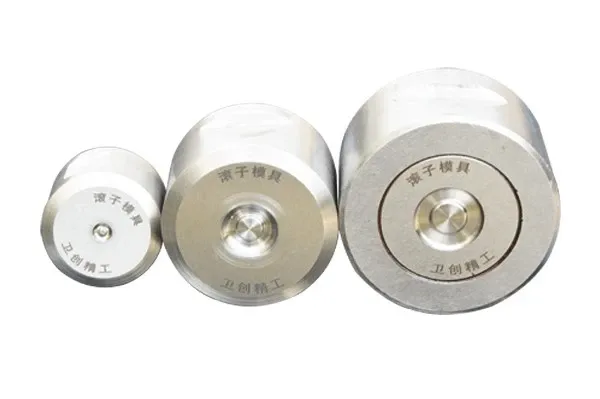
WBM produces taper roller dies with high efficiency and automation. Rollers are formed on a single automatic cold heading press and are fed, cut, and punched into the die for five steps.
We can produce different types and sizes taper roller dies with quality assurance,include:Combination Punch,Outside Sleeve,Blade,Combination Punch,Feed Cylinder,Combination Dies,Double Layer Sleeve,Insert.
https://www.w-bm.com/products/Taper-roller-cold-heading-dies/Heading-dies,Punch/400.html