
In the vast and dynamic world of marine operations, steel balls play a crucial yet often overlooked role. As a dedicated steel ball supplier, I have witnessed firsthand the diverse applications of these small but mighty components across various types of marine equipment. In this blog post, I will delve into the different types of marine equipment that rely on steel balls, exploring their functions and the specific requirements for the steel balls used.
1. Marine Engines
Marine engines are the heart of any vessel, providing the power needed to propel it through the water. Steel balls are used in several key components of marine engines, including bearings and fuel injection systems.
Bearings
Bearings are essential for reducing friction and enabling smooth rotation of engine components. In marine engines, steel balls are commonly used in ball bearings, which consist of an inner and outer race separated by a set of steel balls. These bearings support the rotating shafts of the engine, such as the crankshaft and camshaft, ensuring efficient power transmission and minimizing wear and tear.
The steel balls used in marine engine bearings must meet strict quality and performance standards. They need to be made from high - quality steel with excellent hardness, wear resistance, and corrosion resistance. For example, chrome steel balls are often used due to their high hardness and good corrosion resistance, which can withstand the harsh operating conditions of marine engines, including high temperatures, high loads, and exposure to saltwater.
Fuel Injection Systems
Fuel injection systems are responsible for delivering the precise amount of fuel into the engine cylinders at the right time. Steel balls are used in the injectors of these systems to control the flow of fuel. The balls act as valves, opening and closing to regulate the fuel flow rate.
The steel balls used in fuel injection systems need to have a high degree of precision in terms of size and shape. Any deviation in the size or shape of the ball can affect the fuel flow rate and the performance of the engine. Additionally, they must be able to withstand high pressures and the corrosive effects of fuel. For this reason, stainless steel balls are often preferred as they offer good corrosion resistance and can maintain their shape and performance under high - pressure conditions.
2. Steering Systems
Steering systems are crucial for controlling the direction of a vessel. Steel balls are used in steering gears, which are responsible for converting the rotational motion of the steering wheel into the linear motion required to turn the rudder.
Rack and Pinion Steering Gears
In rack and pinion steering gears, steel balls are used in the ball screws. The ball screw consists of a screw shaft and a nut with a series of steel balls in between. When the screw shaft rotates, the balls roll between the screw and the nut, converting the rotational motion into linear motion. This linear motion is then used to move the rack, which in turn moves the rudder.
The steel balls used in ball screws need to have a high load - carrying capacity and low friction. They must be able to withstand the high forces generated during steering operations and ensure smooth and precise movement of the steering system. High - carbon steel balls are often used in these applications due to their high strength and good wear resistance.
3. Anchor Winches
Anchor winches are used to raise and lower the anchor on a vessel. Steel balls are used in the bearings of the winch drums and the gearboxes of the winches.
Bearings in Winch Drums
The winch drum rotates to wind and unwind the anchor chain. Steel ball bearings are used to support the drum shaft, reducing friction and allowing for smooth rotation. The steel balls in these bearings need to be able to withstand the heavy loads imposed by the anchor chain and the weight of the anchor. They also need to have good corrosion resistance, as they are often exposed to saltwater and other harsh marine environments.
Gearboxes
Gearboxes are used to increase the torque and control the speed of the winch. Steel balls are used in the bearings of the gears to ensure smooth rotation and efficient power transmission. The steel balls in gearbox bearings need to have high precision and good wear resistance to maintain the proper operation of the gearbox.
4. Navigation Equipment
Navigation equipment is essential for ensuring the safety and efficiency of marine operations. Steel balls are used in some types of navigation equipment, such as gyrocompasses.
Gyrocompasses
Gyrocompasses are used to determine the true north direction of a vessel. They rely on the principle of gyroscopic stability to maintain a fixed orientation. Steel balls are used in the bearings of the gyroscope rotor, which rotates at high speeds.
The steel balls used in gyrocompass bearings need to have extremely low friction and high precision. Any friction in the bearings can cause the gyroscope to lose its stability and affect the accuracy of the compass. Additionally, they must be made from materials that are non - magnetic to avoid interference with the magnetic field of the compass.
5. Marine Pumps
Marine pumps are used for various purposes on a vessel, such as bilge pumping, ballast pumping, and fuel transfer. Steel balls are used in the check valves of these pumps.
Check Valves
Check valves are used to allow the flow of fluid in one direction and prevent backflow. Steel balls are used as the closing elements in check valves. When the fluid flows in the forward direction, the ball is pushed away from the valve seat, allowing the fluid to pass through. When the flow reverses, the ball is pushed back onto the valve seat, preventing backflow.
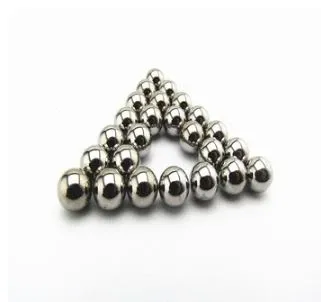
The steel balls used in check valves need to have a good sealing ability and be able to withstand the pressure of the fluid. They also need to be corrosion - resistant, as they are often in contact with water or other corrosive fluids. Stainless steel balls are commonly used in marine pump check valves for their corrosion resistance and good sealing properties.
The Importance of Choosing the Right Steel Balls
When it comes to marine equipment, choosing the right steel balls is crucial. The performance and reliability of the equipment depend on the quality and suitability of the steel balls used. As a steel ball supplier, I understand the importance of providing high - quality steel balls that meet the specific requirements of different marine applications.
For example, in applications where corrosion resistance is a major concern, such as in anchor winch bearings and marine pump check valves, stainless steel balls are the ideal choice. In applications that require high precision and low friction, such as in gyrocompass bearings and fuel injection systems, precision - ground steel balls are necessary.
Conclusion
In conclusion, steel balls are used in a wide range of marine equipment, from engines and steering systems to anchor winches and navigation equipment. Each application has its own specific requirements for the steel balls, in terms of size, material, hardness, precision, and corrosion resistance. As a [Your Position] at a steel ball supply company, I am committed to providing high - quality steel balls that meet these diverse requirements.
If you are in the market for steel balls for your marine equipment, I invite you to explore our product range. We offer a variety of steel balls, including Metal Ball, Metric Steel Ball, and Solid Steel Balls. Our team of experts is ready to assist you in selecting the right steel balls for your specific needs. Contact us today to start a discussion about your procurement requirements.
References
- "Marine Engineering Handbook" by C. B. Barrass
- "Principles of Naval Architecture" by The Society of Naval Architects and Marine Engineers
- "Ball Bearings: Design, Engineering, and Application" by Peter Musgrave