
Hey there! As a supplier of spherical rollers, I've been getting a bunch of questions lately about the best type of lubricant for these bad boys. So, I thought I'd sit down and write this blog to share some insights based on my experience and knowledge.
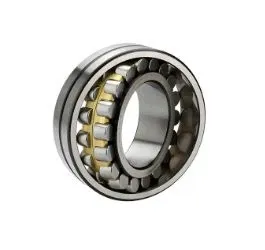
First off, let's talk about why lubrication is so crucial for spherical rollers. Spherical rollers are designed to handle heavy loads and provide smooth rotation in a wide range of applications, from industrial machinery to automotive systems. Without proper lubrication, these rollers can experience excessive wear and tear, leading to premature failure and costly downtime. Lubricants help reduce friction between the roller and the raceway, dissipate heat, and prevent corrosion, ensuring that the spherical rollers operate at their best.
Now, let's dive into the different types of lubricants available and which ones are best suited for spherical rollers.
Grease Lubricants
Grease is one of the most commonly used lubricants for spherical rollers, and for good reason. It has several advantages that make it a top choice in many applications.
Advantages of Grease
- Retention: Grease stays in place better than oil, which means it can provide long - lasting lubrication without the need for frequent re - application. This is especially useful in applications where the rollers are difficult to access.
- Sealing: It acts as a sealant, preventing contaminants like dust and water from entering the bearing area. This helps extend the life of the spherical rollers by reducing the risk of abrasive wear and corrosion.
- Simplified Design: Grease - lubricated bearings often have a simpler design, as they don't require complex oil delivery systems.
Disadvantages of Grease
- Heat Dissipation: Grease may not dissipate heat as effectively as oil, which can be a problem in high - speed or high - temperature applications.
- Limited Speed: There are limitations to the speed at which grease - lubricated spherical rollers can operate. At very high speeds, the grease can be thrown out of the bearing, reducing its effectiveness.
When choosing a grease for spherical rollers, you need to consider factors like the operating temperature, load, and speed. For example, in low - speed, high - load applications, a high - viscosity grease with good load - carrying capacity would be ideal. On the other hand, in high - speed applications, a low - viscosity, high - temperature - resistant grease might be a better choice.
Oil Lubricants
Oil lubrication is another option for spherical rollers, and it has its own set of benefits and drawbacks.
Advantages of Oil
- Heat Dissipation: Oil is much better at dissipating heat compared to grease. This makes it suitable for high - speed and high - temperature applications, where excessive heat can cause premature failure of the rollers.
- Cleaning: Oil can carry away contaminants from the bearing area, acting as a cleaning agent. This helps keep the spherical rollers clean and reduces the risk of abrasive wear.
- High - Speed Capability: Oil - lubricated bearings can generally operate at higher speeds than grease - lubricated ones.
Disadvantages of Oil
- Retention: Oil is more likely to leak or be lost from the bearing area, requiring more frequent re - filling. This can be a problem in some applications, especially those where leakage is not acceptable.
- Complexity: Oil lubrication systems can be more complex and expensive to install and maintain compared to grease - lubricated systems. They often require pumps, filters, and oil reservoirs.
There are different types of oils available, such as mineral oils, synthetic oils, and vegetable oils. Synthetic oils, for example, offer better performance at extreme temperatures and have a longer service life compared to mineral oils. However, they are also more expensive.
Solid Lubricants
Solid lubricants are less commonly used but can be a good option in certain situations. These lubricants come in the form of powders, coatings, or composites.
Advantages of Solid Lubricants
- Extreme Conditions: Solid lubricants can provide lubrication in extreme conditions, such as high temperatures, high pressures, or environments with a lack of oxygen.
- Low Friction: They can offer low friction coefficients, which helps reduce wear on the spherical rollers.
- Long - Term Lubrication: In some cases, solid lubricants can provide long - term lubrication without the need for frequent re - application.
Disadvantages of Solid Lubricants
- Limited Load - Carrying Capacity: Solid lubricants may not have the same load - carrying capacity as grease or oil in some applications.
- Difficult to Apply: Applying solid lubricants can be more difficult compared to grease or oil, and they may require special equipment or processes.
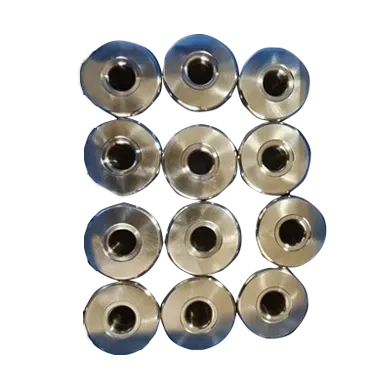
If you're looking for spherical rollers or related products, we also offer 2022 New product Taper Roller With Hole in The Center, Conical Rollers, and Cross Roller. These products are designed to meet the highest quality standards and are suitable for a wide range of applications.
How to Choose the Right Lubricant
Choosing the right lubricant for your spherical rollers depends on several factors:
- Operating Conditions: Consider the temperature, speed, and load of the application. For high - temperature environments, high - temperature - resistant lubricants such as synthetic oils or certain types of greases would be a good choice. In high - speed applications, oil lubrication might be more suitable.
- Contamination: If the application is in a dirty or wet environment, a lubricant with good sealing properties, like grease, would be beneficial.
- Maintenance Requirements: Think about how often you can perform maintenance. Grease - lubricated bearings generally require less frequent maintenance, while oil - lubricated systems may need more attention.
If you're still not sure which lubricant is best for your spherical rollers, feel free to reach out. Our team of experts is here to help you make the right choice based on your specific application and requirements. Whether you're in the market for a few rollers or a large - scale order, we've got you covered. Contact us to discuss your procurement needs and get a personalized solution for your business.
References
- Machinery's Handbook, 31st Edition, Industrial Press Inc.
- Bearing Application Engineering Handbook, SKF Group
- Lubrication Fundamentals, ASTM International