
Cross roller bearings are a type of high-precision and high-rigidity bearing widely used in various industrial applications. As a cross roller bearing supplier, I am often asked about the working principle of these bearings. In this blog post, I will explain the working principle of cross roller bearings in detail and discuss their advantages and applications.
Structure of Cross Roller Bearings
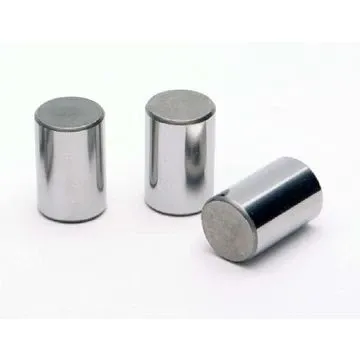
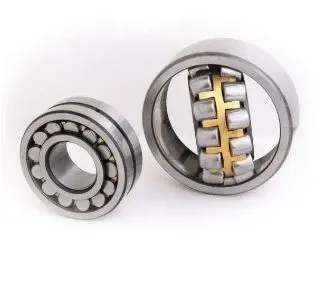
Cross roller bearings consist of an inner ring, an outer ring, and cylindrical rollers arranged in a cross pattern. The rollers are separated by a cage or spacer to prevent them from contacting each other and to ensure smooth rotation. The cross arrangement of the rollers allows the bearing to support both radial and axial loads simultaneously, making it suitable for applications where multi-directional loads are present.
The inner and outer rings of cross roller bearings are usually made of high-quality bearing steel, which is heat-treated to achieve high hardness and wear resistance. The raceways of the rings are precision-ground to ensure accurate roller guidance and low friction. The cylindrical rollers are also made of high-quality steel and are carefully finished to minimize surface roughness and improve rolling performance.
Working Principle of Cross Roller Bearings
The working principle of cross roller bearings is based on the rolling motion of the cylindrical rollers between the inner and outer rings. When a load is applied to the bearing, the rollers roll along the raceways of the rings, transmitting the load from the inner ring to the outer ring. The cross arrangement of the rollers allows the bearing to distribute the load evenly across the contact area, reducing stress concentrations and improving the bearing's load-carrying capacity.
In addition to supporting radial and axial loads, cross roller bearings can also withstand moment loads. Moment loads are caused by forces that act at a distance from the center of the bearing, creating a turning effect. The cross arrangement of the rollers provides high rigidity and resistance to moment loads, making cross roller bearings suitable for applications where high precision and stability are required, such as robotics, machine tools, and medical equipment.
Advantages of Cross Roller Bearings
Cross roller bearings offer several advantages over other types of bearings, including:
- High Rigidity: The cross arrangement of the rollers provides high rigidity and resistance to deformation, making cross roller bearings suitable for applications where high precision and stability are required.
- High Load-Carrying Capacity: Cross roller bearings can support both radial and axial loads simultaneously, as well as moment loads, making them suitable for applications where multi-directional loads are present.
- Compact Design: Cross roller bearings have a compact design, allowing them to be used in applications where space is limited.
- Low Friction: The rolling motion of the rollers between the inner and outer rings results in low friction, reducing energy consumption and improving the efficiency of the bearing.
- High Precision: Cross roller bearings are precision-manufactured to ensure accurate roller guidance and low friction, resulting in high precision and smooth operation.
Applications of Cross Roller Bearings
Cross roller bearings are widely used in various industrial applications, including:
- Robotics: Cross roller bearings are used in robotic joints to provide high precision and stability, allowing robots to perform complex tasks with accuracy and efficiency.
- Machine Tools: Cross roller bearings are used in machine tool spindles to support radial and axial loads, as well as moment loads, ensuring high precision and stability during machining operations.
- Medical Equipment: Cross roller bearings are used in medical equipment, such as CT scanners and surgical robots, to provide high precision and smooth operation, ensuring accurate diagnosis and treatment.
- Aerospace: Cross roller bearings are used in aerospace applications, such as aircraft landing gear and satellite antennas, to provide high reliability and performance in harsh environments.
- Automotive: Cross roller bearings are used in automotive applications, such as electric power steering systems and transmission systems, to provide high precision and efficiency, improving the performance and fuel economy of vehicles.
Comparison with Other Types of Bearings
Cross roller bearings are often compared with other types of bearings, such as Spherical Roller, Interroll Tapered Roller, and Taper Roller Disign. While each type of bearing has its own advantages and disadvantages, cross roller bearings offer several unique features that make them suitable for specific applications.
- Spherical Roller Bearings: Spherical roller bearings are designed to accommodate misalignment and angular deflection, making them suitable for applications where the shaft and housing may not be perfectly aligned. However, spherical roller bearings have a lower load-carrying capacity and higher friction compared to cross roller bearings.
- Interroll Tapered Roller Bearings: Interroll tapered roller bearings are designed to support both radial and axial loads, as well as moment loads, making them suitable for applications where multi-directional loads are present. However, interroll tapered roller bearings have a larger size and higher cost compared to cross roller bearings.
- Taper Roller Bearings: Taper roller bearings are designed to support both radial and axial loads, as well as moment loads, making them suitable for applications where multi-directional loads are present. However, taper roller bearings have a lower load-carrying capacity and higher friction compared to cross roller bearings.
Conclusion
Cross roller bearings are a type of high-precision and high-rigidity bearing widely used in various industrial applications. The cross arrangement of the rollers allows the bearing to support both radial and axial loads simultaneously, as well as moment loads, making it suitable for applications where multi-directional loads are present. Cross roller bearings offer several advantages over other types of bearings, including high rigidity, high load-carrying capacity, compact design, low friction, and high precision.
If you are looking for a high-quality cross roller bearing for your application, please contact us for more information. We are a leading supplier of cross roller bearings, offering a wide range of products to meet your specific needs. Our team of experts can help you select the right bearing for your application and provide you with technical support and advice.
References
- Harris, T. A., & Kotzalas, M. N. (2007). Rolling Bearing Analysis. Wiley-Interscience.
- Jones, A. R. (1960). A Mathematical Analysis of the Load Capacity of Rolling Bearings. ASME Journal of Basic Engineering, 82(1), 170-178.
- Palmgren, A. (1929). Die Lebensdauer von Kugellagern. Zeitschrift für angewandte Mathematik und Mechanik, 9(5), 339-346.