
As a prominent supplier of Taper Rollers, I'm frequently engaged in in - depth discussions about various aspects of these essential components. One topic that often comes to the forefront is the vibration level of a taper roller during operation. Understanding this vibration level is crucial for multiple reasons, from ensuring product reliability to optimizing performance in different applications.
Basics of Taper Rollers
Taper rollers are widely used in mechanical systems, especially in bearings, due to their ability to handle both radial and axial loads. They are designed with a conical shape, which allows for efficient load distribution and smooth rotation. You can find more detailed information about Taper Rollers here: Taper Rollers.
In a bearing assembly, taper rollers serve as the rolling elements between the inner and outer raceways. As they rotate, a variety of factors can influence their vibration level. These factors can be broadly categorized into design - related aspects, manufacturing quality, and operational conditions.
Factors Affecting Vibration Level
Design - related Factors
The design of a taper roller itself plays a significant role in determining its vibration level. The geometric parameters such as the cone angle, roller diameter, and length ratio are crucial. A well - designed taper roller should have precise cone angles to ensure proper contact with the raceways. If the cone angle is off even by a small margin, it can lead to uneven load distribution. This, in turn, causes increased vibration as the roller rotates.
For example, if the cone angle is too large, the roller may tend to skid rather than roll smoothly on the raceway. This skidding motion generates additional forces that result in higher vibration levels. On the other hand, if the cone angle is too small, the load may be concentrated in a small area, leading to premature wear and increased vibration over time.
The roller diameter and length also matter. A larger diameter roller can generally handle higher loads but may require more precise manufacturing to maintain low vibration. The length - to - diameter ratio affects the stability of the roller during rotation. A proper ratio helps in reducing the tendency of the roller to tilt or wobble, which can cause excessive vibration.
Manufacturing Quality
The quality of the manufacturing process has a profound impact on the vibration level of taper rollers. Precision machining is essential to achieve the required dimensional accuracy of the rollers. Any errors in the machining process, such as out - of - tolerance diameters or surface roughness variations, can lead to increased vibration.
The material used for the taper rollers is also a key factor. High - quality materials with consistent mechanical properties are necessary. For instance, if the material has internal defects or inhomogeneities, it can cause imbalances during rotation. During the heat - treatment process, improper hardening or tempering can change the material's structure, affecting its hardness and toughness. This can lead to premature wear and increased vibration as the roller operates under load.
Operational Conditions
The operating environment significantly influences the vibration level of taper rollers. The load applied to the bearing is a primary factor. If the load exceeds the design capacity of the taper rollers, it can cause excessive deformation and increase vibration. Overloading can also lead to accelerated wear of the rollers and raceways, further exacerbating the vibration problem.
The rotational speed is another important consideration. Higher speeds generate more centrifugal forces on the taper rollers. If the rollers are not properly balanced, these centrifugal forces can cause significant vibration. Additionally, at high speeds, any small eccentricities or imbalances in the roller or the bearing assembly become more pronounced, resulting in increased vibration levels.
Lubrication also plays a vital role in controlling vibration. A well - lubricated bearing reduces friction between the taper rollers and the raceways. Insufficient lubrication can lead to increased friction, heat generation, and wear. This can cause the rollers to vibrate more as they struggle to rotate smoothly. On the other hand, over - lubrication can create hydrodynamic forces that may also affect the vibration characteristics.
Measuring Vibration Level
To accurately assess the vibration level of taper rollers during operation, various measurement techniques are available. One common method is to use accelerometers. These sensors can be attached to the bearing housing or other relevant parts of the machinery. The accelerometer measures the acceleration of the vibrations, which can then be analyzed to determine the frequency and amplitude of the vibrations.
The frequency of the vibrations can provide valuable information about the source of the problem. For example, low - frequency vibrations may be related to misalignment or imbalance in the bearing assembly. High - frequency vibrations, on the other hand, can indicate issues such as surface defects on the rollers or raceways.
Another approach is to use vibration - analysis software. This software can process the data collected by the accelerometers and generate detailed reports. It can also perform spectral analysis to break down the vibration signal into its individual frequency components. This helps in identifying specific problems and taking appropriate corrective actions.
Comparison with Other Roller Types
It's interesting to compare the vibration levels of taper rollers with other types of rollers, such as Cross Rollers and Spherical Rollers. Cross Rollers, as the name suggests, have a criss - cross arrangement. They are known for their high radial and axial load - carrying capacity. You can find more information about Cross Rollers here: Cross Roller.
Compared to taper rollers, cross rollers may have different vibration characteristics. The criss - cross arrangement can provide better stability in some applications, potentially resulting in lower vibration levels. However, their design is more complex, and any manufacturing errors can lead to significant vibration problems.
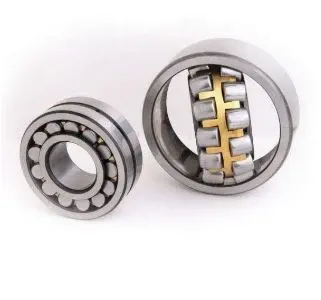
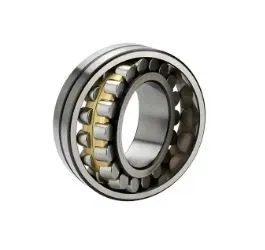
Spherical Rollers are designed to accommodate misalignment between the shaft and the housing. You can learn more about Spherical Rollers here: Spherical Roller. Due to their spherical shape, they can distribute loads more evenly in situations with misalignment. In some cases, this may result in lower vibration levels compared to taper rollers when operating under misaligned conditions. However, in properly aligned systems, taper rollers can often offer a more efficient solution in terms of vibration control.
Significance of Controlling Vibration
Controlling the vibration level of taper rollers is of utmost importance for several reasons. Firstly, excessive vibration can lead to premature failure of the bearing assembly. The vibrations cause additional stress on the rollers and raceways, which can result in cracks, spalling, or other forms of damage. This, in turn, can lead to costly downtime and repairs.
Secondly, high vibration levels can cause noise pollution. In industrial settings, excessive noise can be a safety hazard and may also violate environmental regulations. By keeping the vibration levels in check, we can reduce the noise generated by the machinery.
Finally, a well - controlled vibration level is essential for maintaining the precision of the equipment. In applications where precision is critical, such as in machine tools or aerospace components, even a small amount of vibration can affect the accuracy of the operation.
Conclusion and Call to Action
In conclusion, understanding and controlling the vibration level of taper rollers during operation is a complex but crucial task. By taking into account design factors, manufacturing quality, and operational conditions, we can ensure that our taper rollers offer optimal performance and reliability.
If you are in the market for high - quality taper rollers and want to discuss your specific requirements regarding vibration levels and other performance parameters, we would be more than happy to assist you. Please reach out to us for in - depth discussions and to explore how our products can meet your needs.
References
- Harris, T. A., & Kotzalas, M. N. (2007). Rolling Bearing Analysis. Wiley-Interscience.
- Stachowiak, G. W., & Batchelor, A. W. (2005). Engineering Tribology. Elsevier.