
When it comes to the industrial world, metal balls play a crucial role in a wide range of applications, from precision machinery to heavy - duty equipment. As a Metal Ball supplier, I've had the privilege of witnessing firsthand the significance of these small yet powerful components. One of the most important characteristics of a metal ball is its toughness. But what exactly is the toughness of a metal ball?
Understanding Toughness in Metallurgy
Toughness in the context of metals refers to the ability of a metal to absorb energy and deform plastically before fracturing. It is a measure of a material's resistance to crack propagation and sudden failure. A tough metal ball can withstand high - impact forces, repeated stress cycles, and harsh operating conditions without breaking or losing its integrity.
There are two main types of toughness: static toughness and dynamic toughness. Static toughness is related to the energy absorbed by a material under slow - loading conditions, such as in a simple tensile test. Dynamic toughness, on the other hand, is relevant when the material is subjected to rapid or impact loading, like in a ball - bearing system where the balls experience high - speed collisions.
Factors Affecting the Toughness of Metal Balls
Material Composition
The composition of the metal is the primary factor influencing its toughness. Different metals and alloys have distinct atomic structures and bonding characteristics that determine how they respond to stress. For example, 316 Stainless Steel Balls are known for their excellent corrosion resistance and relatively high toughness. The addition of chromium, nickel, and molybdenum in 316 stainless steel forms a protective oxide layer on the surface, which not only resists corrosion but also contributes to the overall toughness of the material.
Carbon Steel Ball is another common type of metal ball. The carbon content in carbon steel can significantly affect its toughness. Low - carbon steels generally have higher toughness because they have a more ductile microstructure. As the carbon content increases, the steel becomes harder but less tough, as the formation of carbide particles can act as stress concentrators and initiate cracks.
Heat Treatment
Heat treatment is a critical process that can alter the microstructure of a metal ball and thereby enhance its toughness. Processes such as quenching and tempering are commonly used. Quenching involves rapidly cooling the metal from a high temperature, which can create a hard and brittle martensitic structure. However, this is followed by tempering, where the metal is heated to a lower temperature for a specific period. Tempering relieves internal stresses, breaks down the martensite, and forms a more ductile and tough microstructure.
For instance, if a carbon steel ball is quenched and then properly tempered, it can achieve a good balance between hardness and toughness. The heat - treated ball can withstand high - load applications without fracturing easily.

Manufacturing Process
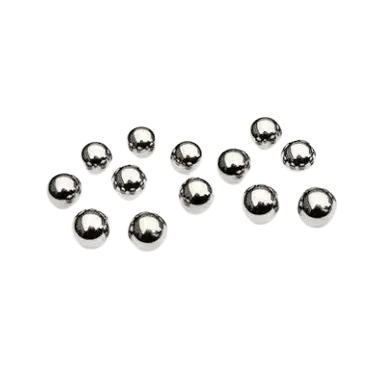
The manufacturing process of metal balls also has an impact on their toughness. Precision - manufacturing techniques, such as cold heading or grinding, can produce balls with a more uniform microstructure and fewer internal defects. A ball with a smooth surface finish and consistent internal structure is less likely to have stress concentrations, which can lead to premature failure.
In contrast, balls produced by less - precise methods may have surface irregularities or internal voids. These defects can act as starting points for cracks, reducing the overall toughness of the ball.
Applications and the Importance of Toughness
Bearings
One of the most common applications of metal balls is in bearings. In a bearing system, the balls are subjected to high - contact stresses and rolling friction. A tough metal ball is essential to ensure the long - term performance and reliability of the bearing. If the ball fractures or deforms excessively, it can lead to bearing failure, which can cause significant downtime and maintenance costs in industrial machinery.
For example, in high - speed bearings used in automotive engines or aerospace applications, the metal balls need to have high dynamic toughness to withstand the rapid - loading conditions and prevent premature wear and failure.
Valves
Metal balls are also used in valve systems, where they act as sealing elements. In a valve, the ball needs to be tough enough to withstand the pressure differentials and the abrasive action of the fluid flowing through the valve. A tough ball can maintain its shape and integrity, ensuring a tight seal and preventing leakage. This is particularly important in applications such as oil and gas pipelines, where even a small leak can have serious environmental and safety consequences.
Grinding and Milling
In grinding and milling operations, metal balls are used as grinding media. They are subjected to repeated impacts and abrasion as they crush and grind the materials. A tough metal ball can resist wear and fracture, maintaining its size and shape for a longer time. This results in more efficient grinding processes and reduces the need for frequent replacement of the grinding media.
Testing the Toughness of Metal Balls
There are several methods to test the toughness of metal balls. One of the most common tests is the Charpy impact test. In this test, a notched specimen of the metal ball material is struck by a pendulum hammer, and the energy absorbed during the fracture is measured. A higher energy absorption indicates a tougher material.
Another test is the Rockwell hardness test, which measures the indentation hardness of the metal. While hardness is not the same as toughness, there is often a relationship between the two. A ball with an appropriate hardness range usually has good toughness.
Our Offerings as a Metal Ball Supplier
As a Metal Ball supplier, we understand the importance of toughness in different applications. We offer a wide range of Metal Ball products, including 316 Stainless Steel Balls and Carbon Steel Ball, all manufactured with strict quality control.
Our manufacturing processes are designed to ensure that each ball has a uniform microstructure and high - quality surface finish. We use advanced heat - treatment techniques to optimize the toughness of our balls, making them suitable for a variety of demanding applications.
Whether you need metal balls for bearings, valves, or grinding operations, we can provide you with the right solution. Our team of experts can also offer technical advice on selecting the most appropriate metal ball based on your specific requirements.
Conclusion
The toughness of a metal ball is a complex yet crucial property that determines its performance and reliability in various applications. It is influenced by factors such as material composition, heat treatment, and manufacturing processes. As a Metal Ball supplier, we are committed to providing high - quality balls with excellent toughness to meet the diverse needs of our customers.
If you are in need of metal balls for your industrial applications, we invite you to contact us for a detailed discussion. Our professional team is ready to assist you in finding the perfect metal ball solution for your specific requirements.
References
- Callister, W. D., & Rethwisch, D. G. (2017). Materials Science and Engineering: An Introduction. Wiley.
- ASM Handbook Committee. (2000). ASM Handbook Volume 1: Properties and Selection: Irons, Steels, and High - Performance Alloys. ASM International.
- Dieter, G. E. (1986). Mechanical Metallurgy. McGraw - Hill.