
What is the tensile strength of a metal ball? Well, if you're in the market for metal balls, you've come to the right place. I'm a supplier of Metal Ball, and I'm here to break down the concept of tensile strength and why it matters when you're buying metal balls.
Let's start with the basics. Tensile strength is a measure of how much stress a material can withstand before it breaks or fails when being pulled or stretched. In the context of metal balls, it's an important property because it gives you an idea of how well the ball can handle forces without deforming or cracking.
There are different types of metal balls out there, and each has its own unique tensile strength. For example, 316 Stainless Steel Balls are known for their corrosion resistance and relatively high tensile strength. Stainless steel is an alloy that contains chromium, nickel, and other elements, which give it its strength and durability. The tensile strength of 316 stainless steel balls typically ranges from about 515 MPa (megapascals) to 655 MPa. This means that they can handle a significant amount of pulling force before they start to show signs of failure.
On the other hand, Din 5401 Steel Ball are made according to specific standards. These balls are often used in applications where high precision and good mechanical properties are required. The tensile strength of Din 5401 steel balls can vary depending on the specific composition and heat treatment, but generally, they also have a decent tensile strength that allows them to perform well under stress.
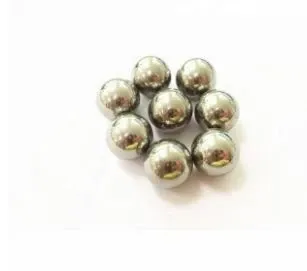
Why does tensile strength matter when you're buying metal balls? Well, if you're using the balls in a high - stress application, like in a bearing or a mechanical system where they'll be subjected to heavy loads, you need balls with a high tensile strength. If the balls have a low tensile strength, they might deform or break under the load, which can lead to equipment failure, downtime, and potentially costly repairs.
Let's say you're using metal balls in a ball bearing. The bearing is constantly rotating, and the balls are under pressure from the load being applied to the bearing. If the balls don't have enough tensile strength, they can flatten or crack, which will affect the smooth operation of the bearing. This can cause increased friction, heat generation, and eventually, the bearing might seize up.
Another factor to consider is the size of the metal ball. Generally, smaller balls can have a higher tensile strength per unit volume compared to larger balls. This is because the stress distribution within the ball is different for different sizes. Smaller balls have less material to distribute the stress, so they need to be made of a material with higher strength to withstand the same amount of force.
When you're choosing metal balls, it's also important to consider the surface finish. A smooth surface finish can actually improve the apparent tensile strength of the ball. This is because a rough surface can act as a stress concentrator, where the stress is focused in certain areas, making the ball more likely to fail. A smooth surface distributes the stress more evenly, allowing the ball to handle more force.
Now, I know all this technical talk about tensile strength can be a bit overwhelming, but that's where I come in. As a Metal Ball supplier, I have the knowledge and experience to help you choose the right metal balls for your specific application. Whether you need 316 Stainless Steel Balls for a corrosive environment or Din 5401 Steel Ball for a high - precision application, I can guide you through the selection process.
I can also provide you with detailed information about the tensile strength and other properties of the metal balls I offer. We test our balls regularly to ensure that they meet the highest quality standards, and we can provide you with certificates of compliance if needed.
If you're interested in learning more about metal balls and their tensile strength, or if you're ready to place an order, don't hesitate to get in touch. I'm here to answer any questions you might have and to help you find the perfect metal balls for your needs. Whether you're a small business looking for a few balls or a large manufacturer in need of a bulk order, I can work with you to get the best solution at a competitive price.
In conclusion, understanding the tensile strength of metal balls is crucial when choosing the right ones for your application. It can affect the performance, reliability, and lifespan of your equipment. As a trusted Metal Ball supplier, I'm committed to providing you with high - quality balls that meet your specific requirements. So, if you're in the market for metal balls, give me a shout, and let's start talking about how I can help you.
References:
- Materials Science and Engineering textbooks
- Industry standards for metal ball manufacturing
- Technical literature from metal ball manufacturers