
Hey there! As a supplier of Precision Steel Balls, I often get asked about the surface roughness of these little wonders. So, let's dive right in and break it down.
First off, what exactly is surface roughness? Well, it's a measure of the texture of a surface. In the case of precision steel balls, it refers to the microscopic irregularities on the ball's surface. These irregularities can have a big impact on how the ball performs in different applications.
When we talk about the surface roughness of precision steel balls, we're usually referring to a few key parameters. One of the most important is Ra, which stands for arithmetic average roughness. This is the average height of the surface irregularities over a specified length. A lower Ra value means a smoother surface.
For example, in high - precision applications like bearings, we want the steel balls to have a very low Ra value. A smooth surface reduces friction, which in turn reduces wear and tear on the ball and the surrounding components. This leads to longer service life and better overall performance of the bearing.
Another parameter is Rz, or ten - point height of irregularities. It measures the difference between the average height of the five highest peaks and the average depth of the five deepest valleys within a sampling length. Rz gives us an idea of the larger - scale irregularities on the surface.
The surface roughness of precision steel balls can be influenced by several factors. The manufacturing process is a major one. We use different methods to make steel balls, such as cold heading, grinding, and lapping. Each of these processes can leave its mark on the surface.
Cold heading is a process where a piece of steel wire is cut and formed into a ball shape under high pressure. This initial forming process can create some surface irregularities. However, subsequent grinding and lapping operations are used to smooth out the surface.
Grinding is a process that uses abrasive wheels to remove small amounts of material from the ball's surface. It can significantly reduce the surface roughness, but it also has its limitations. The quality of the grinding wheels, the grinding parameters (like speed and pressure), and the skill of the operator all play a role in determining the final surface finish.
Lapping is a finishing process that uses a lapping plate and a fine abrasive slurry. It's a very precise process that can achieve extremely low surface roughness values. During lapping, the balls are rotated and rubbed against the lapping plate, gradually smoothing out any remaining irregularities.
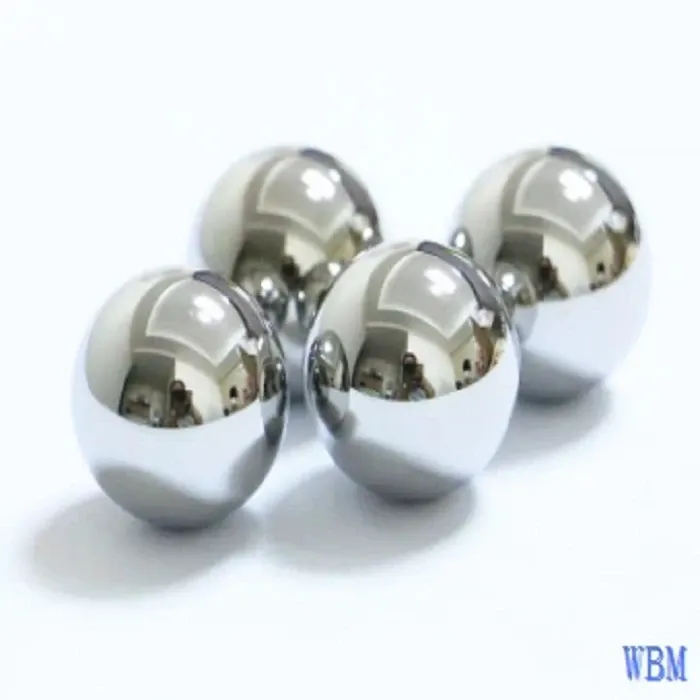
The type of steel used also affects the surface roughness. We offer different types of steel balls, such as Stainless Steel Ball and Carbon Steel Ball. Stainless steel balls are known for their corrosion resistance, while carbon steel balls are often used for their high hardness.
Stainless steel has a different microstructure compared to carbon steel, which can influence how it responds to the manufacturing processes. For example, stainless steel can be more difficult to grind due to its tendency to work - harden. This means that special grinding techniques and abrasives may be required to achieve the desired surface roughness.
Carbon steel, on the other hand, can be more easily machined in some cases. But it may be more prone to rusting if not properly protected. So, depending on the application, we need to choose the right type of steel and the appropriate manufacturing processes to get the desired surface roughness.
In addition to the manufacturing and material factors, the environment in which the steel balls will be used also matters. If the balls are going to be used in a high - speed, high - load application, a smoother surface is usually required to reduce friction and heat generation.
On the other hand, if the application is less demanding, a slightly rougher surface may be acceptable. For example, in some agricultural machinery, the steel balls may not need to have the same level of surface finish as those used in aerospace applications.
We, as a precision steel ball supplier, take great care in ensuring that our products meet the required surface roughness standards. We have strict quality control measures in place at every stage of the manufacturing process. Our quality control team uses advanced measuring equipment, such as profilometers, to measure the surface roughness of the steel balls.
A profilometer is a device that uses a stylus to trace the surface of the ball and measures the height variations. It can provide accurate and detailed information about the surface roughness parameters like Ra and Rz. By regularly checking the surface roughness of our products, we can ensure that they meet the specifications of our customers.
Now, let's talk about the different types of steel balls we offer and how their surface roughness might vary. Stainless Steel Ball is a popular choice for many applications because of its corrosion resistance. We can offer stainless steel balls with a wide range of surface roughness values, depending on the customer's requirements.
For general - purpose applications, we can provide stainless steel balls with a relatively low surface roughness, say an Ra value of around 0.05 - 0.1 micrometers. For more high - precision applications, like in medical devices or high - end automotive components, we can achieve Ra values as low as 0.01 micrometers or even lower.
Carbon Steel Ball is another option. Carbon steel is known for its high hardness and strength. The surface roughness of carbon steel balls can also be controlled through the manufacturing process. We can offer carbon steel balls with similar surface finish qualities as stainless steel balls, but the specific values may vary depending on the carbon content and other alloying elements in the steel.
We also have Metal Ball options that are made from other metals or metal alloys. Each type of metal has its own unique properties, and the surface roughness requirements can vary accordingly.
If you're in the market for precision steel balls, it's important to consider the surface roughness requirements for your specific application. Don't hesitate to reach out to us to discuss your needs. We have a team of experts who can help you choose the right type of steel ball with the appropriate surface finish. Whether you need a small quantity for a prototype or a large - scale production order, we're here to serve you.
In conclusion, the surface roughness of precision steel balls is a crucial factor that can affect their performance in various applications. By understanding the factors that influence surface roughness and using the right manufacturing processes, we can provide high - quality steel balls that meet your exact requirements. So, if you're looking for top - notch precision steel balls, get in touch with us today to start the procurement process.
References
- "Handbook of Manufacturing Processes"
- "Fundamentals of Precision Engineering"
- "Surface Engineering for Advanced Materials"