
What is the surface roughness of metric steel balls? Well, let me break it down for you from the perspective of a Metric Steel Ball supplier.
First off, surface roughness is a key factor when it comes to metric steel balls. It's all about the tiny bumps and valleys on the surface of these balls. You know, those minuscule irregularities that can have a huge impact on how the ball performs in different applications.
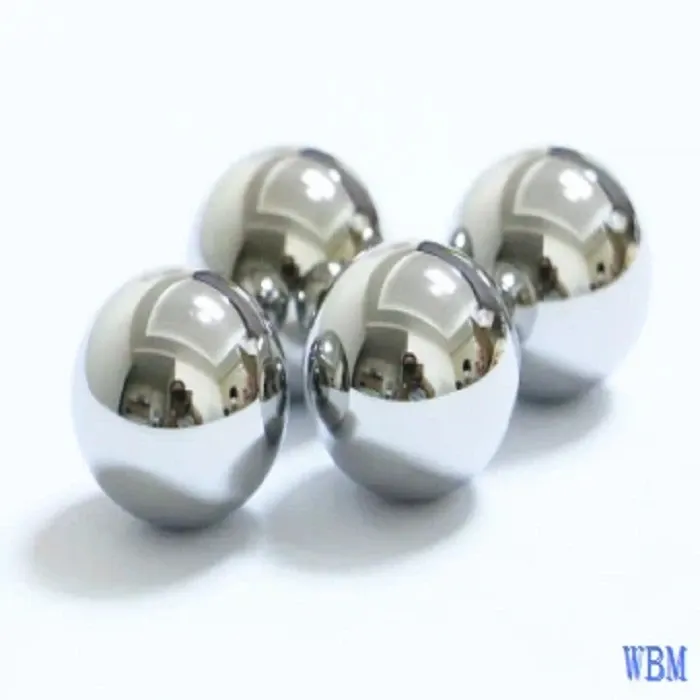
In the world of mechanical engineering and manufacturing, the surface roughness of metric steel balls matters big time. For example, in precision machinery, a ball with a high - grade smooth surface (low surface roughness) is crucial. Think about ball bearings, where the balls need to roll smoothly with minimal friction. If the surface of the steel balls is too rough, it can lead to increased wear and tear, reduced efficiency, and even overheating. Imagine the havoc it could cause in high - speed equipment like motors or engines.
Let's talk about how we measure surface roughness. One common way is by using the Ra value. Ra stands for the arithmetic average of the absolute values of the profile height deviations from the mean line, within the sampling length. It's a bit technical, but in simple terms, a lower Ra value means a smoother surface. For our metric steel balls, we usually strive to achieve very low Ra values. Depending on the application, we might look at Ra values ranging from 0.01μm to 0.1μm for high - precision requirements.
Now, different manufacturing processes can have a major effect on the surface roughness of metric steel balls. One of the most common methods for making these balls is through cold heading and subsequent grinding and polishing. Cold heading is a process where the steel wire is cut into small pieces and then formed into the basic ball shape under high pressure. This initial process gives the ball its general shape, but it usually leaves a relatively rough surface.
That's where grinding and polishing come in. Grinding uses abrasive wheels to remove material from the ball's surface, gradually reducing the roughness. It's a bit like sanding a piece of wood to make it smooth. But grinding only gets you so far. Polishing is the next step, and it's what really gives the ball that mirror - like finish. We use polishing compounds and special machinery to further refine the surface and reduce the roughness to the desired level.
As a supplier, we understand that different customers have different needs. Some might be looking for steel balls for general industrial applications where the surface roughness requirements aren't as strict. For example, in some simple conveyor systems or non - critical mechanical linkages, the balls can have a slightly higher surface roughness. On the other hand, customers in the aerospace or medical industries often demand steel balls with extremely low surface roughness. In aerospace, these balls are used in components like flight control systems, where reliability and precision are of the utmost importance. In the medical field, they might be used in devices like surgical tools or imaging equipment.
We also offer a wide range of metric steel balls to meet these diverse needs. If you're interested in Ball Bearing Balls, we've got you covered. These balls are designed to provide smooth and efficient rolling, and we make sure the surface roughness is optimized for bearing applications.
For those who need Metal Balls, we produce them with high - quality steel and the right surface finish. Whether it's for decorative purposes or more industrial uses, our metal balls are made to last.
And of course, our Precision Steel Balls are top - notch. These are the ones with the ultra - smooth surface, perfect for applications where precision is everything.
When it comes to choosing the right metric steel ball with the appropriate surface roughness, there are a few things to consider. First, think about the application. What kind of environment will the ball be operating in? Is it a high - speed or high - load situation? The speed and load can significantly affect how much surface roughness the ball can tolerate.
Also, consider the mating parts. If the ball is going to be in contact with other components, the surface finish of those parts also matters. You want to make sure that the surface roughness of the ball and the mating surfaces are compatible to ensure proper functioning.
We're always here to help you make the right choice. If you're not sure what surface roughness is suitable for your specific application, just give us a call or send us an email. Our team of experts has years of experience in the industry, and we can provide you with valuable advice and guidance.
In conclusion, surface roughness is a critical characteristic of metric steel balls. It affects the performance, durability, and efficiency of these balls in various applications. As a supplier, we're committed to providing high - quality metric steel balls with the right surface finish for your needs. Whether you're in the market for a few balls for a small project or a large quantity for a big - scale production, we've got the products and the expertise to meet your requirements. So, if you're interested in purchasing metric steel balls, don't hesitate to reach out for a consultation and start the procurement process. We look forward to working with you!
References:
- "Mechanical Engineering Handbook" by Myer Kutz
- "Manufacturing Processes for Engineering Materials" by Serope Kalpakjian and Steven Schmid