
Stainless steel balls are widely used across various industries, from precision instruments to heavy machinery, due to their excellent corrosion resistance, high strength, and good durability. One of the critical aspects that determine the performance and suitability of stainless steel balls for specific applications is their surface finish. In this blog, as a stainless - steel ball supplier, I'll delve into the details of what the surface finish of stainless steel balls entails and its significance.
Understanding Surface Finish
The surface finish of stainless - steel balls refers to the texture and quality of their outer surface. It is characterized by several factors, including roughness, waviness, and lay. Roughness represents the fine irregularities on the surface of the ball. These irregularities are typically the result of the manufacturing process, such as machining, grinding, or polishing. A lower roughness value indicates a smoother surface. Waviness, on the other hand, refers to more widely spaced deviations from a perfectly spherical surface. Lay describes the direction of the predominant surface pattern, which is often determined by the manufacturing operations used.
Measuring Surface Finish
There are various methods to quantify the surface finish of stainless steel balls. One of the most common parameters used is the arithmetic average roughness (Ra). Ra measures the average deviation of the surface profile from the mean line within a specified sampling length. A smaller Ra value implies a smoother surface. Another parameter is the root - mean - square roughness (Rq), which gives more weight to larger deviations from the mean line.
Modern measurement techniques, such as optical profilometry and scanning electron microscopy (SEM), provide high - resolution images and accurate data about the surface characteristics of stainless - steel balls. With optical profilometry, a non - contact method, it is possible to measure surface height variations with great precision, while SEM allows for detailed visualization of the surface microstructure and any defects.
Impact of Surface Finish on Performance
Corrosion Resistance
A smooth surface finish can significantly enhance the corrosion resistance of stainless - steel balls. Rough surfaces have more crevices and pits where corrosive agents can accumulate and initiate corrosion. In contrast, a well - polished surface reduces the available sites for corrosion to start, making the ball more resistant to oxidation and chemical attack. For example, in chemical processing plants where stainless - steel balls are exposed to harsh chemicals, a smooth surface finish is crucial to ensure long - term performance and prevent premature failure.
Lubrication
In applications where stainless - steel balls are used in ball bearings or other moving parts, the surface finish affects the lubrication efficiency. A smooth surface allows lubricants to form a continuous and uniform film, reducing friction and wear between the ball and the mating surfaces. On the contrary, a rough surface may disrupt the lubricant film, leading to increased friction, higher energy consumption, and accelerated wear. As such, in high - speed or high - load applications, such as automotive engines or industrial machinery, balls with a high - quality surface finish are essential for proper lubrication and extended service life.
Dimensional Accuracy
The surface finish is also closely related to the dimensional accuracy of stainless - steel balls. During the manufacturing process, achieving a precise surface finish helps in maintaining the correct diameter and roundness of the balls. Any irregularities on the surface can lead to variations in the ball's dimensions, which may cause problems in applications that require high precision. For instance, in the aerospace industry, where components need to meet strict tolerances, the surface finish of stainless - steel balls must be carefully controlled to ensure proper fit and function.
Different Types of Surface Finishes for Stainless Steel Balls
Polished Finish
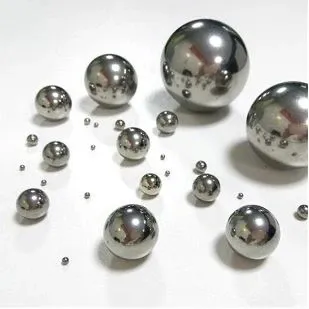
A polished finish is one of the most common surface treatments for stainless - steel balls. Polishing involves using abrasive materials to remove surface irregularities and create a smooth, shiny surface. This finish is often used in applications where aesthetics, corrosion resistance, and low friction are important, such as in jewelry, decorative items, and some types of bearings. The polished finish can range from a basic buffed finish to a mirror - like finish, depending on the level of polishing.
Ground Finish
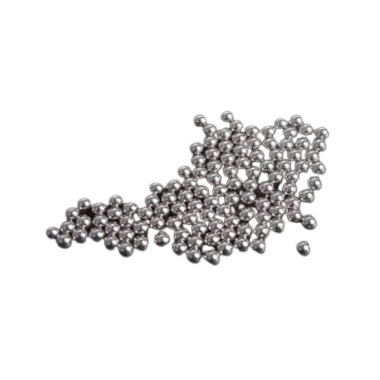
A ground finish is achieved through a grinding process, which uses abrasive wheels to remove material from the surface of the ball to achieve the desired size and surface quality. Ground balls typically have a higher level of precision compared to polished balls and are commonly used in applications that require high dimensional accuracy, such as precision bearings and measuring instruments. The surface of ground balls is smoother than that of as - cast balls but may not be as shiny as polished balls.
Coated Finish
In some cases, stainless - steel balls may be coated with additional materials to enhance their performance. Coatings can provide improved corrosion resistance, reduced friction, or enhanced wear resistance. For example, a titanium nitride (TiN) coating can increase the hardness of the ball's surface, making it more resistant to wear in high - load applications. Other coatings, such as PTFE (polytetrafluoroethylene), can reduce friction and improve the ball's self - lubricating properties.
Our Offerings as a Stainless - Steel Ball Supplier
As a stainless - steel ball supplier, we understand the importance of surface finish in different applications. We offer a wide range of stainless - steel balls with various surface finishes to meet the diverse needs of our customers. Whether you need Metal Ball for general industrial use, Ball Bearing Balls for high - precision machinery, or Metric Steel Ball with specific dimensional requirements, we can provide products with the appropriate surface finish.
Our manufacturing process is designed to ensure high - quality surface finishes. We use advanced grinding and polishing equipment, along with strict quality control measures, to produce stainless - steel balls with consistent surface characteristics. We also offer custom coating services to further enhance the performance of our balls according to your specific requirements.
Contact Us for Your Stainless - Steel Ball Needs
If you are in the market for stainless - steel balls and have specific requirements regarding surface finish or other properties, we invite you to contact us. Our team of experts is ready to assist you in selecting the most suitable products for your application and provide you with detailed information and solutions. Whether you are a small - scale manufacturer or a large - scale industrial enterprise, we are committed to meeting your stainless - steel ball needs.
References
- BS EN ISO 4287:1998 Geometrical Product Specifications (GPS) -- Surface texture: Profile method -- Terms, definitions and surface texture parameters.
- ASME B46.1 - 2009 Surface Texture (Surface Roughness, Waviness, and Lay).
- Wilson, W. R. D. (1995). Principles of Ball and Roller Bearings. New York: Wiley - Interscience.