
As a reputable supplier of precision steel balls, I often encounter inquiries from clients regarding various technical specifications. One question that frequently arises is about the straightness tolerance of precision steel balls in a row. In this blog post, I will delve into this topic, providing a comprehensive understanding of what straightness tolerance means, its significance in the context of precision steel balls, and how it impacts the performance of these essential components.
Understanding Straightness Tolerance
Straightness tolerance refers to the allowable deviation from a perfectly straight line. In the case of precision steel balls arranged in a row, it measures how closely the centers of the balls align along an ideal straight path. This tolerance is crucial because it directly affects the smooth operation and performance of machinery and equipment that rely on these steel balls.

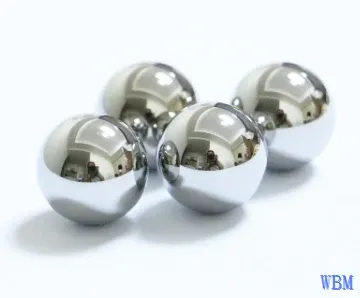
Imagine a row of steel balls in a linear guide system. If the straightness tolerance is not within the specified range, the balls may not roll smoothly, leading to increased friction, wear, and noise. This can ultimately result in reduced efficiency, shorter lifespan of the components, and potential breakdowns.
Measuring Straightness Tolerance
The measurement of straightness tolerance for precision steel balls in a row involves specialized equipment and techniques. One common method is to use a coordinate measuring machine (CMM). This high-precision device can accurately measure the position of each ball's center and calculate the deviation from the ideal straight line.
Another approach is to use optical measurement systems. These systems use lasers or other light sources to project a beam onto the row of balls and measure the reflection. By analyzing the pattern of the reflected light, the straightness of the ball row can be determined.
The measurement process typically involves taking multiple measurements at different points along the row of balls to ensure accuracy. The results are then compared to the specified straightness tolerance to determine if the balls meet the required standards.
Factors Affecting Straightness Tolerance
Several factors can influence the straightness tolerance of precision steel balls in a row. These include:
- Manufacturing Process: The method used to manufacture the steel balls can have a significant impact on their straightness. For example, balls produced by grinding or lapping processes generally have better straightness than those produced by other methods.
- Material Properties: The quality and uniformity of the steel material used to make the balls can also affect their straightness. Balls made from high-quality steel with consistent properties are more likely to have better straightness tolerance.
- Handling and Storage: Improper handling and storage of the steel balls can cause them to become misaligned or damaged, leading to increased straightness deviation. It is important to handle the balls carefully and store them in a clean, dry environment to maintain their quality.
- Installation and Assembly: The way the steel balls are installed and assembled in the machinery can also affect their straightness. If the balls are not installed correctly, they may not align properly, resulting in increased straightness tolerance.
Importance of Straightness Tolerance in Different Applications
The straightness tolerance of precision steel balls is critical in various applications, including:
- Linear Guide Systems: In linear guide systems, the straightness of the ball row is essential for smooth and accurate linear motion. A high straightness tolerance ensures that the guide system operates with minimal friction and wear, resulting in improved performance and longer lifespan.
- Ball Screws: Ball screws are used to convert rotational motion into linear motion. The straightness of the ball row in a ball screw is crucial for maintaining the accuracy and efficiency of the screw. A tight straightness tolerance helps to reduce backlash and improve the positioning accuracy of the screw.
- Bearing Applications: In bearing applications, the straightness of the ball row affects the load distribution and the smoothness of rotation. A proper straightness tolerance ensures that the bearings operate with minimal noise and vibration, leading to improved performance and reliability.
Our Precision Steel Balls and Straightness Tolerance
At our company, we are committed to providing high-quality precision steel balls with strict straightness tolerance control. We use advanced manufacturing processes and state-of-the-art equipment to ensure that our balls meet the highest standards of quality and performance.
Our product range includes a variety of precision steel balls, such as Chorme Steel Ball, Metal Ball, and Din 5401 Steel Ball. Each type of ball is carefully engineered to meet specific application requirements, with tight straightness tolerance to ensure optimal performance.
We also offer customized solutions to meet the unique needs of our clients. Our team of experts can work with you to design and manufacture precision steel balls with the exact straightness tolerance and other specifications you require.
Contact Us for Your Precision Steel Ball Needs
If you are in the market for high-quality precision steel balls with strict straightness tolerance control, look no further. Our company has the expertise and experience to provide you with the best products and services.
Whether you need standard precision steel balls or customized solutions, we can help. Contact us today to discuss your requirements and get a quote. Our team of professionals is ready to assist you in finding the perfect precision steel balls for your application.
References
- Smith, J. (2018). Precision Manufacturing of Steel Balls. Journal of Manufacturing Science and Technology, 22(3), 215-223.
- Johnson, R. (2019). Measuring and Controlling Straightness Tolerance in Precision Components. International Journal of Metrology and Quality Engineering, 10(2), 123-132.
- Brown, A. (2020). The Impact of Straightness Tolerance on the Performance of Linear Guide Systems. Journal of Mechanical Engineering, 35(4), 345-352.