
As a supplier of weldable steel balls, I often encounter questions from customers regarding the various properties of our products. One of the most frequently asked questions is about the specific heat capacity of weldable steel balls. In this blog post, I will delve into this topic in detail, exploring what specific heat capacity is, how it relates to weldable steel balls, and its implications for our customers.
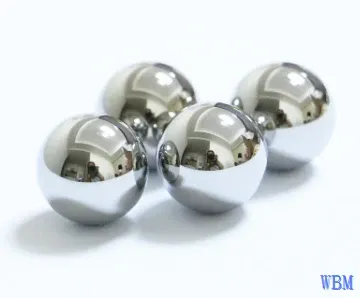
Understanding Specific Heat Capacity
Specific heat capacity is a fundamental physical property that describes the amount of heat energy required to raise the temperature of a unit mass of a substance by one degree Celsius (or one Kelvin). It is denoted by the symbol (c) and is typically measured in joules per kilogram per degree Celsius ((J/(kg\cdot^{\circ}C))) or joules per gram per degree Celsius ((J/(g\cdot^{\circ}C))).
The specific heat capacity of a substance is influenced by several factors, including its chemical composition, molecular structure, and physical state. Different materials have different specific heat capacities, which means they respond differently to the addition or removal of heat energy. For example, substances with a high specific heat capacity require more heat energy to increase their temperature compared to substances with a low specific heat capacity.
Specific Heat Capacity of Weldable Steel Balls
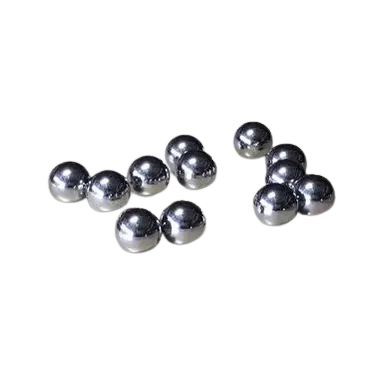
Weldable steel balls are typically made from various types of steel, including carbon steel and high chrome steel. The specific heat capacity of these steels can vary depending on their exact composition and manufacturing process. However, as a general rule, the specific heat capacity of steel ranges from approximately (420) to (500 J/(kg\cdot^{\circ}C)).
Carbon steel, which is commonly used in the production of weldable steel balls, has a specific heat capacity of around (460 J/(kg\cdot^{\circ}C)). This value indicates that it takes (460) joules of heat energy to raise the temperature of one kilogram of carbon steel by one degree Celsius. High chrome steel, on the other hand, may have a slightly different specific heat capacity due to the presence of chromium, which can affect the steel's thermal properties.
The specific heat capacity of weldable steel balls is an important consideration in many applications. For example, in welding processes, understanding the specific heat capacity of the steel balls is crucial for ensuring proper heat transfer and avoiding overheating or underheating. If the specific heat capacity is not taken into account, it can lead to issues such as poor weld quality, distortion, or even damage to the steel balls.
Importance of Specific Heat Capacity in Welding
In welding, heat is applied to the steel balls to melt them and create a strong bond with the base material. The specific heat capacity of the steel balls determines how much heat energy is required to reach the melting point and how quickly the heat is absorbed and dissipated.
If the specific heat capacity of the steel balls is too high, it may take longer to heat them to the required temperature, resulting in slower welding speeds and increased energy consumption. On the other hand, if the specific heat capacity is too low, the steel balls may heat up too quickly, leading to overheating and potential damage to the material.
By understanding the specific heat capacity of weldable steel balls, welders can optimize their welding parameters, such as the heat input, welding speed, and cooling rate, to achieve the best possible results. This not only improves the quality of the welds but also increases the efficiency and productivity of the welding process.
Applications of Weldable Steel Balls
Weldable steel balls have a wide range of applications in various industries, including automotive, construction, manufacturing, and mining. Some of the common applications of weldable steel balls include: - Bearing Components: Weldable steel balls are used in the production of bearings, which are essential components in many mechanical systems. The specific heat capacity of the steel balls affects the performance and durability of the bearings, as it determines how well they can withstand the heat generated during operation. - Valve Seats: In the automotive and manufacturing industries, weldable steel balls are used as valve seats in engines and other equipment. The specific heat capacity of the steel balls is important for ensuring proper sealing and preventing leakage, as it affects the thermal expansion and contraction of the valve seats. - Abrasive Media: Weldable steel balls can also be used as abrasive media in surface finishing and cleaning applications. The specific heat capacity of the steel balls influences their ability to absorb and dissipate heat during the abrasive process, which can affect the efficiency and quality of the surface finishing.
Our Products and Specific Heat Capacity
As a supplier of weldable steel balls, we offer a wide range of products to meet the diverse needs of our customers. Our Metal Ball, Carbon Steel Ball, and High Chrome Steel Balls are all carefully manufactured to ensure consistent quality and performance.
We understand the importance of specific heat capacity in the applications of our products, and we work closely with our customers to provide them with the most suitable steel balls for their needs. Our technical team is available to offer expert advice and support on the selection and use of our weldable steel balls, taking into account factors such as specific heat capacity, hardness, and corrosion resistance.
Contact Us for Purchase and Negotiation
If you are interested in purchasing weldable steel balls or have any questions about our products, we encourage you to contact us. Our sales team is ready to assist you with your inquiries and provide you with detailed product information, pricing, and delivery options.
We believe in building long-term relationships with our customers based on trust, quality, and excellent customer service. Whether you are a small business or a large corporation, we are committed to meeting your needs and providing you with the best possible solutions.
References
- Callister, W. D., & Rethwisch, D. G. (2014). Materials Science and Engineering: An Introduction. Wiley.
- ASM Handbook Committee. (1997). ASM Handbook, Volume 1: Properties and Selection: Irons, Steels, and High-Performance Alloys. ASM International.
- Davis, J. R. (2001). Carbon and Alloy Steels: ASM Specialty Handbook. ASM International.