
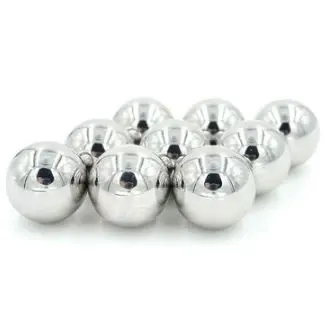
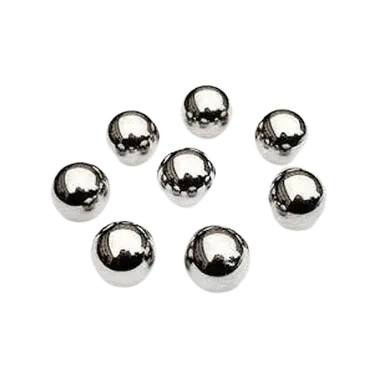
As a dedicated supplier of stainless steel balls, I've spent years delving into the various properties and applications of these remarkable products. One aspect that often piques the interest of our customers is the sound - damping performance of stainless steel balls. In this blog, we'll explore what sound - damping is, how stainless steel balls perform in this regard, and why it matters in different industries.
Understanding Sound Damping
Sound damping, also known as sound absorption or noise reduction, is the process of reducing the intensity of sound waves. When a sound wave encounters an object, part of the wave's energy can be reflected, transmitted through the object, or absorbed. Sound - damping materials convert the sound energy into other forms of energy, such as heat, thereby reducing the amount of sound that is reflected or transmitted.
Factors Affecting Sound - Damping Performance of Stainless Steel Balls
- Material Properties
Stainless steel is an alloy primarily composed of iron, chromium, and other elements. The unique molecular structure of stainless steel gives it certain inherent characteristics that influence sound damping. The density and elasticity of stainless steel play a crucial role. A higher density can help in absorbing more sound energy as the molecules within the material have more mass to interact with the sound waves. At the same time, the elasticity of stainless steel allows it to deform slightly when exposed to sound waves, which in turn dissipates the sound energy. - Ball Size and Shape
The size and shape of the stainless steel balls also impact their sound - damping performance. Larger balls, like those found in Large Steel Ball, generally have a greater surface area and mass compared to smaller ones. This means they can interact with more sound waves and absorb more energy. Spherical balls, which are the most common shape, provide a uniform surface for sound wave interaction. Irregularly shaped balls may have different sound - damping characteristics due to the non - uniform distribution of mass and surface area. - Packing Density
When stainless steel balls are used in a packed arrangement, such as in a bearing or a container, the packing density becomes an important factor. A higher packing density means that there are more balls in a given volume, increasing the chances of sound waves interacting with the balls. This can enhance the overall sound - damping effect as more sound energy is absorbed by the multiple balls.
Applications of Stainless Steel Balls' Sound - Damping Performance
- Automotive Industry
In the automotive industry, stainless steel balls are used in various components, including ball bearings. The sound - damping property of these balls helps in reducing the noise generated by the moving parts. For example, in engine components, the use of Ball Bearing Balls can minimize the rattling and humming sounds, providing a quieter driving experience. This is especially important in luxury cars where noise reduction is a key selling point. - Industrial Machinery
Industrial machinery often generates a significant amount of noise during operation. Stainless steel balls can be incorporated into machinery parts to dampen the sound. In conveyor systems, for instance, the use of stainless steel balls in bearings can reduce the noise produced by the movement of the conveyor belts. This not only creates a more comfortable working environment for employees but also helps in meeting noise regulations in industrial settings. - Consumer Electronics
In consumer electronics, such as hard disk drives or electric motors in small appliances, stainless steel balls can be used to reduce the noise generated by the rotating parts. The sound - damping performance of these balls ensures that the electronics operate quietly, which is highly desirable for consumers.
Comparison with Other Types of Steel Balls
- Carbon Steel Ball
Compared to Carbon Steel Ball, stainless steel balls generally have better corrosion resistance. However, in terms of sound - damping performance, carbon steel may have different characteristics. Carbon steel has a different composition and molecular structure, which can affect its density and elasticity. In some cases, carbon steel may be more effective at damping certain frequencies of sound, while stainless steel may perform better in other frequency ranges. The choice between the two depends on the specific application and the desired sound - damping requirements. - Other Alloys
There are also other types of alloy steel balls available in the market. Each alloy has its own unique set of properties that influence sound - damping. For example, some high - strength alloys may have a higher density, which could potentially lead to better sound absorption. However, these alloys may also be more expensive and may not be suitable for all applications.
Measuring the Sound - Damping Performance of Stainless Steel Balls
To accurately measure the sound - damping performance of stainless steel balls, several methods can be used. One common method is to use a sound level meter to measure the sound intensity before and after the sound waves pass through a sample of stainless steel balls. Another approach is to use a reverberation chamber, where the decay of sound energy in the presence of the balls can be measured. These measurements can provide valuable data on the effectiveness of the stainless steel balls in damping sound.
Improving the Sound - Damping Performance of Stainless Steel Balls
- Surface Treatments
Applying surface treatments to stainless steel balls can enhance their sound - damping performance. For example, a coating can be applied to the surface of the balls to change their surface properties. This coating can increase the friction between the balls and the sound waves, which in turn dissipates more sound energy. - Composite Structures
Combining stainless steel balls with other sound - damping materials can also improve the overall performance. For instance, embedding the balls in a polymer matrix can create a composite structure that takes advantage of the sound - damping properties of both materials.
Conclusion
The sound - damping performance of stainless steel balls is a complex but important property that has a wide range of applications in different industries. As a supplier, we understand the significance of this property and are committed to providing high - quality stainless steel balls that meet the specific sound - damping requirements of our customers. Whether you are in the automotive, industrial machinery, or consumer electronics industry, our stainless steel balls can offer an effective solution for noise reduction.
If you are interested in learning more about our stainless steel balls and their sound - damping performance, or if you have specific requirements for your application, we encourage you to reach out to us for a detailed discussion. We are here to help you find the best solution for your needs.
References
- "Materials Science and Engineering: An Introduction" by William D. Callister Jr. and David G. Rethwisch
- "Handbook of Noise Control" by Cyril M. Harris