
Hey there! As a supplier of weldable steel balls, I've been getting a lot of questions lately about residual stress in these balls after welding. So, I thought I'd dive into this topic and share some insights with you all.
First off, let's talk about what residual stress actually is. Residual stress is the stress that remains in a material after the original cause of the stress (in this case, welding) has been removed. When we weld steel balls, the intense heat from the welding process causes the metal to expand. As the metal cools down, it contracts. But because different parts of the ball cool at different rates, this uneven cooling creates internal stresses within the ball. These stresses are what we call residual stress.
Now, you might be wondering why residual stress is such a big deal. Well, it can have a significant impact on the performance and durability of the weldable steel balls. High levels of residual stress can lead to cracking, distortion, and reduced fatigue life. For example, if a ball with high residual stress is used in a high - pressure application, the internal stresses can combine with the external load, increasing the likelihood of failure.
There are a few factors that can affect the level of residual stress in weldable steel balls after welding. One of the main factors is the welding process itself. Different welding methods, such as arc welding, gas welding, or laser welding, generate different amounts of heat and have different cooling rates. For instance, laser welding is a relatively fast process that can create a more concentrated heat source, which might result in different residual stress patterns compared to arc welding, which is a slower process with a broader heat - affected zone.
The type of steel used in the balls also plays a crucial role. Stainless steel balls, like the ones you can find here Stainless Steel Ball, have different thermal properties compared to carbon steel balls Carbon Steel Ball. Stainless steel has a lower thermal conductivity, which means it cools more slowly during the welding process. This slower cooling can lead to different residual stress distributions compared to carbon steel, which has a higher thermal conductivity and cools more quickly.
Another factor is the size of the steel balls. Large steel balls Large Steel Ball have a larger mass, which means they take longer to cool down after welding. This longer cooling time can result in more significant residual stress buildup compared to smaller balls. The geometry of the weld joint also matters. Complex weld joint designs can create more uneven cooling and higher residual stress levels.
So, how can we measure and control residual stress in weldable steel balls? There are several methods for measuring residual stress. One common method is the hole - drilling method. In this method, a small hole is drilled into the surface of the ball, and the relaxation of the stress around the hole is measured using strain gauges. Another method is X - ray diffraction, which can measure the lattice spacing in the metal. Changes in the lattice spacing indicate the presence of residual stress.
To control residual stress, we can use several techniques. One approach is to use pre - heating before welding. Pre - heating the steel balls can reduce the temperature difference between the welded area and the surrounding metal, which in turn reduces the thermal stress during the welding process. Post - weld heat treatment is another effective method. This involves heating the welded balls to a specific temperature and then cooling them slowly. This process helps to relieve the residual stress by allowing the metal atoms to rearrange themselves and reduce the internal stresses.
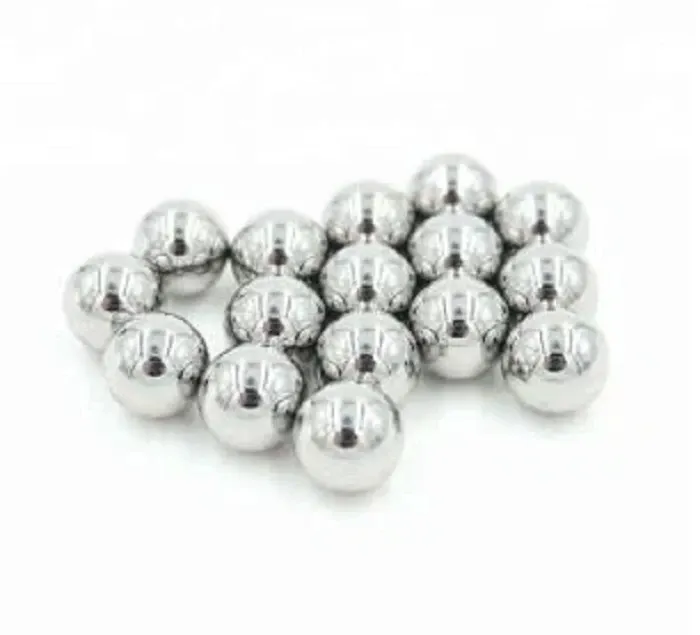
As a supplier of weldable steel balls, we take residual stress very seriously. We use advanced welding techniques and quality control measures to ensure that our balls have minimal residual stress. Our team of experts carefully selects the welding parameters and conducts thorough testing to make sure that the final product meets the highest standards.
If you're in the market for high - quality weldable steel balls, we'd love to hear from you. Whether you need stainless steel balls, large steel balls, or carbon steel balls, we've got you covered. We can provide you with detailed information about the residual stress levels in our products and how we control them. So, don't hesitate to reach out to us for a quote or to discuss your specific requirements. We're here to help you find the perfect solution for your application.
References
- ASM Handbook, Volume 6: Welding, Brazing, and Soldering, ASM International
- Welding Metallurgy and Weldability of Stainless Steels, John C. Lippold and David J. Kotecki