
Hey there! As a supplier of Solid Steel Balls, I often get asked about the production capacity of solid steel ball manufacturers. It's a pretty important topic, especially if you're in the market to buy these balls for your business. So, let's dive right in and explore what goes into the production capacity of solid steel ball manufacturers.
First off, what exactly are solid steel balls used for? Well, they've got a ton of applications. You'll find them in machinery, automotive parts, bearings, and even in some consumer products. They're super versatile, and their demand is high across various industries.
Now, when we talk about production capacity, there are a few key factors that come into play. One of the biggest factors is the manufacturing process. There are different ways to make solid steel balls, and each method has its own limitations and capabilities.
One common method is the cold heading process. In this process, a wire or rod of steel is cut into small pieces, and then these pieces are formed into balls using a cold heading machine. This method is great for producing large quantities of balls quickly. It's efficient and can handle high - volume production. However, the size of the balls that can be made using cold heading is somewhat limited. Generally, it's better suited for smaller to medium - sized balls.
Another method is the hot forging process. Here, the steel is heated to a very high temperature and then forged into the shape of a ball. This method is more suitable for larger balls. It allows for better control over the internal structure of the ball, which can result in higher - quality products. But hot forging is a slower process compared to cold heading, and it requires more energy. So, the production capacity in terms of quantity per unit of time is usually lower.
The equipment used in the manufacturing facility also plays a huge role in production capacity. Modern, state - of - the - art machinery can produce solid steel balls at a much faster rate than older equipment. For example, a new automated cold heading machine can produce thousands of balls per hour, while an older, manual machine might only be able to produce a few hundred.
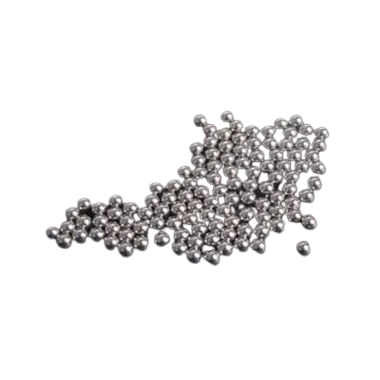

The quality control measures in place also impact production capacity. If a manufacturer has very strict quality control standards, they might have to slow down the production process to ensure that each ball meets those standards. This is a good thing, as it means you're getting a high - quality product, but it can reduce the overall production volume.
Let's talk about the different types of solid steel balls and how production capacity might vary for each.
We've got the Chorme Steel Ball. Chrome steel balls are known for their high hardness and wear resistance. They're commonly used in bearings and other high - stress applications. The production of chrome steel balls requires a specific type of steel alloy and a precise manufacturing process. The production capacity for chrome steel balls can be affected by the availability of the raw materials. If there's a shortage of the specific chrome - containing alloy, it can slow down production.
Then there are Metric Steel Ball. Metric steel balls are standardized in size according to the metric system. They're widely used in industries around the world. The production capacity for metric steel balls is often high because they're in such high demand. Manufacturers usually have well - established production lines for metric sizes, which allows them to produce large quantities efficiently.
And we can't forget about Carbon Steel Ball. Carbon steel balls are relatively inexpensive and are used in a wide range of applications. The production of carbon steel balls is generally faster and more straightforward compared to some other types. As a result, the production capacity for carbon steel balls can be quite high, especially for common sizes.
The workforce at the manufacturing facility is also an important factor. A well - trained and experienced workforce can operate the machinery more efficiently, troubleshoot problems quickly, and keep the production line running smoothly. On the other hand, if there's a shortage of skilled workers or if the workers are inexperienced, it can lead to production delays and a lower overall production capacity.
The location of the manufacturing facility can also have an impact. If the facility is close to the source of raw materials, it can reduce the time and cost of transporting the materials. This can lead to a more efficient production process and potentially higher production capacity. Additionally, if the facility is located in an area with good infrastructure, such as reliable power supply and transportation links, it can support a higher level of production.
As a supplier of Solid Steel Balls, I know that different customers have different needs. Some need small quantities of high - precision balls for a specialized project, while others need large volumes of standard - sized balls for mass production. That's why I work closely with manufacturers who have a diverse range of production capabilities. Whether you need a few hundred Chorme Steel Ball for a custom - made bearing or thousands of Carbon Steel Ball for a consumer product, I can help you find the right solution.
If you're in the market for solid steel balls, don't hesitate to reach out. We can discuss your specific requirements, and I'll do my best to match you with the manufacturer that can meet your needs in terms of quantity, quality, and price. Whether you need a one - time order or a long - term supply contract, I'm here to assist you in the procurement process.
In conclusion, the production capacity of solid steel ball manufacturers is influenced by many factors, including the manufacturing process, equipment, quality control, workforce, and location. Understanding these factors can help you make an informed decision when it comes to purchasing solid steel balls for your business. So, if you've got any questions or if you're ready to start a procurement discussion, just drop me a line. I'm looking forward to helping you get the best solid steel balls for your needs.
References
- Smith, J. (2018). Steel Ball Manufacturing: Processes and Capabilities. Industrial Manufacturing Journal.
- Brown, A. (2020). Factors Affecting Production Capacity in Metal Manufacturing. Production Management Review.