
Needle rollers are essential components in various mechanical systems, offering high load - carrying capacity and compact design. As a needle roller supplier, I am often asked about the precision level of needle rollers. In this blog, I will delve into the concept of precision levels of needle rollers, their importance, and how they impact different applications.
Understanding Precision Levels of Needle Rollers
Precision in needle rollers refers to the degree of conformity to specified dimensions, geometric shapes, and surface finish. The precision level is determined by a series of tight tolerances that control the size, straightness, roundness, and surface roughness of the needle rollers.
The size of a needle roller is a critical factor. The diameter and length of the roller must be within a very narrow range. For example, in some high - precision applications, the diameter tolerance of a needle roller might be as small as ±0.002 mm. A deviation from this tolerance can lead to uneven load distribution in a bearing assembly, which may cause premature wear and failure.
Geometric shape also plays a vital role. Needle rollers should be as straight and round as possible. Straightness is crucial because any curvature can cause the roller to bind or skid within the bearing, reducing its efficiency. Roundness ensures that the contact between the roller and the raceway is uniform, which is essential for smooth operation and long - term durability.
Surface finish is another aspect of precision. A smooth surface reduces friction and wear between the needle roller and the mating parts. High - precision needle rollers often have a surface roughness of less than 0.1 micrometers, which minimizes the generation of heat and noise during operation.
Importance of Precision in Different Applications
Automotive Industry
In the automotive industry, needle rollers are used in various components such as transmissions, engines, and wheel bearings. In transmissions, high - precision needle rollers are required to ensure smooth gear shifting. A slight deviation in the precision of the needle rollers can lead to rough gear engagement, increased noise, and reduced fuel efficiency. For example, in a dual - clutch transmission, the needle rollers in the clutch packs must have extremely tight tolerances to ensure precise and reliable operation.
In engines, needle rollers are used in the valve train and connecting rod bearings. The precision of these rollers is critical for maintaining proper valve timing and reducing friction in the engine. Any imprecision can result in power loss, increased emissions, and engine damage over time.
Aerospace Industry
The aerospace industry demands the highest level of precision in all its components, and needle rollers are no exception. In aircraft engines, needle rollers are used in the turbine and compressor sections. These components operate under extreme conditions of high temperature, high speed, and high load. High - precision needle rollers are essential to ensure the reliability and safety of the engine. A single faulty needle roller can lead to catastrophic engine failure, so the tolerances in aerospace - grade needle rollers are extremely tight.
In aircraft landing gear systems, needle rollers are used to support the heavy loads during takeoff and landing. The precision of these rollers is crucial for smooth operation and to prevent any jamming or malfunction that could endanger the safety of the aircraft.
Industrial Machinery
In industrial machinery, needle rollers are used in a wide range of equipment, from machine tools to conveyor systems. In machine tools, high - precision needle rollers are used in the spindle bearings to ensure accurate machining operations. Any deviation in the precision of the needle rollers can result in poor surface finish and dimensional inaccuracies in the machined parts.
In conveyor systems, needle rollers are used to support the moving parts. Precision needle rollers help to reduce friction and wear, which increases the efficiency and lifespan of the conveyor system.
How We Ensure Precision as a Needle Roller Supplier
As a needle roller supplier, we have a comprehensive quality control system in place to ensure the high precision of our products.
Advanced Manufacturing Processes
We use state - of - the - art manufacturing equipment and techniques to produce needle rollers. Our production process starts with high - quality raw materials. We carefully select the steel grades that have the right combination of strength, hardness, and ductility.
The manufacturing process involves precision grinding and lapping operations. Grinding is used to achieve the desired diameter and length of the needle rollers, while lapping is used to improve the surface finish and roundness. Our grinding machines are equipped with advanced control systems that can maintain tight tolerances throughout the production process.
Stringent Quality Inspection
After the manufacturing process, each batch of needle rollers undergoes a series of rigorous quality inspections. We use advanced measuring instruments such as coordinate measuring machines (CMMs) to check the dimensions of the needle rollers. CMMs can measure the diameter, length, and straightness of the rollers with high accuracy.
We also use optical profilometers to measure the surface roughness of the needle rollers. This ensures that the surface finish meets the required specifications. In addition, we perform hardness tests and material analysis to ensure the quality of the raw materials and the heat treatment process.
Continuous Improvement
We are committed to continuous improvement in our manufacturing processes and quality control systems. We regularly invest in research and development to explore new materials and manufacturing techniques that can further improve the precision of our needle rollers. We also collect feedback from our customers and use it to identify areas for improvement.
Comparison with Other Types of Rollers
Gravity Taper Roller
Gravity taper rollers are designed to handle both radial and axial loads. While they have their own advantages in terms of load - carrying capacity, needle rollers are generally more suitable for applications where space is limited. Needle rollers have a smaller diameter and a larger length - to - diameter ratio, which allows them to fit into compact spaces. In terms of precision, needle rollers often require higher precision in terms of diameter and roundness because of their smaller size.
Cylindrical Roller
Cylindrical rollers are similar to needle rollers in some ways, but they are generally larger in diameter. Cylindrical rollers are better suited for applications with high radial loads. Needle rollers, on the other hand, are more versatile and can be used in a wider range of applications, especially those with limited space. The precision requirements for needle rollers are often more stringent due to their smaller size and the need for smooth operation in tight spaces.
Conclusion
The precision level of needle rollers is a critical factor that determines their performance and suitability for different applications. As a Needle Roller supplier, we understand the importance of precision and are committed to providing high - quality needle rollers that meet the strictest industry standards.
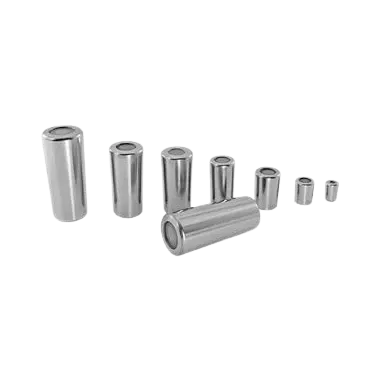

If you are in need of high - precision needle rollers for your application, we invite you to contact us for a detailed discussion. Our team of experts can help you select the right needle rollers based on your specific requirements. We look forward to the opportunity to work with you and contribute to the success of your projects.
References
- Harris, T. A., & Kotzalas, M. N. (2007). Rolling Bearing Analysis. Wiley.
- Zorzi, C., & Giacopini, A. (2012). Handbook of Bearings. Elsevier.
- Jones, A. (2015). Precision Engineering: Principles and Practice. CRC Press.