
In the world of mechanical engineering and industrial manufacturing, cylindrical rollers play a pivotal role. These small yet mighty components are integral to the smooth operation of countless machines and equipment. As a leading supplier of cylindrical rollers, I've had the privilege of witnessing firsthand the importance of precision in these essential parts. In this blog, we'll delve into the precision levels of cylindrical rollers, exploring what they mean, why they matter, and how we ensure the highest standards in our products.
Understanding Precision in Cylindrical Rollers
Precision in cylindrical rollers refers to the degree of accuracy with which the roller is manufactured to meet specific dimensional and geometric requirements. These requirements are crucial because even the slightest deviation can have a significant impact on the performance and lifespan of the machinery in which the rollers are used.
Dimensional Precision
One of the primary aspects of precision is dimensional accuracy. This includes the diameter, length, and roundness of the roller. The diameter of a cylindrical roller must be within a very tight tolerance range to ensure proper fit and function within the bearing assembly. For example, in high - speed applications, a roller with a diameter that is even slightly larger or smaller than the specified value can cause excessive friction, heat generation, and premature wear.
Length is another critical dimension. A roller that is too long or too short may not distribute the load evenly across the bearing, leading to uneven stress and potential failure. Roundness, which measures how closely the cross - section of the roller approximates a perfect circle, is also essential. Any out - of - roundness can result in vibrations, noise, and reduced efficiency.
Geometric Precision
Geometric precision encompasses factors such as straightness, cylindricity, and surface finish. Straightness ensures that the roller is perfectly straight along its axis. If a roller is bent or bowed, it can cause misalignment within the bearing, leading to increased wear and decreased performance.
Cylindricity refers to how well the roller's surface conforms to an ideal cylinder shape. Imperfections in cylindricity can lead to uneven contact between the roller and the raceway, which can cause stress concentrations and premature fatigue.
The surface finish of a cylindrical roller is also of utmost importance. A smooth surface finish reduces friction and wear, while a rough surface can cause damage to the raceway and increase the likelihood of lubrication breakdown.
Measuring Precision Levels
To determine the precision level of cylindrical rollers, manufacturers use a variety of advanced measurement techniques and instruments. Coordinate measuring machines (CMMs) are commonly used to measure dimensional accuracy with high precision. These machines use a probe to touch the surface of the roller at multiple points, allowing for accurate measurement of diameter, length, and other dimensions.
Optical measuring systems, such as laser scanners, can be used to measure geometric features like roundness, straightness, and cylindricity. These systems project a laser beam onto the surface of the roller and analyze the reflected light to create a detailed 3D profile of the roller's shape.
Surface roughness testers are used to measure the surface finish of the roller. These instruments use a stylus to trace the surface of the roller and measure the height variations, providing a quantitative measure of the surface roughness.
Importance of Precision in Different Applications
The required precision level of cylindrical rollers varies depending on the application. In some industries, such as aerospace and medical devices, extremely high precision is required. For example, in aircraft engines, the cylindrical rollers used in the bearings must have very tight dimensional and geometric tolerances to ensure reliable operation under high - speed and high - load conditions.
In the automotive industry, precision is also crucial. Cylindrical rollers used in transmissions and engines need to be highly precise to ensure smooth shifting, efficient power transfer, and long - term durability.
On the other hand, in less demanding applications, such as some types of conveyor systems, a slightly lower precision level may be acceptable. However, even in these applications, maintaining a reasonable level of precision is still important to ensure proper function and reduce maintenance costs.
Our Commitment to Precision as a Supplier
As a cylindrical roller supplier, we understand the critical role that precision plays in the performance of our products. That's why we have implemented a comprehensive quality control system to ensure that every roller we produce meets the highest precision standards.
We use state - of - the - art manufacturing equipment and techniques to produce our cylindrical rollers. Our production process includes multiple stages of machining, heat treatment, and finishing, each of which is carefully controlled to minimize dimensional and geometric variations.
Before leaving our facility, every roller undergoes a rigorous inspection process. We use a combination of in - house measurement equipment and third - party testing laboratories to verify the precision of our products. This ensures that our customers receive cylindrical rollers that are not only precise but also reliable and durable.
Related Products and Their Precision
In addition to cylindrical rollers, we also offer other types of rolling elements, such as Needle Roller and Conical Rollers. These products also require a high level of precision, although the specific requirements may differ from those of cylindrical rollers.
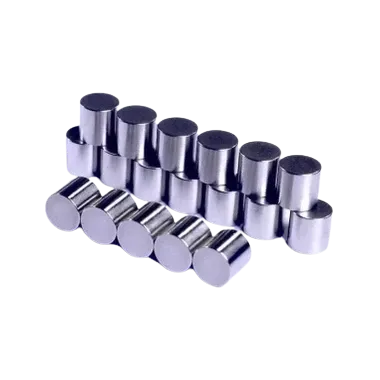
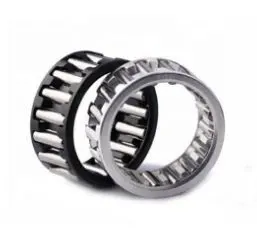
Needle rollers, for example, are much smaller in diameter compared to cylindrical rollers. This makes them suitable for applications where space is limited. However, their small size also makes them more challenging to manufacture with high precision. We use specialized manufacturing techniques to ensure that our needle rollers meet the strict dimensional and geometric requirements of our customers.
Conical rollers are designed to handle both radial and axial loads. Their unique shape requires precise machining to ensure proper contact with the raceway and even load distribution. Our Taper Roller Disign team works closely with our manufacturing department to optimize the design and production process of conical rollers, ensuring the highest level of precision.
Conclusion
In conclusion, the precision level of cylindrical rollers is a critical factor in their performance and reliability. Whether it's in high - tech aerospace applications or everyday automotive use, precision ensures smooth operation, reduced wear, and extended lifespan. As a supplier, we are committed to providing our customers with cylindrical rollers that meet the highest precision standards.
If you are in need of high - precision cylindrical rollers or other rolling elements for your application, we invite you to contact us for a consultation. Our team of experts is ready to assist you in selecting the right products and ensuring that they meet your specific requirements. We look forward to working with you to solve your rolling element needs.
References
- "Rolling Bearing Analysis" by T.A. Harris and M.N. Kotzalas
- "Manufacturing Engineering and Technology" by S. Kalpakjian and S.R. Schmid
- Industry standards and specifications related to cylindrical rollers and rolling elements.