
As a supplier of Gravity Taper Rollers, I often encounter various technical inquiries from customers. One question that comes up quite frequently is about the Poisson's ratio of Gravity Taper Rollers. In this blog post, I will delve into this topic, explaining what Poisson's ratio is, its significance in the context of Gravity Taper Rollers, and how it affects their performance.
Understanding Poisson's Ratio
Poisson's ratio is a fundamental concept in materials science and engineering. It is defined as the negative ratio of the transverse strain to the axial strain when a material is subjected to an axial load. In simpler terms, when you pull or compress a material in one direction, it will not only deform in that direction but also in the perpendicular directions. Poisson's ratio quantifies this lateral deformation.
Mathematically, Poisson's ratio ((\nu)) is expressed as:
(\nu = -\frac{\epsilon_{transverse}}{\epsilon_{axial}})
where (\epsilon_{transverse}) is the transverse strain and (\epsilon_{axial}) is the axial strain.
The value of Poisson's ratio ranges from -1 to 0.5 for most materials. For isotropic materials, which have the same properties in all directions, the theoretical upper limit is 0.5. Rubber, for example, has a Poisson's ratio close to 0.5, meaning that when it is stretched in one direction, it contracts equally in the perpendicular directions. On the other hand, cork has a Poisson's ratio close to 0, which means it hardly contracts laterally when compressed axially.
Poisson's Ratio in Gravity Taper Rollers
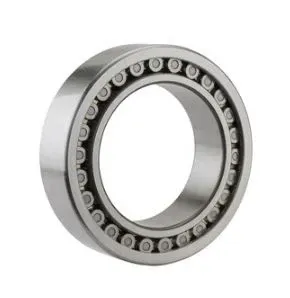
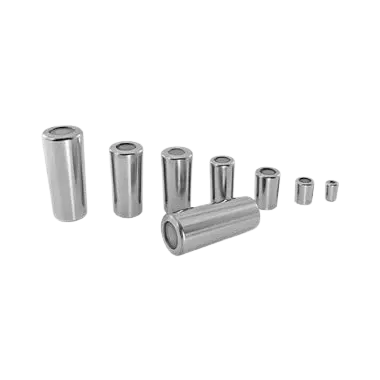
Gravity Taper Rollers are a type of rolling element used in various mechanical applications, such as bearings. They are designed to handle both radial and axial loads efficiently. The Poisson's ratio of Gravity Taper Rollers plays a crucial role in determining their mechanical behavior and performance.
When a Gravity Taper Roller is subjected to an axial load, it will deform both axially and transversely. The transverse deformation can affect the contact between the roller and the raceway, which in turn can influence the load distribution, friction, and wear. A higher Poisson's ratio means that the roller will contract more laterally under axial load, which can lead to a larger contact area with the raceway. This can be beneficial in terms of load distribution, as it reduces the stress concentration at the contact points. However, it can also increase the friction and wear, as the larger contact area means more surface interaction.
Conversely, a lower Poisson's ratio means that the roller will contract less laterally, resulting in a smaller contact area with the raceway. This can reduce the friction and wear, but it may also lead to higher stress concentration at the contact points, which can potentially cause premature failure.
Therefore, finding the optimal Poisson's ratio for Gravity Taper Rollers is a delicate balance between load distribution, friction, and wear. It depends on various factors, such as the material of the roller, the design of the bearing, and the operating conditions.
Factors Affecting the Poisson's Ratio of Gravity Taper Rollers
The Poisson's ratio of Gravity Taper Rollers is not a fixed value but can be influenced by several factors:
- Material Properties: The material used to manufacture the Gravity Taper Rollers has a significant impact on their Poisson's ratio. Different materials have different atomic structures and bonding characteristics, which determine how they deform under load. For example, steel, which is commonly used in roller bearings, has a Poisson's ratio of around 0.3. However, the exact value can vary depending on the specific alloy composition and heat treatment.
- Manufacturing Process: The manufacturing process can also affect the Poisson's ratio of Gravity Taper Rollers. Processes such as forging, machining, and heat treatment can introduce residual stresses and microstructural changes in the material, which can alter its mechanical properties, including the Poisson's ratio. For example, a heat treatment process that increases the hardness of the roller may also change its Poisson's ratio.
- Operating Conditions: The operating conditions, such as temperature, load, and speed, can also influence the Poisson's ratio of Gravity Taper Rollers. At high temperatures, the material may become more ductile, which can increase the Poisson's ratio. Similarly, high loads and speeds can cause the material to deform plastically, which can also affect the Poisson's ratio.
Measuring the Poisson's Ratio of Gravity Taper Rollers
Measuring the Poisson's ratio of Gravity Taper Rollers accurately is essential for understanding their mechanical behavior and optimizing their performance. There are several methods available for measuring Poisson's ratio, including:
- Strain Gauge Method: This is the most common method for measuring Poisson's ratio. It involves attaching strain gauges to the surface of the roller in both the axial and transverse directions. When the roller is subjected to an axial load, the strain gauges measure the corresponding strains, and the Poisson's ratio can be calculated using the formula mentioned earlier.
- Ultrasonic Method: This method uses ultrasonic waves to measure the elastic properties of the material, including the Poisson's ratio. Ultrasonic waves are sent through the roller, and the time taken for the waves to travel through the material is measured. By analyzing the wave propagation characteristics, the Poisson's ratio can be determined.
- Dilatometer Method: This method measures the change in volume of the roller when it is subjected to an axial load. The Poisson's ratio can be calculated from the relationship between the axial and transverse strains and the change in volume.
Importance of Poisson's Ratio in Gravity Taper Roller Applications
The Poisson's ratio of Gravity Taper Rollers is an important parameter that affects their performance in various applications. In bearing applications, for example, the Poisson's ratio can influence the load capacity, fatigue life, and noise level of the bearing. A bearing with a roller having an optimal Poisson's ratio can handle higher loads, last longer, and operate more quietly.
In addition, the Poisson's ratio can also affect the performance of Gravity Taper Rollers in other applications, such as conveyor systems, automotive transmissions, and aerospace equipment. In these applications, the rollers are often subjected to complex loading conditions, and the Poisson's ratio can play a crucial role in determining their ability to withstand these loads and maintain their performance over time.
Conclusion
In conclusion, the Poisson's ratio of Gravity Taper Rollers is a critical parameter that affects their mechanical behavior and performance. It is influenced by various factors, including the material properties, manufacturing process, and operating conditions. Measuring the Poisson's ratio accurately is essential for understanding the roller's behavior and optimizing its performance in different applications.
As a supplier of Gravity Taper Rollers, we understand the importance of Poisson's ratio and its impact on the performance of our products. We use advanced manufacturing processes and quality control measures to ensure that our rollers have the optimal Poisson's ratio for their intended applications. If you are interested in learning more about our Gravity Taper Rollers or have any questions about Poisson's ratio, please feel free to contact us for procurement and further discussion. We are always happy to help you find the best solution for your needs.
References
- Timoshenko, S. P., & Goodier, J. N. (1970). Theory of Elasticity. McGraw-Hill.
- Callister, W. D., & Rethwisch, D. G. (2014). Materials Science and Engineering: An Introduction. Wiley.
- Harris, T. A., & Kotzalas, M. N. (2007). Rolling Bearing Analysis. Wiley.