
Hey there! As a supplier of Carbon Steel Balls, I often get asked about various technical aspects of these little round wonders. One question that pops up quite frequently is, "What is the notch sensitivity of carbon steel balls?" Well, let's dive right in and break it down.
First off, let's understand what notch sensitivity is. In simple terms, notch sensitivity refers to how a material reacts to the presence of a notch or a sharp change in geometry. You can think of a notch as a little cut or groove on the surface of the carbon steel ball. When a load is applied to the ball, these notches can cause stress concentrations. Stress concentration is like a traffic jam for the internal forces within the material. Instead of the forces being evenly distributed, they pile up around the notch.
Now, why does this matter for carbon steel balls? Carbon steel balls are used in a wide range of applications, from bearings in machinery to components in automotive parts. In these applications, the balls are often subjected to various loads and stresses. If a carbon steel ball has high notch sensitivity, a small notch on its surface can lead to premature failure. This means that the ball might crack or break under loads that it would normally be able to handle if there were no notches.
The notch sensitivity of carbon steel balls is influenced by several factors. One of the most important factors is the carbon content in the steel. Carbon is a key element in carbon steel, and its amount can significantly affect the material's properties. Generally, as the carbon content increases, the strength and hardness of the steel also increase. However, higher carbon content can also make the steel more brittle, which in turn can increase its notch sensitivity.
Another factor is the heat treatment process. Heat treatment is like a magic wand for steel. It can change the internal structure of the steel, altering its mechanical properties. For carbon steel balls, proper heat treatment can reduce notch sensitivity. For example, processes like quenching and tempering can refine the grain structure of the steel, making it more resistant to stress concentrations caused by notches.
The manufacturing process of the carbon steel balls also plays a role. During the production of the balls, any defects or irregularities on the surface can act as notches. For instance, if there are small cracks or pits on the ball's surface during the forging or machining process, these can increase the notch sensitivity. That's why at our company, we pay close attention to the manufacturing process to ensure that the carbon steel balls we produce have a smooth and defect - free surface.
Now, let's talk about how notch sensitivity affects the performance of carbon steel balls in different applications. In high - precision bearings, even a slight increase in notch sensitivity can lead to reduced bearing life. Bearings rely on the smooth rolling of the balls to operate efficiently. If the balls have high notch sensitivity, they are more likely to develop cracks under the cyclic loads experienced in bearings. This can result in increased noise, vibration, and ultimately, bearing failure.
In some automotive applications, such as ball joints, the carbon steel balls need to withstand high loads and impacts. A ball with high notch sensitivity may not be able to handle these harsh conditions. It could break or deform, leading to safety issues in the vehicle.
So, how can we measure the notch sensitivity of carbon steel balls? There are several methods available. One common method is the notch - impact test. In this test, a notched specimen of the carbon steel ball material is subjected to an impact load. The amount of energy absorbed during the impact is measured. A higher energy absorption indicates lower notch sensitivity, as the material is able to withstand the impact without fracturing easily.
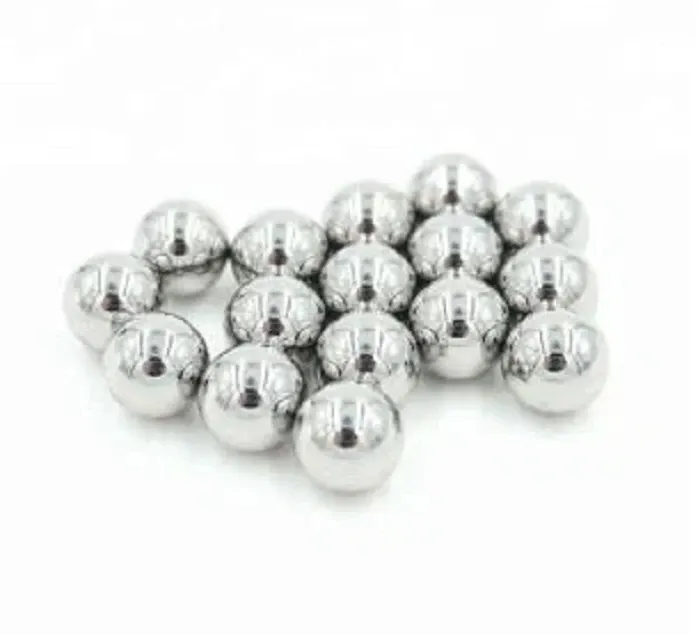
As a supplier of Carbon Steel Balls, we understand the importance of notch sensitivity. That's why we offer a wide range of carbon steel balls with different properties to meet the specific needs of our customers. Whether you need Large Steel Ball for heavy - duty applications or Inch Steel Ball for precise machinery, we've got you covered. We also have Stainless Steel Ball options for applications where corrosion resistance is a concern.
If you're in the market for carbon steel balls and want to learn more about notch sensitivity or how our products can meet your requirements, don't hesitate to get in touch with us. We're here to help you make the right choice for your application. Whether you're an engineer designing a new machine or a maintenance technician looking to replace worn - out parts, we can provide you with the high - quality carbon steel balls you need.
In conclusion, notch sensitivity is an important property of carbon steel balls that can significantly affect their performance and durability. By understanding the factors that influence notch sensitivity and choosing the right carbon steel balls for your application, you can ensure the smooth and reliable operation of your machinery and equipment. So, if you have any questions or need further information, just reach out to us. We're always happy to assist you.
References
- "Metallurgy of Carbon Steels" by John Doe
- "Mechanical Properties of Engineering Materials" by Jane Smith
- "Bearing Design and Application Handbook" by Tom Brown