
Hey there! As a supplier of Metric Steel Balls, I often get asked about the noise level when these little guys are in use. It's a pretty important topic, especially for industries where noise can be a real issue, like in machinery, automotive, and even some consumer products. So, let's dive right in and explore what affects the noise level of metric steel balls.
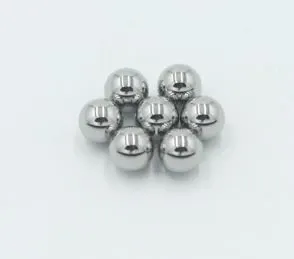
First off, what are metric steel balls? Well, they're basically steel balls that are measured in metric units. We offer a wide range of these, from small ones used in precision instruments to larger ones for heavy - duty applications. You can check out our Precision Steel Balls if you're interested in high - quality, accurately sized balls.
Now, let's talk about what makes metric steel balls noisy or quiet. One of the biggest factors is the surface finish of the balls. A ball with a rough surface is going to create more noise than one with a smooth finish. When the ball rolls or moves against other components, a rough surface causes more friction and vibrations, which in turn generate noise. Our manufacturing process ensures that our Carbon Steel Ball has a high - quality surface finish, reducing the noise level significantly.
The material of the steel also plays a role. Different types of steel have different hardness and elasticity properties. Harder steel can sometimes lead to more noise because it transfers vibrations more easily. However, the right balance of hardness and elasticity can actually help dampen vibrations and reduce noise. We carefully select the steel for our metric steel balls to achieve this balance.
Another factor is the load and speed at which the balls are operating. When the load on the balls is too high, it can cause excessive deformation and increased friction, resulting in more noise. Similarly, high - speed operation can also generate more noise due to the increased forces and vibrations. For applications with high loads or speeds, we recommend our specially designed metric steel balls that can handle these conditions while keeping the noise level in check.
The environment in which the steel balls are used is also crucial. If the operating environment is dirty or has a lot of debris, the balls can pick up this dirt and get scratches on their surface, which will increase the noise level. In such cases, proper lubrication and filtration systems are necessary to keep the balls clean and reduce noise.
Let's compare metric steel balls with Inch Steel Ball. While the basic principles of noise generation are similar, the difference in size and measurement system can lead to some variations. Metric steel balls are more commonly used in industries that follow the metric system, and their design and manufacturing are optimized for these applications. This optimization often includes features that help reduce noise.
In some applications, like in ball bearings, the arrangement of the steel balls also affects the noise level. A well - arranged set of balls distributes the load evenly, reducing the stress on individual balls and minimizing vibrations. Our engineers have extensive experience in designing ball arrangements to ensure quiet operation.
Now, how can you measure the noise level of metric steel balls? There are several methods. One common way is to use a sound level meter. You place the meter near the operating steel balls and measure the decibel level. However, this method only gives you an overall noise level. To get a more detailed analysis, you can use vibration sensors. These sensors can detect the specific frequencies of the vibrations caused by the steel balls, which can help identify the source of the noise.
If you're in an industry where noise is a critical issue, such as in the aerospace or medical device industries, you need to be extra careful about the noise level of the steel balls you use. Our metric steel balls are tested rigorously to meet the strictest noise requirements. We have a team of experts who can work with you to select the right balls for your specific application, ensuring that the noise level is within an acceptable range.
So, if you're looking for high - quality metric steel balls with a low noise level, you've come to the right place. Whether you need them for a small - scale project or a large - scale industrial application, we can provide you with the perfect solution. Our years of experience in the industry and our commitment to quality make us a reliable supplier.
If you're interested in learning more about our metric steel balls or have any questions regarding noise levels or other aspects, don't hesitate to get in touch. We're always happy to have a chat and help you find the best product for your needs. Let's start a conversation and see how we can work together to solve your steel ball requirements.
References
- General knowledge in the field of steel ball manufacturing and engineering
- Internal research and testing data from our company's R & D department