
Hey there! As a supplier of Metric Steel Balls, I often get asked about the modulus of elasticity of these little round wonders. So, let's dive right in and break it down.
First off, what exactly is the modulus of elasticity? Well, it's a measure of how a material responds to being stretched or compressed. In simpler terms, it tells us how "stiff" or "flexible" a material is. When we talk about metric steel balls, the modulus of elasticity gives us an idea of how they'll behave under different loads.
For metric steel balls, the modulus of elasticity typically falls within a certain range. Most of the time, we're looking at a value around 200 - 210 GPa (gigapascals). That's a pretty high number, which means steel balls are quite stiff. They don't deform easily under normal loads. This stiffness is one of the reasons why steel balls are so popular in a wide range of applications.
Let's take a look at some of the common types of metric steel balls we supply and how their modulus of elasticity plays a role.
Din 5401 Steel Ball
The Din 5401 Steel Ball is a well - known standard in the industry. These balls are used in various mechanical applications, like bearings and precision instruments. The high modulus of elasticity of these steel balls ensures that they can withstand the high pressures and loads that come with these applications. When a bearing is in operation, the balls are constantly being squeezed between the races. Thanks to their high stiffness, they maintain their shape and don't deform, which is crucial for the smooth operation of the bearing.
High Chrome Steel Balls
High Chrome Steel Balls are another popular choice. The high chrome content in these balls not only gives them excellent wear resistance but also affects their modulus of elasticity. The modulus of these balls is also in the typical range for steel, around 200 - 210 GPa. This high stiffness allows them to be used in high - speed and high - load applications. For example, in ball screws used in CNC machines, the high chrome steel balls need to be able to handle the rapid movements and heavy loads without deforming. Their high modulus of elasticity ensures that they can do just that, providing accurate and reliable performance.
Large Steel Ball
Large Steel Ball is used in some heavy - duty applications. These balls can be found in mining equipment, where they are used in crushers and mills. The large size of these balls means they are subjected to extremely high loads. The high modulus of elasticity of steel ensures that these large balls can handle these loads without significant deformation. Even under the intense pressure of crushing rocks, the steel balls maintain their integrity, which is essential for the efficient operation of the mining equipment.
Now, you might be wondering how the modulus of elasticity is measured. Well, there are a few different methods, but one of the most common is the tensile test. In a tensile test, a sample of the steel is pulled until it breaks, and the stress and strain are measured throughout the process. The modulus of elasticity is then calculated as the ratio of stress to strain in the elastic region (the region where the material returns to its original shape after the load is removed).
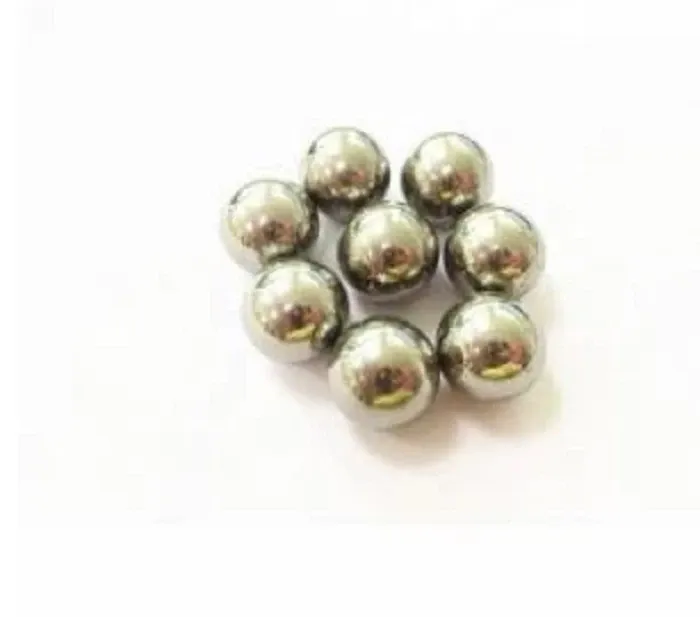
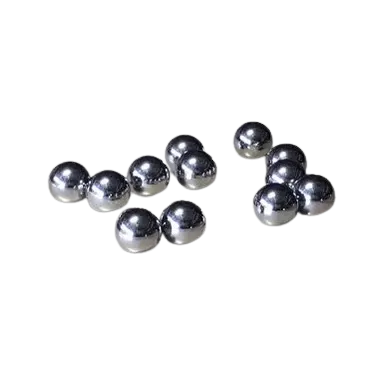
It's also important to note that the modulus of elasticity can be affected by factors like the heat treatment of the steel. Different heat treatment processes can change the internal structure of the steel, which in turn can affect its stiffness. For example, quenching and tempering can increase the hardness and modulus of elasticity of the steel balls.
So, why should you care about the modulus of elasticity when buying metric steel balls? Well, it directly impacts the performance and durability of the balls in your application. If you choose balls with a lower modulus of elasticity than required, they may deform under load, leading to premature failure of your equipment. On the other hand, if you choose balls with a much higher modulus of elasticity than needed, you might be over - paying for a feature that isn't necessary for your application.
As a supplier, we understand the importance of providing the right metric steel balls for your specific needs. We have a team of experts who can help you select the balls with the appropriate modulus of elasticity for your application. Whether you're working on a small - scale precision project or a large - scale industrial application, we've got you covered.
If you're in the market for metric steel balls, don't hesitate to reach out to us. We can provide you with detailed information about the modulus of elasticity of our different ball types, as well as other important properties like hardness, wear resistance, and surface finish. Let's have a chat and find the perfect steel balls for your project.
References
- "Materials Science and Engineering: An Introduction" by William D. Callister Jr. and David G. Rethwisch
- Industry standards and technical documents related to steel ball manufacturing and application