
As a supplier of Metric Steel Balls, I often get asked about the minimum order quantity (MOQ). This is a crucial question for both our potential customers and our business operations. In this blog post, I'll delve into the factors influencing the MOQ for metric steel balls and provide some insights that might help you understand our requirements better.
Understanding Metric Steel Balls
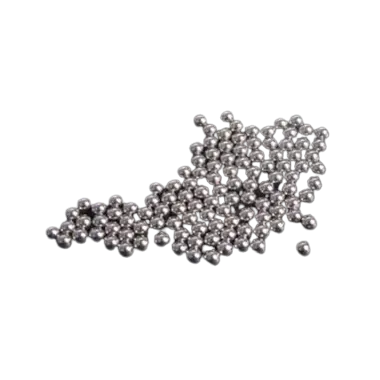
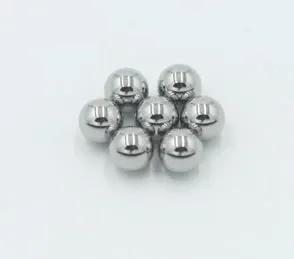
Before we dive into the MOQ, let's briefly understand what Metric Steel Balls are. Metric steel balls are precision-engineered spheres made from high-quality steel. They are used in a wide range of industries, including automotive, aerospace, bearing manufacturing, and precision machinery. The Metric Steel Ball we supply adhere to strict international standards, ensuring high precision, durability, and performance.
Factors Influencing the Minimum Order Quantity
Production Costs
One of the primary factors determining the MOQ is the production cost. Manufacturing steel balls involves several processes, including forging, heat treatment, grinding, and polishing. Each of these processes requires specialized equipment, skilled labor, and raw materials. Setting up the production line for a small batch can be relatively expensive due to the fixed costs associated with equipment setup, tooling, and quality control. To make the production economically viable, we need to produce a certain quantity of steel balls.
Raw Material Procurement
Another important factor is the procurement of raw materials. Steel is the primary material used in manufacturing steel balls, and it is usually purchased in large quantities to get the best price. Buying small amounts of steel can be more expensive per unit, which in turn increases the cost of production. By setting a reasonable MOQ, we can optimize our raw material procurement and pass on the cost savings to our customers.
Quality Control
Maintaining high-quality standards is our top priority. Quality control is an integral part of the production process, and it involves various inspections and tests at different stages. Conducting these quality control measures for a small batch can be disproportionately expensive compared to a larger batch. A higher MOQ allows us to spread the cost of quality control over a larger number of products, ensuring that each steel ball meets our strict quality standards.
Market Demand
Market demand also plays a role in determining the MOQ. If there is a high demand for a particular size or type of metric steel ball, we may be able to offer a lower MOQ as we can quickly sell the produced quantity. On the other hand, if the demand is low, we may need to set a higher MOQ to cover our costs and ensure that the production is profitable.
Typical Minimum Order Quantities
The MOQ for metric steel balls can vary depending on several factors, such as the size, material, and precision grade of the balls. Generally, for common sizes and standard grades of Precision Steel Balls, the MOQ can range from a few thousand pieces to tens of thousands of pieces. For example, for a standard 5mm diameter steel ball with a common precision grade, the MOQ might be around 5,000 pieces. However, for larger or smaller sizes, special materials like Stainless Steel Ball, or higher precision grades, the MOQ may be higher.
It's important to note that these are just general guidelines, and the actual MOQ can be negotiated based on specific customer requirements. We understand that different customers have different needs, and we are always willing to work with our customers to find a mutually beneficial solution.
Benefits of Meeting the Minimum Order Quantity
Cost Savings
By meeting the MOQ, customers can enjoy significant cost savings. As mentioned earlier, producing a larger quantity allows us to optimize our production processes and raw material procurement, which in turn reduces the cost per unit. These cost savings can be passed on to the customers in the form of lower prices.
Faster Delivery
When customers place orders that meet or exceed the MOQ, we can schedule the production more efficiently. This often results in faster delivery times as we can prioritize the order and allocate the necessary resources to ensure timely production and shipment.
Consistent Quality
Producing a larger quantity also allows us to maintain a more consistent quality. With a larger batch, we can better control the production process and ensure that each steel ball meets the same high-quality standards. This is especially important for applications where precision and reliability are critical.
Negotiating the Minimum Order Quantity
We understand that some customers may not be able to meet the standard MOQ due to various reasons, such as limited budget or low initial demand. In such cases, we are open to negotiating the MOQ. We believe in building long-term relationships with our customers, and we are willing to work with them to find a solution that meets their needs.
When negotiating the MOQ, it's important to provide us with detailed information about your requirements, such as the quantity you need, the expected frequency of orders, and your budget. This will help us understand your situation better and come up with a customized solution.
Conclusion
In conclusion, the minimum order quantity for metric steel balls is influenced by several factors, including production costs, raw material procurement, quality control, and market demand. While the standard MOQ may seem high for some customers, it is necessary to ensure the economic viability of the production and maintain high-quality standards. By meeting the MOQ, customers can enjoy cost savings, faster delivery, and consistent quality. However, we are also open to negotiating the MOQ to meet the specific needs of our customers.
If you are interested in purchasing metric steel balls or have any questions about the minimum order quantity, please feel free to contact us. We would be happy to discuss your requirements and provide you with a detailed quote. Let's work together to find the best solution for your metric steel ball needs.
References
- "Manufacturing Processes for Steel Balls" - Industry Handbook on Precision Ball Manufacturing
- "Quality Control in Steel Ball Production" - Journal of Metallurgical Engineering and Quality Assurance