
Hey there! As a supplier of Weldable Steel Balls, I often get asked about the maximum welding current for these little guys. It's a crucial question, especially for those in the manufacturing and engineering fields. So, let's dive right in and explore this topic.
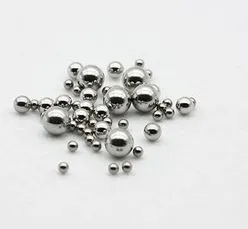
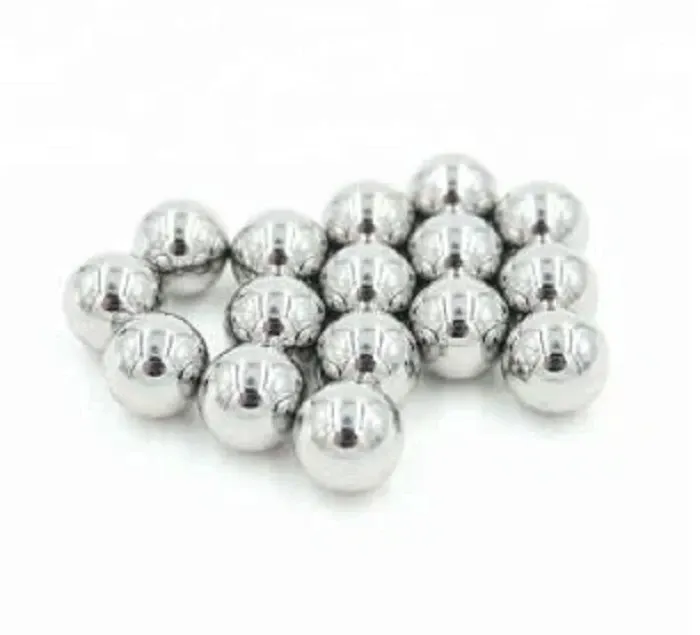
First off, what are weldable steel balls? Well, these are steel balls that are specifically designed to be welded. They're used in a variety of applications, from machinery to construction. Unlike regular steel balls, weldable steel balls have properties that allow them to be joined to other materials through welding. You can check out more about Weldable Steel Balls on our website.
Now, let's talk about the maximum welding current. The maximum welding current for weldable steel balls depends on several factors. One of the most important factors is the size of the ball. Generally speaking, larger balls can handle higher welding currents than smaller ones. This is because larger balls have more mass, which means they can dissipate heat more effectively. For example, a 1-inch diameter weldable steel ball can typically handle a higher current than a 1/4-inch diameter ball.
Another factor that affects the maximum welding current is the type of steel used in the ball. Different types of steel have different melting points and electrical conductivity. For instance, stainless steel has a higher melting point than carbon steel. So, if you're using Stainless Steel Ball, you might need a higher welding current to achieve a proper weld.
The welding process also plays a role. There are several welding processes available, such as MIG (Metal Inert Gas) welding, TIG (Tungsten Inert Gas) welding, and stick welding. Each process has its own optimal current range. MIG welding, for example, is known for its high deposition rate and is often used for larger weldable steel balls. It usually requires a relatively high current. On the other hand, TIG welding is more precise and is suitable for smaller balls or when a high-quality weld is required. It typically uses a lower current.
Let's take a closer look at how these factors interact. Suppose you're working with a 3/4-inch diameter carbon steel weldable ball and you're using MIG welding. You'll need to find the right balance between the current and the welding speed. If the current is too low, the weld might not penetrate the ball properly, resulting in a weak joint. On the other hand, if the current is too high, you could end up melting the ball or causing excessive spatter.
To determine the maximum welding current for a specific weldable steel ball, it's a good idea to conduct some tests. Start with a lower current and gradually increase it while observing the weld quality. Look for signs of proper fusion, such as a smooth bead and good penetration. You can also consult the manufacturer's recommendations. Most suppliers provide guidelines on the recommended welding parameters for their products.
In addition to the technical aspects, there are also safety considerations when dealing with high welding currents. Always wear appropriate safety gear, such as welding gloves, a welding helmet, and protective clothing. Make sure your welding equipment is in good working condition and that you follow all safety procedures.
Now, let's talk about the applications of weldable steel balls. They're used in a wide range of industries. In the automotive industry, they can be used in engine components or suspension systems. In the aerospace industry, they're used in precision machinery and control systems. And in the construction industry, they can be used in structural connections.
If you're in the market for high-quality weldable steel balls, we've got you covered. We're a leading supplier of Weldable Steel Balls, and we offer a wide range of sizes and materials. Our balls are made from the highest quality steel and are carefully manufactured to meet the strictest standards.
We also offer Ball Bearing Balls for those who need them. These balls are designed to reduce friction and support radial and axial loads in bearings. Whether you're a small business or a large corporation, we can provide you with the right products at competitive prices.
If you have any questions about our products or the maximum welding current for weldable steel balls, don't hesitate to reach out. We have a team of experts who are ready to assist you. We can help you choose the right balls for your application and provide you with all the information you need to ensure a successful welding process.
In conclusion, the maximum welding current for weldable steel balls depends on factors like ball size, steel type, and welding process. By understanding these factors and conducting proper tests, you can achieve a high-quality weld. And if you're looking for top-notch weldable steel balls, we're here to be your trusted supplier. So why wait? Contact us today to start your procurement process and let's work together to find the perfect solution for your needs.
References
- Welding Handbook, American Welding Society
- Steel Ball Manufacturing Standards, International Organization for Standardization