
The manufacturing process of gravity taper rollers is a complex and precise journey that combines advanced technology with skilled craftsmanship. As a dedicated supplier of gravity taper rollers, I am excited to share with you the detailed steps involved in creating these essential components.
Raw Material Selection
The first and most crucial step in the manufacturing process is the selection of high - quality raw materials. Gravity taper rollers are typically made from high - carbon chromium bearing steel, such as GCr15. This type of steel offers excellent hardness, wear resistance, and fatigue strength, which are essential properties for the demanding applications of taper rollers.
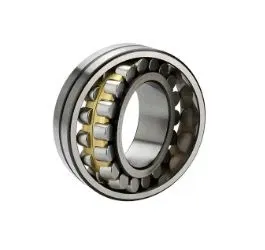
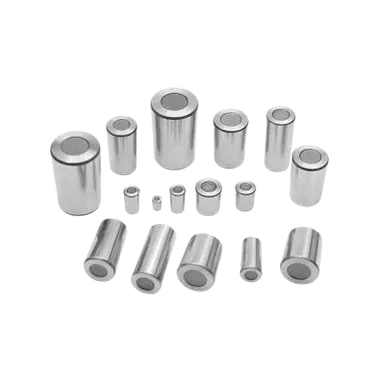
The raw steel is carefully inspected for any defects, including cracks, inclusions, or uneven hardness. Only the steel that meets strict quality standards is selected for further processing. This initial quality control ensures that the final product will have the desired performance and durability.
Cutting and Forming
Once the raw material is selected, it is cut into appropriate lengths. This is usually done using precision cutting machines, such as saws or shears, to ensure accurate dimensions. After cutting, the blanks are heated to a specific temperature to make them more malleable for the forming process.
The forming of gravity taper rollers is a critical step. There are several methods for forming, but one of the most common is cold heading or hot forging. Cold heading is a process where the steel blank is placed in a die and a punch is used to shape it into the rough form of a taper roller. This method is suitable for high - volume production and can achieve good dimensional accuracy.
Hot forging, on the other hand, involves heating the steel blank to a very high temperature and then using a hammer or press to shape it. Hot forging can produce stronger and more complex shapes compared to cold heading, but it requires more energy and has a relatively slower production speed.
Turning and Machining
After the initial forming, the rough - shaped taper rollers undergo turning and machining operations. Turning is a process where the roller is rotated on a lathe, and a cutting tool is used to remove excess material and achieve the desired diameter, length, and taper angle.
During machining, other features such as chamfers, fillets, and surface finishes are also created. Precision machining is essential to ensure that the rollers have the correct dimensions and surface quality. Any deviation in the dimensions can lead to problems in the assembly and performance of the bearings in which the taper rollers are used.
Heat Treatment
Heat treatment is a crucial step in the manufacturing process of gravity taper rollers. It is used to improve the hardness, strength, and wear resistance of the rollers. The most common heat treatment process for taper rollers is quenching and tempering.
Quenching involves heating the rollers to a high temperature (usually around 840 - 860°C for GCr15 steel) and then rapidly cooling them in a quenching medium, such as oil or water. This rapid cooling creates a hard and brittle martensitic structure in the steel.
After quenching, the rollers are tempered to reduce the brittleness and improve the toughness. Tempering is done by heating the rollers to a lower temperature (usually around 150 - 200°C) for a specific period of time and then cooling them slowly. This process helps to relieve the internal stresses generated during quenching and makes the rollers more suitable for use in bearings.
Grinding
Grinding is the final and most precise machining operation in the manufacturing of gravity taper rollers. It is used to achieve the required surface finish and dimensional accuracy. The rollers are first ground on a centerless grinder to remove any remaining material and to improve the roundness and straightness of the rollers.
After centerless grinding, the rollers may undergo additional grinding operations, such as cylindrical grinding or taper grinding, to achieve the exact taper angle and surface finish. The grinding process uses abrasive wheels with different grit sizes to gradually remove material and create a smooth and precise surface.
Surface Treatment
Surface treatment is often applied to gravity taper rollers to improve their corrosion resistance and reduce friction. One common surface treatment method is nitriding. Nitriding involves introducing nitrogen into the surface of the steel to form a hard and wear - resistant nitride layer.
Another surface treatment option is the application of a lubricating coating. This coating can reduce friction between the rollers and the raceways in the bearing, which helps to improve the efficiency and lifespan of the bearing.
Quality Control
Throughout the manufacturing process, strict quality control measures are implemented. At each stage, the rollers are inspected for dimensional accuracy, surface quality, hardness, and other properties. Non - destructive testing methods, such as ultrasonic testing and magnetic particle inspection, are used to detect any internal defects in the rollers.
Final inspection is carried out before the rollers are packaged and shipped. Only the rollers that meet all the quality standards are accepted as finished products. This ensures that our customers receive high - quality gravity taper rollers that can perform reliably in their applications.
Applications of Gravity Taper Rollers
Gravity taper rollers are widely used in various industries. They are commonly found in automotive transmissions, where they help to transfer torque and reduce friction. In industrial machinery, such as machine tools and conveyors, taper rollers are used in bearings to support heavy loads and ensure smooth operation.
If you are interested in Cross Roller, Taper Rollers or Needle Roller, we can also provide you with high - quality products.
Conclusion
The manufacturing process of gravity taper rollers is a multi - step process that requires precision, expertise, and strict quality control. As a supplier, we are committed to producing high - quality taper rollers that meet the diverse needs of our customers. Whether you are in the automotive, industrial, or any other industry, our gravity taper rollers can provide reliable performance and long - lasting service.
If you are interested in purchasing gravity taper rollers or have any questions about our products, please feel free to contact us for further discussion. We look forward to the opportunity to work with you and provide you with the best solutions for your bearing needs.
References
- "Bearing Design and Application Handbook", SKF Group
- "Manufacturing Engineering and Technology", Serope Kalpakjian and Steven R. Schmid