
The load - carrying capacity of ball bearing balls is a crucial factor that determines the performance and longevity of ball bearings in various applications. As a supplier of high - quality Ball Bearing Balls, I understand the significance of this characteristic and am eager to share comprehensive insights with you.
1. Definition and Significance of Load - Carrying Capacity
The load - carrying capacity of ball bearing balls refers to the maximum load that these balls can withstand without experiencing excessive deformation, fatigue failure, or other forms of damage. In practical applications, ball bearings are used in countless mechanical systems, from automotive engines and industrial machinery to household appliances. The load - carrying capacity directly impacts the reliability and efficiency of these systems.
For example, in a high - speed motor, the ball bearing balls need to support both radial and axial loads while rotating at extremely high speeds. If the load - carrying capacity is insufficient, the balls may wear out quickly, leading to increased friction, heat generation, and eventually, system failure. Therefore, understanding and accurately assessing the load - carrying capacity is essential for proper bearing selection and system design.
2. Factors Affecting the Load - Carrying Capacity
Material Properties
The material of the ball bearing balls plays a fundamental role in determining their load - carrying capacity. Different materials have distinct mechanical properties such as hardness, toughness, and fatigue resistance.
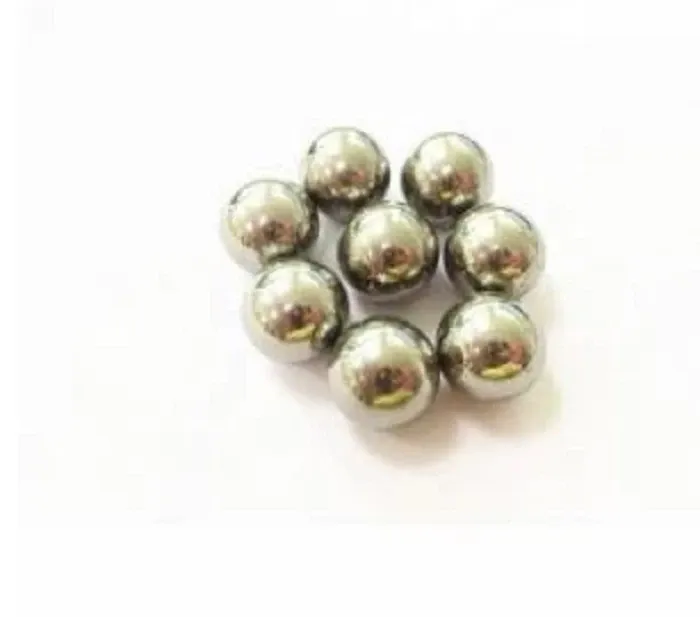
- Steel Balls: Steel is one of the most commonly used materials for ball bearing balls. Din 5401 Steel Ball conforms to specific standards, offering excellent hardness and wear resistance. Carbon steel balls, like the Carbon Steel Ball, are known for their good strength and relatively low cost. High - carbon chromium steel is often used in precision bearings due to its high hardness and ability to withstand heavy loads.
- Stainless Steel Balls: 316 Stainless Steel Balls are popular in applications where corrosion resistance is required. While they may have slightly lower hardness compared to some high - carbon steels, their corrosion - resistant properties make them suitable for use in harsh environments such as marine or food - processing industries. The chemical composition of stainless steel, including elements like chromium and nickel, contributes to its corrosion resistance but also affects its mechanical properties and load - carrying capacity.
Ball Size
The size of the ball bearing balls also has a significant impact on the load - carrying capacity. Generally, larger balls can carry more load than smaller ones. This is because a larger ball has a greater contact area with the raceways of the bearing, which distributes the load over a larger surface. However, larger balls also increase the overall size and weight of the bearing, which may not be suitable for all applications. In some cases, a compromise needs to be made between the load - carrying requirement and the space and weight limitations of the system.
Surface Finish
The surface finish of the ball bearing balls is another important factor. A smooth surface finish reduces friction and wear between the balls and the raceways. Rough surfaces can cause stress concentrations, which may lead to premature failure. During the manufacturing process, precise grinding and polishing techniques are used to achieve a high - quality surface finish. The surface roughness is typically measured in micrometers, and a lower roughness value indicates a smoother surface, which is beneficial for improving the load - carrying capacity and the overall performance of the bearing.
Lubrication
Proper lubrication is essential for enhancing the load - carrying capacity of ball bearing balls. Lubricants reduce friction, dissipate heat, and prevent direct metal - to - metal contact between the balls and the raceways. There are different types of lubricants available, such as grease and oil. Grease is a semi - solid lubricant that is easy to use and provides long - term lubrication. It is suitable for applications with relatively low - speed and moderate - load conditions. Oil, on the other hand, is more effective in high - speed and high - load applications as it can provide better cooling and can be circulated to remove heat and contaminants from the bearing.
3. Calculating the Load - Carrying Capacity
Static Load - Carrying Capacity
The static load - carrying capacity ($C_0$) is the maximum static load that a bearing can withstand without causing permanent deformation of the balls or the raceways. It is calculated based on the material properties, ball size, and the geometry of the bearing. The formula for calculating the static load - carrying capacity is complex and often involves factors such as the elastic modulus of the material, the Poisson's ratio, and the contact geometry. In practice, manufacturers usually provide static load - carrying capacity values in their product catalogs based on standardized testing methods.
Dynamic Load - Carrying Capacity
The dynamic load - carrying capacity ($C$) is the load that a bearing can carry for a specified number of revolutions with a 90% probability of survival. It takes into account the effects of dynamic forces such as inertia and vibration during operation. The calculation of the dynamic load - carrying capacity also depends on the material, ball size, and the operating conditions of the bearing. Standardized methods, such as those defined by the International Organization for Standardization (ISO), are used to calculate the dynamic load - carrying capacity.

4. Applications and Load - Carrying Requirements
Automotive Industry
In the automotive industry, ball bearings are used in various components such as wheel hubs, transmissions, and engines. The load - carrying requirements vary depending on the specific application. For example, wheel hub bearings need to support the weight of the vehicle as well as the dynamic loads generated during driving, such as cornering and braking. These bearings typically require a high load - carrying capacity to ensure safety and reliability. Engine bearings, on the other hand, operate at high speeds and are subject to cyclic loads. The load - carrying capacity needs to be sufficient to withstand the high - frequency forces generated by the engine's operation.
Industrial Machinery
Industrial machinery encompasses a wide range of applications, from heavy - duty manufacturing equipment to precision machine tools. In heavy - duty applications such as mining or construction equipment, ball bearings are required to carry extremely high loads. For instance, the bearings in a large - scale conveyor system need to support the weight of the conveyed materials as well as the tension in the conveyor belt. In precision machine tools, the load - carrying capacity needs to be balanced with the requirement for high - precision motion control. The bearings must be able to carry the load while maintaining accurate positioning and low - vibration operation.
5. Quality Assurance and Testing
As a supplier of Ball Bearing Balls, we implement strict quality - assurance measures to ensure that our products meet the required load - carrying capacity standards. During the manufacturing process, we use advanced inspection techniques to monitor the material properties, dimensions, and surface finish of the balls. Non - destructive testing methods such as ultrasonic testing and magnetic particle inspection are used to detect any internal defects that may affect the load - carrying capacity.
In addition, we conduct performance testing on our ball bearing balls. This includes running the balls in test bearings under simulated operating conditions to measure their load - carrying capacity, friction, and wear characteristics. The test results are used to optimize our manufacturing processes and ensure that our products meet or exceed the industry standards.
6. Conclusion and Call to Action
Understanding the load - carrying capacity of ball bearing balls is essential for selecting the right bearings for your applications. As a professional supplier of Ball Bearing Balls, we offer a wide range of high - quality products with different materials, sizes, and performance characteristics. Our team of experts is ready to assist you in choosing the most suitable ball bearing balls based on your specific load - carrying requirements.
If you are in need of high - quality ball bearing balls or have any questions regarding load - carrying capacity, please feel free to contact us for procurement and further discussions. We are committed to providing you with the best solutions and ensuring the success of your projects.
References
- Harris, T. A., & Kotzalas, M. N. (2007). Rolling Bearing Analysis. Wiley.
- ISO 281:2007. Rolling bearings - Dynamic load ratings and rating life.
- DIN 5401: German standard for steel balls.