
As a supplier of Metric Steel Balls, I've witnessed firsthand the critical role these components play in various industries. One of the most frequently asked questions by our customers is about the impact resistance of metric steel balls. In this blog post, I'll delve into what impact resistance means for metric steel balls, the factors influencing it, and its significance in real - world applications.
Understanding Impact Resistance
Impact resistance refers to the ability of a material to withstand sudden and forceful loads without breaking, deforming permanently, or losing its functionality. For metric steel balls, this property is crucial as they are often used in environments where they are subjected to high - energy impacts.
When a metric steel ball encounters an impact, it experiences a rapid transfer of energy. The ball must absorb and dissipate this energy in a way that prevents catastrophic failure. A ball with high impact resistance can maintain its shape and integrity, ensuring consistent performance over time.
Factors Affecting the Impact Resistance of Metric Steel Balls
Material Composition
The type of steel used in the manufacturing of metric steel balls is a primary determinant of their impact resistance. High - carbon steels are commonly used due to their excellent strength and hardness. These steels can withstand significant impacts without deforming easily. For example, chrome steel, which is often used in precision ball bearings, has a high chromium content that enhances its wear resistance and also contributes to its ability to handle impacts.
Stainless steels, such as 316 Stainless Steel Balls, are another popular choice. They offer good corrosion resistance in addition to decent impact resistance. The austenitic structure of 316 stainless steel provides a balance between strength and ductility, allowing the balls to absorb some impact energy without fracturing.
Heat Treatment
Heat treatment processes play a vital role in enhancing the impact resistance of metric steel balls. Through processes like quenching and tempering, the internal structure of the steel can be modified to achieve the desired combination of hardness and toughness.
Quenching involves rapidly cooling the heated steel, which increases its hardness. However, this can also make the steel brittle. Tempering, which follows quenching, involves reheating the steel to a lower temperature to relieve internal stresses and improve its toughness. A well - executed heat treatment process can significantly improve the impact resistance of metric steel balls.
Manufacturing Process
The manufacturing process of metric steel balls can also affect their impact resistance. Precision manufacturing techniques ensure that the balls have a uniform structure and surface finish. Any defects or irregularities in the ball's surface or internal structure can act as stress concentrators, reducing its ability to withstand impacts.
Cold - heading is a common manufacturing process for steel balls. It involves shaping the steel wire into a ball by applying high pressure. This process can produce balls with good dimensional accuracy and a relatively smooth surface. However, additional finishing processes may be required to further improve the ball's surface quality and impact resistance.
Significance of Impact Resistance in Applications
Bearing Applications
In bearings, metric steel balls are used to reduce friction and support loads. High - impact resistance is essential in bearing applications because the balls are constantly subjected to dynamic loads as the bearing rotates. If a ball fails due to an impact, it can cause the entire bearing to malfunction, leading to equipment downtime and potentially costly repairs.
For example, in automotive engines, bearings with high - impact - resistant metric steel balls are used to support the crankshaft and camshaft. These components are exposed to high - speed rotations and significant vibrations, which require the balls to have excellent impact resistance to ensure long - term reliability.
Industrial Machinery
In industrial machinery, metric steel balls are used in a variety of applications, such as in pumps, valves, and conveyors. In these applications, the balls may be subjected to impacts from moving parts or the materials being processed. A ball with poor impact resistance may deform or break, leading to reduced efficiency and increased maintenance requirements.
For instance, in a ball - screw mechanism used in a CNC machine, the metric steel balls must be able to withstand the high - speed movements and sudden stops without losing their shape. Otherwise, the accuracy of the machine's movements will be compromised.
Sporting Goods
Metric steel balls are also used in some sporting goods, such as in ball - bearing skate wheels. In this application, the balls need to have good impact resistance to withstand the shocks and vibrations experienced during skating. A ball that fails due to an impact can cause the skate wheel to become unstable, increasing the risk of injury to the skater.
Comparing Metric Steel Balls with Inch Steel Balls in Terms of Impact Resistance
Both Metric Steel Ball and Inch Steel Ball have their own advantages and applications. In terms of impact resistance, the difference between the two is mainly related to their size and the specific requirements of the application.
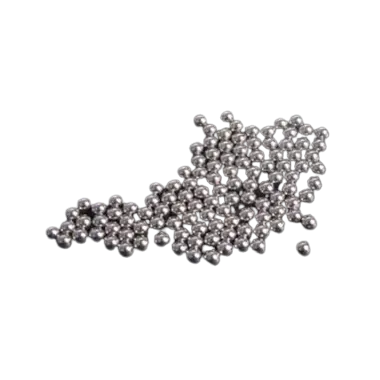
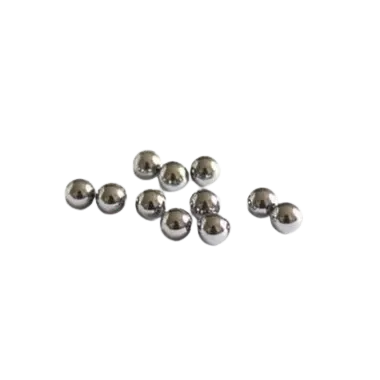
Metric steel balls are available in a wide range of sizes, which allows for more precise selection based on the load and impact conditions of the application. The standardization of metric sizes also ensures better compatibility with metric - based equipment.
Inch steel balls, on the other hand, are commonly used in industries that follow the imperial measurement system. They may have different material and manufacturing options available, depending on the specific needs of the application. However, in general, the impact resistance of both types of balls depends more on the material, heat treatment, and manufacturing process than on the measurement system.
Testing the Impact Resistance of Metric Steel Balls
To ensure the quality and impact resistance of our metric steel balls, we conduct a series of tests. One of the most common tests is the drop - test, where a ball is dropped from a certain height onto a hard surface. The number of drops the ball can withstand before showing signs of damage is recorded.
Another test is the compression test, where the ball is subjected to a gradually increasing compressive force until it fails. This test helps us determine the maximum load the ball can bear and its ability to resist deformation under pressure.
Conclusion
The impact resistance of metric steel balls is a critical property that determines their performance and durability in various applications. Factors such as material composition, heat treatment, and manufacturing process all play important roles in determining the impact resistance of these balls.
As a supplier of metric steel balls, we are committed to providing high - quality products with excellent impact resistance. Our products are carefully manufactured and tested to ensure they meet the strictest industry standards.
If you are in need of metric steel balls for your application, whether it's for bearings, industrial machinery, or sporting goods, we invite you to contact us for a detailed discussion about your requirements. We have a wide range of metric steel balls available and can provide you with the best solutions tailored to your needs. Let's work together to ensure the success of your projects.
References
- ASM Handbook Volume 1: Properties and Selection: Irons, Steels, and High - Performance Alloys.
- ISO Standards for Steel Balls.
- Technical Papers on the Mechanical Properties of Steel Materials.