
The impact resistance of gravity taper rollers is a crucial factor that significantly influences their performance and applicability in various industrial settings. As a leading supplier of Gravity Taper Roller, I have witnessed firsthand the importance of understanding this characteristic for both manufacturers and end - users.
Understanding Gravity Taper Rollers
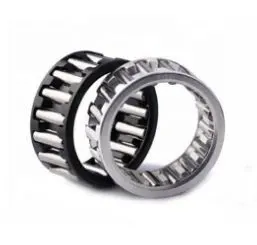
Gravity taper rollers are a specialized type of taper rollers designed to operate under specific conditions. They are conical in shape, which allows them to handle both radial and axial loads effectively. The unique design of gravity taper rollers enables them to distribute loads evenly across the contact surface, reducing stress concentrations and enhancing overall durability.
In many applications, such as automotive transmissions, heavy - duty machinery, and aerospace equipment, gravity taper rollers are subjected to high - impact forces. These forces can arise from sudden starts and stops, uneven terrain, or high - speed operation. Therefore, the ability of these rollers to resist impact is of utmost importance.
Factors Affecting Impact Resistance
Several factors contribute to the impact resistance of gravity taper rollers. One of the primary factors is the material used in their construction. High - quality alloy steels are commonly employed due to their excellent strength and toughness properties. These steels can withstand high - impact loads without deforming or cracking. For example, some advanced alloy steels contain elements such as chromium, nickel, and molybdenum, which enhance their hardenability and impact resistance.
The heat treatment process also plays a vital role in determining the impact resistance of gravity taper rollers. Proper heat treatment can optimize the microstructure of the material, increasing its hardness and toughness. Processes like quenching and tempering can create a fine - grained structure that is more resistant to impact. Additionally, surface treatments such as carburizing or nitriding can further improve the surface hardness and wear resistance of the rollers, which in turn enhances their ability to withstand impact.
The geometric design of the gravity taper roller is another significant factor. The taper angle, diameter, and length of the roller can all affect its impact resistance. A well - designed taper angle ensures that the load is distributed evenly along the contact surface, reducing the likelihood of stress concentrations. Moreover, the proper ratio of diameter to length can enhance the roller's stability and its ability to absorb impact energy.
Measuring Impact Resistance
To accurately assess the impact resistance of gravity taper rollers, several testing methods are commonly used. One of the most widely recognized tests is the Charpy impact test. In this test, a notched specimen of the roller material is struck by a pendulum, and the energy absorbed during the fracture is measured. A higher energy absorption value indicates better impact resistance.
Another method is the drop - weight test, where a heavy weight is dropped onto the roller from a specific height. The roller is then inspected for any signs of damage, such as cracks or deformation. This test simulates real - world impact conditions and provides valuable information about the roller's ability to withstand sudden shocks.
Applications and the Need for High Impact Resistance
In the automotive industry, gravity taper rollers are used in transmissions and differentials. These components are constantly subjected to high - impact forces during gear shifting and vehicle acceleration. A roller with poor impact resistance can lead to premature failure, resulting in costly repairs and downtime. Therefore, automotive manufacturers require gravity taper rollers with high impact resistance to ensure the reliability and longevity of their vehicles.
In the aerospace sector, gravity taper rollers are used in critical components such as landing gear systems and engine bearings. The high - speed operation and extreme conditions in aerospace applications demand rollers that can withstand high - impact loads without compromising safety. A failure of a gravity taper roller in an aerospace component can have catastrophic consequences.
In heavy - duty machinery, such as mining equipment and construction machinery, gravity taper rollers are exposed to harsh operating conditions, including high - impact forces from uneven terrain and heavy loads. High - impact - resistant rollers are essential to ensure the continuous operation of these machines and to prevent costly breakdowns.

Our Role as a Supplier
As a supplier of Gravity Taper Roller, we understand the importance of providing rollers with high impact resistance. We source the highest - quality materials and employ advanced manufacturing processes to ensure that our rollers meet the strictest industry standards. Our in - house quality control team conducts rigorous testing on every batch of rollers to guarantee their impact resistance and overall performance.
We also offer customized solutions to meet the specific needs of our customers. Whether it's a unique geometric design or a special material requirement, we have the expertise and resources to develop gravity taper rollers that are tailored to your application.
In addition to gravity taper rollers, we also supply Needle Roller, which are suitable for applications with limited space and high - load requirements. Our comprehensive product range allows us to provide complete solutions for various industrial needs.
Contact Us for Procurement
If you are in the market for high - quality gravity taper rollers with excellent impact resistance, we invite you to contact us for procurement discussions. Our team of experts is ready to assist you in selecting the right rollers for your application, answering any technical questions you may have, and providing competitive pricing.
References
- ASM Handbook Volume 8: Mechanical Testing and Evaluation. ASM International.
- Metals Handbook Desk Edition, 3rd Edition. ASM International.
- "Design and Analysis of Tapered Roller Bearings" by Dr. G. V. Radzimovsky.