
As a dedicated supplier of Carbon Steel Ball, I've had the privilege of witnessing firsthand the remarkable properties and wide - ranging applications of these essential components. One of the most critical aspects that customers often inquire about is the impact resistance of carbon steel balls. In this blog, I'll delve into the science behind it, explore its influencing factors, and discuss how it relates to different applications.
Understanding Impact Resistance
Impact resistance refers to a material's ability to withstand sudden, dynamic forces without undergoing significant deformation or failure. When it comes to carbon steel balls, this property is of utmost importance as they are often used in environments where they are subjected to high - energy impacts.
Carbon steel is an alloy of iron and carbon, with small amounts of other elements such as manganese, silicon, and sulfur. The carbon content in carbon steel plays a crucial role in determining its mechanical properties, including impact resistance. Generally, as the carbon content increases, the hardness of the steel also increases. However, higher hardness doesn't always translate to better impact resistance. A very hard steel may be brittle and prone to cracking under impact, while a softer steel may deform more easily.
Factors Affecting the Impact Resistance of Carbon Steel Balls
1. Carbon Content
As mentioned earlier, carbon content has a significant influence on the impact resistance of carbon steel balls. Low - carbon steels (less than 0.3% carbon) are relatively soft and ductile, which means they can absorb a large amount of energy before fracturing. They are often used in applications where high impact resistance is required, such as in the automotive industry for parts like gears and bearings.
Medium - carbon steels (0.3% - 0.6% carbon) offer a good balance between hardness and toughness. They can be heat - treated to achieve different levels of hardness and impact resistance, making them suitable for a wide range of applications, including machinery parts and tools.
High - carbon steels (more than 0.6% carbon) are very hard but also brittle. They have lower impact resistance compared to low - and medium - carbon steels and are typically used in applications where wear resistance is more important than impact resistance, such as in cutting tools and springs.
2. Heat Treatment
Heat treatment is a process used to alter the microstructure of carbon steel, thereby changing its mechanical properties. Quenching and tempering are two common heat - treatment methods used to improve the impact resistance of carbon steel balls.
Quenching involves heating the steel to a high temperature and then rapidly cooling it in a quenching medium, such as oil or water. This process hardens the steel by forming a martensitic microstructure. However, quenched steel is often very brittle. Tempering is then carried out to reduce the brittleness and improve the toughness of the steel. By heating the quenched steel to a lower temperature and holding it for a certain period, the martensite transforms into a more ductile structure, enhancing the impact resistance.
3. Microstructure
The microstructure of carbon steel also affects its impact resistance. A fine - grained microstructure generally provides better impact resistance than a coarse - grained one. Fine - grained steels have more grain boundaries, which can act as barriers to crack propagation. During an impact, the cracks are more likely to be deflected or arrested at the grain boundaries, reducing the risk of catastrophic failure.
4. Surface Finish
The surface finish of carbon steel balls can also influence their impact resistance. A smooth surface finish reduces stress concentrations, which can prevent cracks from initiating under impact. On the other hand, a rough surface with scratches or defects can act as stress raisers, increasing the likelihood of crack formation and reducing the impact resistance.
Applications of Carbon Steel Balls Based on Impact Resistance
1. Bearing Applications
In bearing applications, carbon steel balls are subjected to both rolling and impact forces. High - quality carbon steel balls with good impact resistance are essential to ensure the long - term performance and reliability of bearings. For example, in automotive wheel bearings, the balls need to withstand the dynamic loads and impacts generated during vehicle operation. Low - and medium - carbon steel balls, which offer a good balance of hardness and impact resistance, are commonly used in these applications.
2. Grinding and Milling
In grinding and milling operations, carbon steel balls are used as grinding media to break down materials. They are subjected to high - energy impacts as they collide with the material being ground. Carbon steel balls with high impact resistance are required to ensure that they do not break or deform easily during the grinding process. Large Steel Ball with appropriate carbon content and heat treatment are often used in large - scale grinding mills.
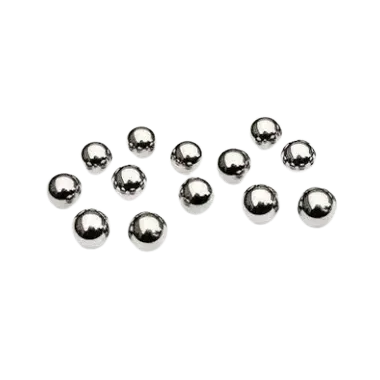
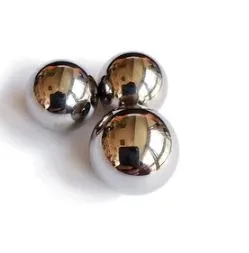
3. Shot Peening
Shot peening is a surface - treatment process used to improve the fatigue life of metal components. Carbon steel balls are used as shot media in this process. They are propelled at high speed onto the surface of the component, creating compressive stresses that can prevent crack initiation and propagation. The impact resistance of the carbon steel balls is crucial to ensure that they can withstand the repeated impacts during the shot - peening process without breaking.
Comparison with Other Types of Steel Balls
When considering the impact resistance of carbon steel balls, it's also useful to compare them with other types of steel balls, such as Stainless Steel Ball.
Stainless steel balls are known for their corrosion resistance. However, in terms of impact resistance, they may not always be the best choice. Some stainless steels have lower impact resistance compared to carbon steels, especially those with high chromium and nickel content. This is because the alloying elements in stainless steel can change the microstructure and mechanical properties of the steel, making it more prone to cracking under impact in certain cases.
Testing the Impact Resistance of Carbon Steel Balls
There are several methods for testing the impact resistance of carbon steel balls. One common method is the Charpy impact test. In this test, a notched specimen of the carbon steel ball is struck by a pendulum hammer, and the energy absorbed during the fracture is measured. The higher the energy absorbed, the better the impact resistance of the steel.
Another method is the drop - weight test. In this test, a carbon steel ball is dropped from a certain height onto a target, and the deformation and damage to the ball are observed. This test can provide practical information about the ball's ability to withstand real - world impacts.
Conclusion
The impact resistance of carbon steel balls is a complex property that is influenced by various factors, including carbon content, heat treatment, microstructure, and surface finish. Understanding these factors is crucial for selecting the right carbon steel balls for different applications.
As a supplier of carbon steel balls, we are committed to providing high - quality products with excellent impact resistance. We use advanced manufacturing processes and strict quality - control measures to ensure that our carbon steel balls meet the highest standards.
If you are in the market for carbon steel balls and have specific requirements regarding impact resistance or other properties, we would be more than happy to discuss your needs. Contact us to start a procurement discussion, and let's find the perfect carbon steel balls for your application.
References
- ASM Handbook Volume 1: Properties and Selection: Irons, Steels, and High - Performance Alloys. ASM International.
- Callister, W. D., & Rethwisch, D. G. (2010). Materials Science and Engineering: An Introduction. Wiley.
- Shackelford, J. F. (2008). Introduction to Materials Science for Engineers. Pearson Prentice Hall.