
Hey there! As a supplier of large steel balls, I've been getting a lot of questions lately about the impact resistance of these bad boys. So, I thought I'd take a deep dive into this topic and share some insights with you all.
First off, let's talk about what impact resistance actually means. In simple terms, it's the ability of a material to withstand sudden forces or shocks without breaking, cracking, or deforming significantly. When it comes to large steel balls, this property is crucial, especially in applications where they're subjected to high - energy impacts.
One of the key factors that determine the impact resistance of a large steel ball is the type of steel used. For instance, Din 5401 Steel Ball is a popular choice. These balls are made according to the DIN 5401 standard, which ensures a certain level of quality and performance. The steel composition in these balls is carefully engineered to balance hardness and toughness. Hardness helps the ball resist wear and indentation, while toughness allows it to absorb energy from impacts without fracturing.
Another type of steel ball that's widely used is the Carbon Steel Ball. Carbon steel balls are known for their good strength and relatively low cost. The carbon content in the steel plays a significant role in determining its impact resistance. Higher carbon content generally means higher hardness, but it can also make the ball more brittle. So, manufacturers need to find the right balance to optimize the impact - resistant properties of carbon steel balls.
Solid Steel Balls are also a great option when it comes to impact resistance. These balls are made from a single piece of steel, which gives them a more uniform structure compared to some other types of balls. A uniform structure means that the ball can distribute the impact energy more evenly throughout its volume, reducing the risk of localized damage.
The manufacturing process also has a huge impact on the ball's ability to withstand impacts. For example, heat treatment is a common process used to enhance the mechanical properties of steel balls. Through proper heat treatment, the steel's grain structure can be refined, which improves its toughness and impact resistance. Quenching and tempering are two common heat - treatment steps. Quenching rapidly cools the steel, which increases its hardness, and tempering then reduces the internal stresses and brittleness introduced during quenching.
The size of the large steel ball also matters. Generally, larger balls have more mass, which means they can absorb more energy during an impact. However, as the size increases, it can also be more challenging to ensure uniform properties throughout the ball. This is why precise manufacturing processes are even more critical for larger steel balls.
In applications like mining, large steel balls are used in ball mills to grind ore. In this environment, the balls are constantly colliding with each other and the ore particles. High impact resistance is essential here because if the balls break or wear out too quickly, it can lead to increased maintenance costs and reduced efficiency. The same goes for applications in the automotive and aerospace industries, where steel balls are used in various moving parts that experience high - stress impacts.
When it comes to testing the impact resistance of large steel balls, there are several methods. One common test is the Charpy impact test. In this test, a notched sample of the steel ball material is struck with a pendulum, and the energy absorbed during the fracture is measured. A higher energy absorption indicates better impact resistance. Another test is the drop - weight test, where a ball is dropped from a certain height onto a hard surface, and the extent of damage is evaluated.
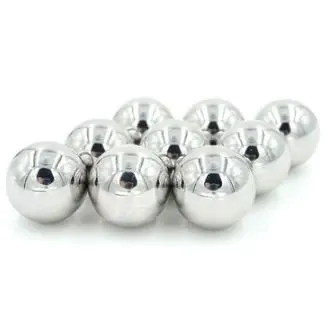
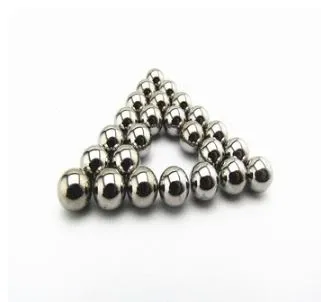
As a supplier, I always make sure that our large steel balls meet the highest standards of impact resistance. We use advanced manufacturing techniques and strict quality - control measures to ensure that each ball we produce can handle the toughest conditions. Whether you need Din 5401 Steel Ball, Carbon Steel Ball, or Solid Steel Balls, you can count on us to provide you with products that perform.
If you're in the market for large steel balls and want to learn more about their impact resistance or discuss your specific application requirements, I'd love to hear from you. We can have a detailed chat about which type of steel ball would be the best fit for your needs. Whether it's for a small - scale project or a large - scale industrial application, we're here to help you make the right choice.
In conclusion, the impact resistance of large steel balls is a complex but crucial property. It's influenced by factors like the type of steel, manufacturing processes, and ball size. By understanding these factors, you can make more informed decisions when it comes to choosing the right steel balls for your applications. So, don't hesitate to reach out if you have any questions or are ready to start a procurement process.
References
- "Metallurgy of Steel" by some well - known metallurgist.
- Industry standards related to steel ball manufacturing, such as DIN 5401.
- Technical papers on impact testing of metals.