
Hey there! As a supplier of Cold Heading Punches, I've seen firsthand how these tools can make a huge difference in the mechanical properties of cold-headed parts. In this blog, I'm gonna break down the impact of Cold Heading Punches on those parts, sharing some insights and real-world knowledge.
Let's start with the basics. Cold heading is a process where metal is shaped at room temperature using a punch and die. The punch is a critical component in this process. It's like the "hero" that delivers the force needed to transform the raw material into the desired shape. The quality and design of the Cold Heading Punch can have a significant influence on the mechanical properties of the final cold-headed part.
One of the key mechanical properties affected by the punch is hardness. When the punch strikes the metal during cold heading, it causes work hardening. Work hardening is a phenomenon where the metal becomes harder and stronger as it's deformed. The force applied by a well-designed Cold Heading Punch can create a more uniform deformation in the metal, leading to a more consistent hardness across the part. For example, if you're making a bolt using cold heading, a good punch will ensure that the entire length of the bolt has a similar hardness, which is crucial for its strength and durability.
Another important property is density. A proper Cold Heading Punch can compress the metal effectively, increasing its density. Higher density often means better mechanical performance. When the punch applies the right amount of force in the right places, it can eliminate voids and porosity in the metal. This is especially important for parts that need to withstand high stress, like automotive components. A denser part is less likely to fail under pressure, which means it can perform better in real-world applications.
The surface finish of the cold-headed part is also influenced by the punch. A smooth and well-finished punch can transfer its surface characteristics to the part. This is important because a good surface finish can reduce friction and wear. For instance, in a fastener, a smooth surface finish can make it easier to install and remove, and it can also prevent corrosion. A rough punch, on the other hand, can leave marks and imperfections on the part, which can weaken it over time.
Now, let's talk about the design of Cold Heading Punches. Different designs are used for different applications. For example, a flat punch is often used for simple shaping, while a stepped punch can be used to create more complex geometries. The shape and size of the punch are carefully engineered to match the requirements of the cold-headed part. If the design is wrong, it can lead to problems like cracking, uneven deformation, and poor mechanical properties. That's why it's so important to choose the right punch for the job.
As a supplier, I've seen many customers come to me with issues related to the mechanical properties of their cold-headed parts. Sometimes, the problem is as simple as using the wrong punch. That's why I always recommend working closely with a knowledgeable supplier to select the best punch for your specific needs.
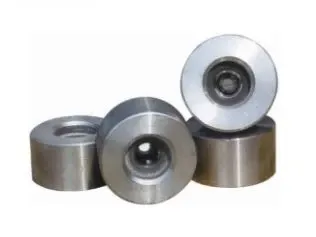
When it comes to materials, Cold Heading Punches are often made from high-quality steel or Tungsten Carbide Die. Tungsten carbide is a popular choice because it's extremely hard and wear-resistant. This means that the punch can maintain its shape and performance over a long period of time, even when used in high-volume production. A punch made from the right material can have a big impact on the mechanical properties of the cold-headed part. It can ensure that the part is made to the highest standards, with consistent quality and performance.
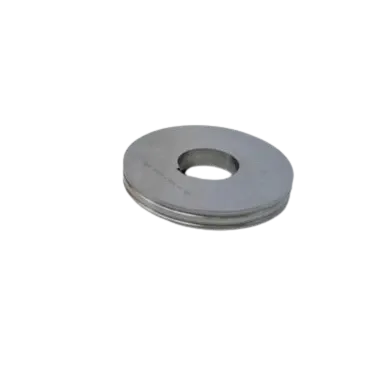
In addition to the punch itself, the Feed Roll also plays a role in the cold heading process. The feed roll is responsible for feeding the raw material into the machine at the right speed and position. A well-functioning feed roll can ensure that the punch strikes the metal at the correct location, which is essential for the accuracy and quality of the cold-headed part. If the feed roll is not working properly, it can cause misalignment and other issues, which can affect the mechanical properties of the part.
So, how do you choose the right Cold Heading Punch? First, you need to consider the specific requirements of your part. What kind of shape do you need? What mechanical properties are important? Then, you should look for a supplier who has experience and expertise in cold heading. A good supplier can help you select the right punch design and material based on your needs. They can also provide you with advice on how to optimize the cold heading process for the best results.
At our company, we offer a wide range of Cold Heading Punches to meet different customer needs. We understand that every application is unique, and we're committed to providing high-quality products and excellent customer service. Whether you're a small manufacturer or a large corporation, we can work with you to find the right solution for your cold heading needs.
If you're interested in learning more about Cold Heading Punches and how they can improve the mechanical properties of your cold-headed parts, or if you have any questions about our products, don't hesitate to reach out. We're here to help you make the best choices for your business. Contact us today to start a conversation about your cold heading requirements.
References
- "Cold Heading Technology Handbook"
- "Mechanical Properties of Metals and Alloys"