
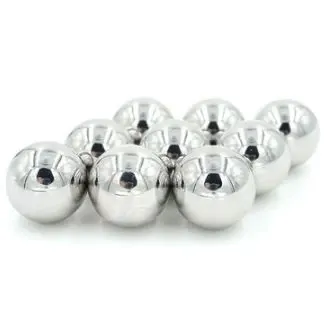
Hey there! As a supplier of inch steel balls, I'm super stoked to share with you all about the heat-treatment process of these little round wonders. You see, inch steel balls are used in a whole bunch of industries, from automotive to aerospace, and the heat-treatment process plays a crucial role in determining their quality and performance.
First off, let's talk about why heat treatment is so important. When you heat-treat steel balls, you're basically changing their physical and mechanical properties. This can make them harder, more wear-resistant, and more durable. And in industries where precision and reliability are key, these are some pretty big deals.
There are a few different heat-treatment processes that we use for inch steel balls, and I'm gonna break them down for you.
Annealing
The first process we'll look at is annealing. This is like giving the steel balls a nice, relaxing spa day. Annealing involves heating the steel balls to a specific temperature and then slowly cooling them down. This helps to relieve internal stresses in the steel, making it more ductile and easier to work with.
We usually start by heating the steel balls to a temperature between 700°C and 900°C, depending on the type of steel. Once they're at the right temperature, we hold them there for a certain amount of time to make sure the heat penetrates evenly. Then, we let them cool down slowly, either in the furnace itself or in a controlled environment.
The great thing about annealing is that it can improve the machinability of the steel balls. This means that we can shape and finish them more easily, which is a huge plus when it comes to mass-producing high-quality inch steel balls.
Normalizing
Next up is normalizing. This process is similar to annealing, but with a few key differences. Instead of cooling the steel balls slowly, we let them cool in air. This results in a harder and more uniform structure compared to annealing.
We heat the steel balls to a temperature slightly higher than the annealing temperature, usually between 800°C and 950°C. Once they reach that temperature, we hold them there for a while and then take them out of the furnace and let them cool naturally in the air.
Normalizing is often used to prepare the steel balls for further heat treatment or to improve their mechanical properties. It can also help to refine the grain structure of the steel, which can enhance its toughness and strength.
Hardening
Now, let's talk about hardening. This is the process where we really make the steel balls tough as nails. Hardening involves heating the steel balls to a very high temperature (usually above 800°C) and then quickly quenching them in a liquid, such as oil or water.
The rapid cooling during quenching causes the steel to transform into a very hard and brittle structure called martensite. This makes the steel balls extremely hard and wear-resistant, which is great for applications where they'll be subjected to a lot of friction and abrasion.
However, hardening also makes the steel balls very brittle, which can be a problem. That's why we usually follow up hardening with another process called tempering.
Tempering
Tempering is like a follow-up treatment to hardening. It helps to reduce the brittleness of the steel balls and improve their toughness and ductility.
We heat the hardened steel balls to a temperature below the critical point (usually between 150°C and 650°C) and hold them there for a certain amount of time. Then, we let them cool down slowly.
The tempering process allows the martensite structure to transform into a more stable and less brittle structure called tempered martensite. This gives the steel balls a good balance of hardness, toughness, and wear resistance.
Different Types of Steel Balls and Their Heat Treatment
Now, not all inch steel balls are made of the same type of steel. We have different options like Carbon Steel Ball, Chorme Steel Ball, and 316 Stainless Steel Balls, and each type requires a slightly different heat-treatment process.
Carbon steel balls are one of the most commonly used types. They're relatively inexpensive and have good strength and hardness. The heat-treatment process for carbon steel balls usually involves annealing, normalizing, hardening, and tempering to achieve the desired properties.
Chrome steel balls, on the other hand, are known for their high chromium content, which gives them excellent corrosion resistance and wear resistance. Their heat-treatment process is similar to that of carbon steel balls, but the temperatures and cooling rates may be adjusted to account for the different alloy composition.
316 stainless steel balls are made from a type of stainless steel that contains molybdenum, which enhances its corrosion resistance even further. The heat-treatment process for 316 stainless steel balls is a bit different. Instead of hardening and tempering, we often use a process called solution annealing. This involves heating the steel balls to a high temperature and then quenching them rapidly to dissolve any carbides and prevent them from forming again.
Quality Control
As a supplier of inch steel balls, quality control is super important to us. We use a variety of testing methods to ensure that our heat-treated steel balls meet the highest standards.
One of the most common tests is hardness testing. We use a hardness tester to measure the hardness of the steel balls at different points. This helps us to make sure that the heat-treatment process has been successful and that the balls have the right level of hardness.
We also do visual inspections to check for any surface defects, such as cracks or pits. And we use non-destructive testing methods, like ultrasonic testing, to detect any internal defects that may not be visible to the naked eye.
Why Choose Our Inch Steel Balls
If you're in the market for high-quality inch steel balls, you should definitely consider working with us. We've got years of experience in the industry, and we know how to produce steel balls that meet the most demanding requirements.
Our heat-treatment process is carefully controlled to ensure that every single steel ball we produce has the right combination of hardness, toughness, and wear resistance. And because we use the latest technology and equipment, we can offer you competitive prices without compromising on quality.
Whether you need carbon steel balls, chrome steel balls, or 316 stainless steel balls, we've got you covered. We can also customize the size, shape, and surface finish of the steel balls to meet your specific needs.
So, if you're interested in learning more about our inch steel balls or if you're ready to place an order, don't hesitate to get in touch. We're always happy to have a chat and help you find the perfect solution for your application.
References
- "Metallurgy for Dummies" by Bytesize Books
- "The Science and Engineering of Materials" by Donald R. Askeland and Pradeep P. Phule
- Various industry standards and guidelines for steel ball production and heat treatment