
Tungsten carbide dies are essential components in various industrial applications, renowned for their exceptional hardness and durability. As a leading supplier of tungsten carbide dies, I've witnessed firsthand the critical role these dies play in manufacturing processes. In this blog, we'll delve into the hardness of tungsten carbide dies, exploring what makes them so tough and why they're a top choice for many industries.
Understanding Tungsten Carbide
Tungsten carbide is a compound composed of tungsten and carbon atoms. It's created through a process called powder metallurgy, where tungsten powder and carbon powder are combined and sintered under high pressure and temperature. This results in a material with a unique crystalline structure that gives it its remarkable properties.
The hardness of tungsten carbide is primarily due to its strong atomic bonds. The tungsten and carbon atoms are held together by covalent bonds, which are extremely strong and difficult to break. This makes tungsten carbide highly resistant to wear, abrasion, and deformation, even under extreme conditions.
Measuring the Hardness of Tungsten Carbide Dies
Hardness is typically measured using the Rockwell, Vickers, or Knoop hardness scales. These scales provide a numerical value that indicates the material's resistance to indentation. Tungsten carbide dies usually have a hardness ranging from 89 to 93 on the Rockwell A scale, which is significantly harder than many other materials commonly used in industrial applications.
To put this into perspective, steel, a widely used material in manufacturing, has a Rockwell hardness of around 20 to 60 HRC (Rockwell C scale). This means that tungsten carbide is much harder and more wear-resistant than steel, making it ideal for applications where high precision and long tool life are required.
Factors Affecting the Hardness of Tungsten Carbide Dies
Several factors can influence the hardness of tungsten carbide dies. One of the most important factors is the composition of the material. The ratio of tungsten to carbon, as well as the presence of other elements such as cobalt, can significantly affect the hardness and other properties of the die.
Cobalt is commonly used as a binder in tungsten carbide dies. It helps to hold the tungsten carbide particles together and provides some degree of toughness. However, increasing the cobalt content can also reduce the hardness of the die. Therefore, finding the right balance between hardness and toughness is crucial when designing tungsten carbide dies.
The manufacturing process also plays a vital role in determining the hardness of the die. The sintering temperature, pressure, and time can all affect the density and structure of the material, which in turn influences its hardness. By carefully controlling these parameters, manufacturers can produce tungsten carbide dies with consistent and optimal hardness.
Applications of Tungsten Carbide Dies
The exceptional hardness of tungsten carbide dies makes them suitable for a wide range of applications. One of the most common uses is in the metalworking industry, where they are used for cold heading, extrusion, and wire drawing. In cold heading, tungsten carbide dies are used to shape metal parts by applying high pressure at room temperature. The hardness of the die allows it to withstand the high forces involved in the process without deforming or wearing out quickly.
In the wire drawing process, tungsten carbide dies are used to reduce the diameter of wires. The smooth surface and high hardness of the die ensure that the wire is drawn with high precision and minimal surface defects. This results in a high-quality wire with excellent mechanical properties.
Tungsten carbide dies are also widely used in the plastics and rubber industries. They are used for injection molding, extrusion, and blow molding processes. The hardness and wear resistance of the die make it ideal for producing high-precision plastic and rubber parts with complex shapes.
Our Tungsten Carbide Die Products
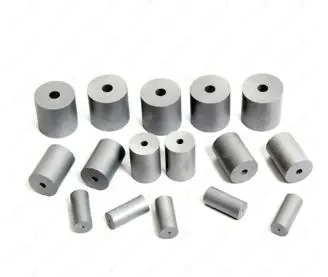
As a supplier of tungsten carbide dies, we offer a wide range of products to meet the diverse needs of our customers. Our dies are made from high-quality tungsten carbide materials and are manufactured using advanced techniques to ensure consistent quality and performance.
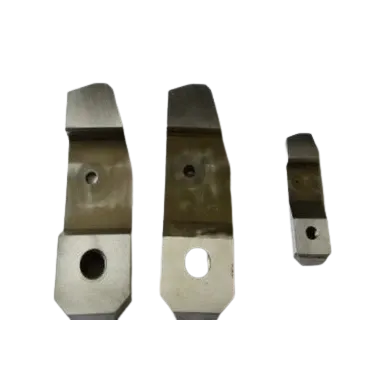
We have Carbide Cut Off Blade COB that are designed for precision cutting in various metalworking applications. These blades are known for their sharp edges and long service life, making them a cost-effective solution for cutting operations.
Our Cold Forming/forging Tools are used in the cold forming and forging processes to shape metal parts with high precision. These tools are made from tungsten carbide with the right balance of hardness and toughness, ensuring optimal performance and durability.
We also provide Feed Roll that are essential for feeding materials in various manufacturing processes. Our feed rolls are made from tungsten carbide to resist wear and ensure smooth and accurate material feeding.
Why Choose Our Tungsten Carbide Dies
When you choose our tungsten carbide dies, you're getting products that are backed by our expertise and commitment to quality. We have a team of experienced engineers and technicians who are dedicated to developing and manufacturing the best tungsten carbide dies.
Our dies are rigorously tested to ensure that they meet the highest standards of quality and performance. We use advanced testing equipment to measure the hardness, density, and other properties of the dies, ensuring that they are consistent and reliable.
In addition to our high-quality products, we also offer excellent customer service. Our sales team is always ready to assist you with any questions or concerns you may have. We can provide technical support, product recommendations, and customized solutions to meet your specific requirements.
Contact Us for Your Tungsten Carbide Die Needs
If you're in the market for high-quality tungsten carbide dies, we'd love to hear from you. Whether you're looking for a standard die or a custom-designed solution, we have the expertise and resources to meet your needs.
Contact us today to discuss your requirements and get a quote. Our team will be happy to assist you in finding the right tungsten carbide dies for your application. Let's work together to improve your manufacturing processes and achieve greater efficiency and productivity.
References
-ASM Handbook Volume 2: Properties and Selection: Nonferrous Alloys and Special-Purpose Materials
-Schmid, F. (2019). Tungsten Carbide: Properties, Production, and Applications. Wiley-VCH.
-Kruss, A. (2020). Hardness Testing of Advanced Materials. Springer.