
Hey there! As a supplier of Inch Steel Balls, I often get asked about the hardness of these little guys. So, I thought I'd take a few minutes to break it down for you.
First off, let's talk about why hardness matters. When it comes to steel balls, hardness plays a crucial role in determining their performance and durability. A harder steel ball can withstand more pressure, resist wear and tear better, and maintain its shape for a longer time. This is especially important in applications where the balls are subjected to high stress, like in bearings, valves, and industrial machinery.
So, what exactly is the hardness of inch steel balls? Well, it depends on a few factors, including the type of steel used, the manufacturing process, and the heat treatment. Most inch steel balls are made from high - carbon steel, chrome steel, or stainless steel, each with its own unique hardness characteristics.
High - Carbon Steel Balls
High - carbon steel is a popular choice for making steel balls because it's relatively inexpensive and can be heat - treated to achieve a high level of hardness. The carbon content in high - carbon steel typically ranges from 0.6% to 1.5%. When heat - treated, these steel balls can reach a Rockwell hardness of around 58 - 65 HRC (Rockwell C scale). This level of hardness makes them suitable for a wide range of applications, from automotive parts to consumer products.
Chrome Steel Balls
Chrome steel is another common material for inch steel balls. It contains chromium, which not only increases the hardness of the steel but also improves its corrosion resistance. Chrome steel balls are often used in high - precision applications, such as bearings in aerospace and automotive industries. The hardness of chrome steel balls can be as high as 60 - 67 HRC after heat treatment. This high hardness allows them to handle heavy loads and high - speed rotations without deforming easily.
Stainless Steel Balls
Stainless steel balls are known for their excellent corrosion resistance, making them ideal for use in harsh environments. However, compared to high - carbon and chrome steel balls, stainless steel balls generally have a lower hardness. The most common type of stainless steel used for balls is 440C, which can achieve a hardness of about 56 - 60 HRC after heat treatment. While this is lower than the hardness of high - carbon and chrome steel balls, it's still sufficient for many applications where corrosion resistance is a top priority.
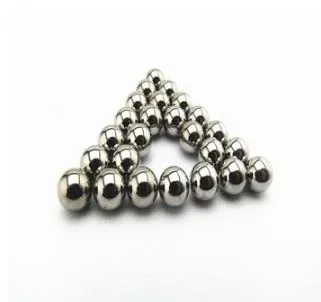
Now, let's talk about how the manufacturing process affects the hardness of inch steel balls. The process typically involves several steps, including forging, machining, heat treatment, and finishing. During the forging process, the steel is shaped into a ball by applying high pressure. This can initially increase the hardness of the steel, but it's the heat treatment step that really determines the final hardness.
Heat treatment involves heating the steel balls to a specific temperature and then cooling them at a controlled rate. This process can change the microstructure of the steel, making it harder and more durable. There are different types of heat treatment, such as quenching and tempering. Quenching involves rapidly cooling the heated steel in a liquid medium, like oil or water, to harden it. Tempering, on the other hand, is done after quenching to reduce the brittleness of the steel and improve its toughness.
As an Inch Steel Ball supplier, I understand the importance of providing high - quality products with the right hardness for your specific needs. That's why we offer a wide range of steel balls made from different materials and with different hardness levels. Whether you need Weldable Steel Balls for welding applications, Large Steel Ball for heavy - duty machinery, or Solid Steel Balls for precision instruments, we've got you covered.
When choosing the right inch steel balls for your application, it's important to consider not only the hardness but also other factors, such as surface finish, roundness, and size tolerance. A smooth surface finish can reduce friction and wear, while high roundness and tight size tolerance ensure accurate performance.
If you're still not sure which type of steel ball is right for you, don't hesitate to reach out. Our team of experts is always here to help you make the best choice. We can provide you with detailed product information, samples for testing, and even customized solutions to meet your specific requirements.
In conclusion, the hardness of inch steel balls is a critical factor that affects their performance and durability. By understanding the different types of steel used, the manufacturing process, and the specific hardness requirements of your application, you can choose the right steel balls for your needs. And if you're in the market for high - quality inch steel balls, look no further. We're here to provide you with the best products and services.
So, if you're interested in purchasing inch steel balls for your business, feel free to contact us. We're ready to start a conversation and help you find the perfect solution for your needs. Let's work together to make your projects a success!
References
- "Metallurgy for Dummies" by John H. Davies
- "Steel Balls: Manufacturing and Applications" by Industrial Press Inc.