
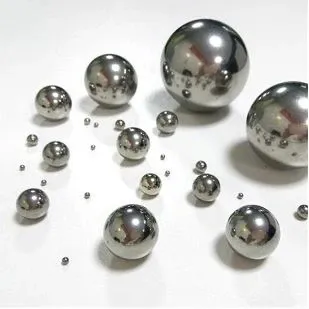
The grain size of steel in solid steel balls is a crucial factor that significantly influences their mechanical properties, performance, and applications. As a reputable supplier of solid steel balls, understanding the concept of grain size and its implications is essential for providing high - quality products to our customers.
Understanding Grain Size in Steel
In the context of steel, grains are the individual crystalline regions that form during the solidification process. When molten steel cools and solidifies, atoms arrange themselves into ordered structures, creating these grains. The size of these grains can vary widely depending on several factors such as the cooling rate, alloy composition, and heat - treatment processes.
Grain size is typically measured using a microscope and is quantified according to established standards. One common method is the ASTM (American Society for Testing and Materials) grain - size number. A lower ASTM grain - size number corresponds to larger grains, while a higher number indicates smaller grains. For example, an ASTM grain - size number of 1 represents relatively large grains, whereas a number of 10 or higher represents very fine grains.
Factors Affecting Grain Size in Solid Steel Balls
Cooling Rate
The rate at which molten steel cools to form solid steel balls has a profound impact on grain size. A rapid cooling rate, such as quenching, results in the formation of fine grains. This is because the atoms in the molten steel have less time to migrate and form larger crystalline structures. On the other hand, a slow cooling rate allows the atoms more time to move and coalesce, leading to the growth of larger grains.
In the production of solid steel balls, controlling the cooling rate is a delicate balance. For applications where high strength and hardness are required, a faster cooling rate may be employed to achieve a finer grain size. However, if the cooling rate is too high, it can introduce internal stresses and brittleness in the steel balls.
Alloy Composition
The addition of various alloying elements to steel can also affect grain size. Elements such as titanium, niobium, and vanadium are known as grain - refiners. They react with carbon and nitrogen in the steel to form fine precipitates. These precipitates act as barriers to grain growth during the heating and cooling processes, resulting in a finer grain structure.
For instance, in some high - performance solid steel balls, small amounts of titanium are added to the steel composition. The titanium forms titanium nitride precipitates, which pin the grain boundaries and prevent them from moving, thus maintaining a fine grain size even at elevated temperatures.
Heat - Treatment Processes
Heat - treatment processes, such as annealing, normalizing, quenching, and tempering, play a vital role in controlling the grain size of steel in solid steel balls. Annealing involves heating the steel to a specific temperature and then slowly cooling it. This process can be used to refine the grain structure and relieve internal stresses.
Normalizing is similar to annealing but involves a faster cooling rate in air. It is often used to produce a more uniform grain size and improve the mechanical properties of the steel. Quenching, as mentioned earlier, is a rapid cooling process that can result in a fine grain size and high hardness. However, quenched steel is usually brittle, so tempering is often performed afterwards. Tempering involves reheating the quenched steel to a lower temperature to reduce brittleness while maintaining a relatively fine grain size and good strength.
Influence of Grain Size on the Properties of Solid Steel Balls
Mechanical Properties
Grain size has a direct impact on the mechanical properties of solid steel balls. Fine - grained steel generally exhibits higher strength, hardness, and toughness compared to coarse - grained steel. The smaller grains provide more grain boundaries, which act as barriers to the movement of dislocations (defects in the crystal structure). This makes it more difficult for the material to deform, resulting in increased strength and hardness.
For example, in applications where solid steel balls are used in high - load bearing situations, such as in ball bearings, fine - grained steel balls can withstand higher stresses without deforming or failing. They also have better resistance to wear and fatigue, which is crucial for ensuring a long service life.

Ductility and Formability
While fine - grained steel has excellent strength and hardness, it may have lower ductility and formability compared to coarse - grained steel. Ductility refers to the ability of a material to deform plastically without fracturing. Coarse - grained steel has fewer grain boundaries, allowing the dislocations to move more freely. This results in better ductility and formability, which can be advantageous in some manufacturing processes.
However, in most applications of solid steel balls, the need for high strength and wear resistance often outweighs the requirements for ductility. Therefore, fine - grained steel is typically preferred.
Corrosion Resistance
Grain size can also influence the corrosion resistance of solid steel balls. Fine - grained steel generally has better corrosion resistance because the increased number of grain boundaries provides more sites for the formation of a protective oxide layer. This oxide layer acts as a barrier, preventing the penetration of corrosive agents into the steel.
Applications of Solid Steel Balls Based on Grain Size
Precision Bearings
In the manufacturing of precision bearings, fine - grained solid steel balls are highly desirable. The high strength and hardness of fine - grained steel ensure that the balls can withstand the high contact stresses and repeated loading in bearing applications. They also have better wear resistance, which helps to maintain the dimensional accuracy of the bearings over time. Metric Steel Ball are commonly used in precision bearings, and their fine grain size contributes to the smooth operation and long service life of these components.
Industrial Machinery
Solid steel balls with different grain sizes are used in various industrial machinery applications. For heavy - duty machinery that requires high - load capacity, fine - grained steel balls are often selected. These balls can withstand the large forces and vibrations encountered in industrial environments. On the other hand, in some less demanding applications where cost is a major consideration, coarse - grained steel balls may be used. Metal Ball with appropriate grain sizes are supplied for a wide range of industrial machinery needs.
Mining and Construction
In the mining and construction industries, large - scale machinery often uses solid steel balls. Large Steel Ball are required to have high strength and wear resistance to withstand the harsh operating conditions. Fine - grained steel is typically used in these applications to ensure the durability and reliability of the steel balls. The fine grain size helps the balls to resist the abrasive forces exerted by rocks and other materials during the mining and construction processes.
Quality Control of Grain Size in Solid Steel Balls
As a supplier of solid steel balls, we implement strict quality control measures to ensure that the grain size of the steel meets the required specifications. We use advanced metallurgical testing techniques, such as optical microscopy and electron microscopy, to analyze the grain structure of the steel.
During the production process, we closely monitor the cooling rate, alloy composition, and heat - treatment parameters to control the grain size. Samples are taken at regular intervals and tested to verify that the grain size is within the acceptable range. Any deviation from the specified grain size can lead to sub - standard products, so we take immediate corrective actions if necessary.
Conclusion
The grain size of steel in solid steel balls is a complex yet critical aspect that affects their mechanical properties, performance, and applications. As a leading supplier of solid steel balls, we are committed to understanding the science behind grain size and using this knowledge to produce high - quality products.
Whether you are in the market for precision bearings, industrial machinery components, or mining and construction equipment, we can provide solid steel balls with the appropriate grain size to meet your specific requirements. Our team of experts is always available to discuss your needs and provide technical support. If you are interested in purchasing solid steel balls, we invite you to get in touch with us for a detailed discussion and to explore the best solutions for your applications.
References
- ASM Handbook Volume 4: Heat Treating. ASM International.
- Metals Handbook Desk Edition, 3rd Edition. ASM International.
- ASTM E112 - 13: Standard Test Methods for Determining Average Grain Size. ASTM International.